Copper Prices Are Surging: Three Copper Stocks to Play the AI and EV Booms

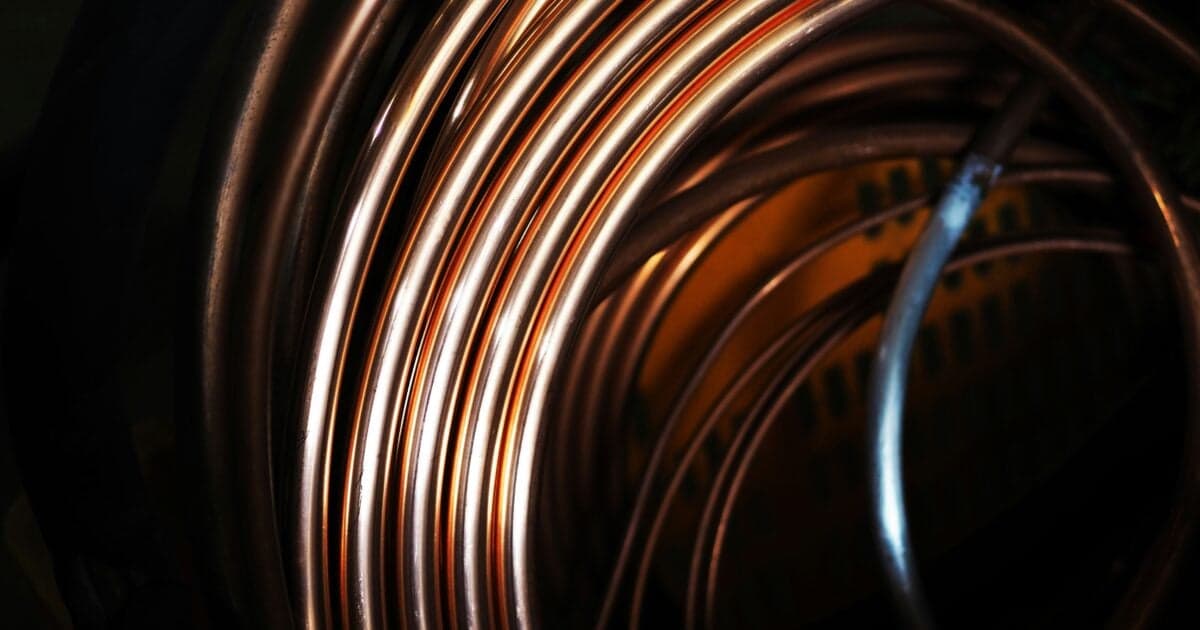
Copper may not quite garner the headlines that gold and silver do, but the industrial metal is a great place for investors as the world's economies spend big money on electrical infrastructure that powers everyday life.
Like these precious metals, the base metal copper has been surging to record highs in 2025. Copper is used in a huge number of industrial applications. Copper even plays a central role in construction, with the use of copper wiring and copper pipes.
Demand for copper is also set to grow in high-tech applications over the next decades, and copper is a quiet but powerful play on the AI build-out. The metal is vital to the electrical networks that feed the power-hungry hyperscalers, data centers, and others performing computationally intensive tasks.
It's also a key input in electrification technology, such as electric vehicles ("EV") with charging and storage applications.
Now, combine this increasing long-term demand with supply that has been underinvested in for years and current supply bottlenecks... You get a powerful combination that could drive profits.
It's why in a May 2025 presentation, Southern Copper called copper "the best fundamental story in commodities."
Of course, the largest gains will not come from buying copper directly, but rather through the miners that dig it out of the ground. That's because their profits are leveraged to the price of copper.
That is, if copper prices rise 20%, the profits of miners might rise 100%, to illustrate the principle.
And today, I am sharing three well-placed mining stocks that can ride copper to riches.
Copper Demand Is Set to Surge
The decadeslong build-out of the world's electrical infrastructure and increasingly hungry data centers are two forces set to play huge roles in the growth in copper demand. Both factors will keep demand for copper strong in future years.
The emergence of electric vehicles is boosting demand for copper. EVs may need up to 4 times the amount of copper as cars with internal combustion engines. Plus, EVs need copper-heavy charging stations.
A move to more renewable energy also requires more of the base metals. Wind and solar facilities use 4 to 5 times as much copper as traditional fossil-fueled facilities.
The industry will need about 10 million metric tons of new annual copper supply over the next decade to keep up with burgeoning demand, according to Australian mining giant BHP.
According to a Goldman Sachs report, investments in the electrical grid and other power infrastructure are expected to account for more than 60% of copper demand growth through 2030. These sources effectively add "the equivalent of another U.S." to overall demand.
Demand is also coming from across the globe. China is expected to account for half the growth in demand over the same period, with the U.S. and Europe being notable drivers, too, says Goldman.
The price of copper has surged more than 40% in 2025, but key supply issues are also at work pushing the price higher, at least for now.
Copper Supply Remains Challenged in the Near Term
This growing demand has met a number of bottlenecks in supply in 2025, helping stoke the price of copper higher in 2025.
For example, a deadly mudslide at the world's second-largest copper mine at Grasberg (Indonesia) has hit supply. The largest part of the mine – that produces 70% of its expected output – is expected to remain shuttered until the second quarter of 2026.
Supply is also affected in the short term from the potential for the U.S. to slap tariffs on foreign producers of copper. To get ahead of potential tariffs from the Trump administration in 2026, some traders have raised copper shipments to the U.S. – and prices – this year.
The supply of copper is unlikely to get a boost in the near term from traditional major suppliers, such as Chile, which is the world's top-producing country. Not only is production there down 5% since 2018, but growth isn't expected until after 2030.
In the meantime, Chilean miners will continue to invest in already existing mines to keep production steady, though not growing.
Meanwhile, the world's second-ranked producer, the Democratic Republic of Congo, faces political and governance challenges to production.
While supply growth is challenged, sources of short-term demand, such as Chinese companies, may not be able to reduce or delay their use of raw copper, adding more impetus to prices.
"More acute supply disruptions are likely here to stay for multiple quarters at the very least, which we think limits China's ability to fully wait out higher prices," says a report from J.P. Morgan. "Hence, we do think there will come a point soon where China will likely have to reluctantly increasingly buy into stronger copper prices."
Copper Prices Expected to Grow Over the Long Term
A variety of short-term forces are at work to keep copper prices higher for now. But prices could well continue to be strong several years out, as supply growth remains weak.
J.P. Morgan expects short-term copper pricing to peak around the second quarter of 2026 and subside somewhat toward the end of the year.
But demand for AI data centers, EVs, and power infrastructure could well keep pricing moving higher over a multiyear period.
"The continued surge in demand for compute remains extremely topical for copper markets, even if overall demand from the sector is growing from a small base," according to J.P. Morgan.
Goldman indicates that demand and supply will come into better balance next year and expects that demand will overtake supply in 2029 and onwards.
So, even if copper prices are elevated on some short-term concerns today, they look to have strong support over the next few years from both demand and supply sides.
Copper Stocks for Growing AI and EV Demand
If you're interested in investing in copper, miners can be an interesting way to play things. You have some different strategies, depending on how you expect the market to develop.
- Go for the low-cost producer: In commodities industries, where producers are largely price takers, the low-cost producer enjoys a competitive advantage. Low costs mean that a company can effectively always secure demand, making it a safer play.
- Choose a diversified producer or a "pure play": Miners produce a variety of metals, but some are more diversified than others. Greater diversification may offer more safety, but it also means lower exposure to any given metal. In contrast, more "pure play" miners give you targeted exposure to specific metals and more upside if you're right.
- High-cost producers may offer more leverage: High-cost producers can offer more leverage (i.e., increasing profitability) if the price of their metal rises. So, a miner that's minimally profitable may become much more profitable at a somewhat higher copper price. Of course, it's riskier if copper prices fall, so it's a double-edged sword.
Here are three companies with big copper operations.
Southern Copper: A Low-Cost Copper Miner
Investors on the hunt for more concentrated copper exposure could turn to Southern Copper (SCCO), one of the world's largest integrated copper producers. It has mines and refining operations in Mexico and Peru, and it says it has the largest copper reserves in the world.
Importantly, it's among the lowest-cost producers of copper, with the next two companies on the list (BHP Group and Freeport-McMoRan) not so far behind.
Unlike more diversified miners, Southern Copper depends heavily on copper for its revenues. From 2022 to 2024, about 76% of the company's revenues came from copper. About 11% of revenues were due to molybdenum and less than 5% from silver.
The company is also putting billions of dollars into growth, including about $5 billion into projects that expand copper production by about 350,000 tons of copper and 105,000 ounces of gold.
Nearly 89% of Southern Copper's stock is owned by Grupo Mexico, meaning the miner is effectively controlled by the Mexican industrial conglomerate.
BHP: Diversified Copper and Commodities Play
BHP (BHP) is a behemoth in the commodities space, producing copper, iron ore, potash, and steelmaking coal. But the Australian company's largest revenue driver is copper, generating about 44% of its $51.3 billion in fiscal 2025 revenue from the metal.
BHP already owns copper operations in Peru, Australia, and Chile, the latter of which includes a 57.5% stake in Escondida, the world's largest copper mine.
While copper is already important for BHP, it's a big future growth opportunity as well. The company is looking to invest more in its existing copper assets and create new joint ventures, such as its recently formed Vicuña joint venture, which invests on the Argentina-Chile border.
This joint venture is with Canada's Lundin Mining, and it will develop the Filo del Sol copper deposit, one of the largest copper discoveries of the past three decades.
Freeport-McMoRan: Focused Copper and Gold Company
Based in Phoenix, Freeport McMoRan (FCX) is another focused play on copper, with an added sideline in gold. About 74% of 2024 revenue came from copper, while another 17% came from gold. Both metals have seen strong moves up in 2025, reaching record highs.
The company has a strong presence in the U.S., but also has copper mines in Chile, Peru, and at the Grasberg minerals district.
Freeport is already one of the largest publicly traded copper producers, and its goal is to focus heavily on copper for the future. The Grasberg mine will be the core of future investments.
Investors may also find the company's capital return policy attractive. The goal here is to return to investors 50% of available cash flow, after capital investments and other factors. The return includes dividends as well as discretionary stock repurchases.
But while copper offers one way to play the AI and EV booms, the precious metal gold has already shattered records this year...
And Stansberry Senior Partner Dr. David "Doc" Eifrig says history shows it could be on the verge of its biggest bull run in over half a century.
His research shows it could be triggered by a major event, eerily similar to what happened in the 1970s. It's NOT inflation, fed rate cut expectations, escalating geopolitical tensions, or anything you're likely expecting.
And Doc believes you MUST own shares of his top gold stock.
He says you could times your money by 10 without touching a risky miner or a boring exchange-traded fund.
It's the centerpiece of Doc's full game plan for this wild market, with extraordinary upside potential.
Click here for the full details on this developing gold story.
Join for free. See how over a million people are taking control of their wealth…