Netflix and Paramount Fight Over Warner Bros: Do Investors Still Have Upside Here?

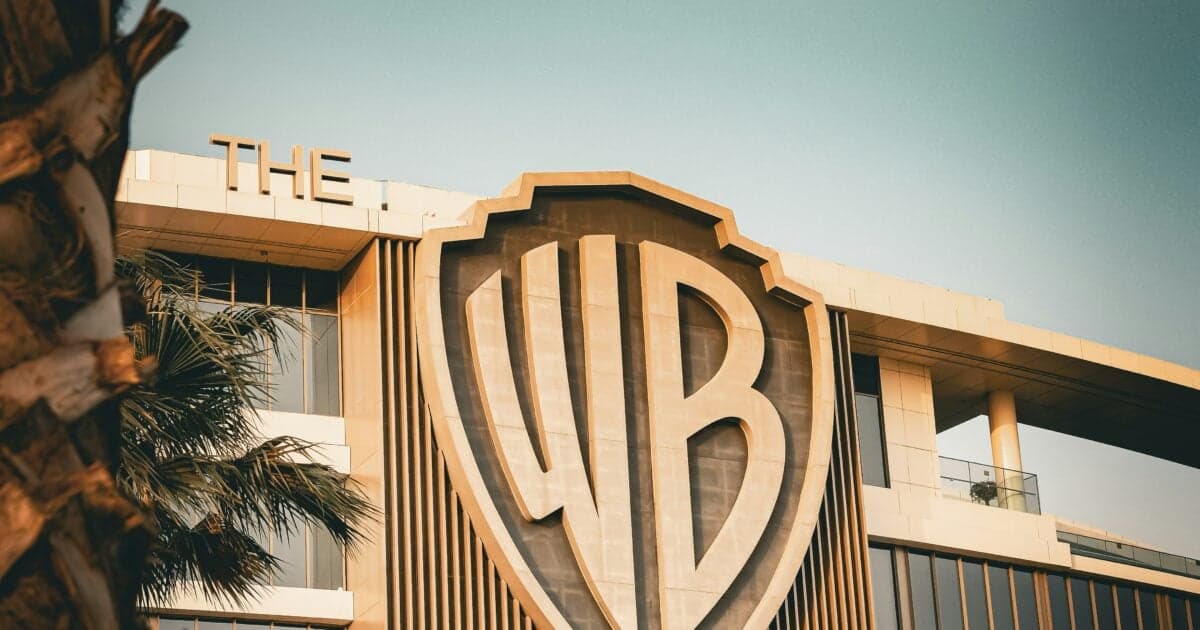
The acquisition of a major Hollywood studio has another plot twist – and maybe even a third!
Late last week, it looked like Netflix (NFLX) was acquiring storied Tinseltown studio Warner Bros., as well as HBO and its crown-jewel streaming service HBO Max. Later that day, Netflix boastfully – and prematurely – sent out an email to subscribers touting its would-be acquisition.
Maybe mark that a "might-not-be acquisition" instead. Tu-dum!
That's because as soon as the deal was announced, politicians on both sides of the aisle criticized the tie-up. On top of that – more drama! – rival Paramount Skydance (PSKY) swooped in on Monday morning with another unsolicited bid to buy the whole Warner Bros. Discovery (WBD).
While Netflix bid about $27.75 per share in cash and stock for Warner Bros. Discovery, Paramount came in with a substantially higher all-cash bid at $30 per share. The Paramount offer also includes acquiring the linear cable assets, something Netflix had no interest in.
The next twists may yet come, as President Donald Trump has said that he doesn't like the Netflix deal, mentioning that it "could be a problem." Meanwhile, he has plenty of ties with the investor groups fronting the money to acquire Warner Bros. One of them happens to be his son-in-law.
So, who's going to win Warner Bros. Discovery?
Investors may still have upside here, given the distance between Warner's stock price and the seemingly better offer of $30. And there may be the chance of an even better bid.
Netflix vs. Paramount: The Knife Fight Over Warner Bros.
The shareholders of Warner Bros. Discovery must feel like the belles of the ball right now. Investors had a real tough go of it for the past few years, since the company was formed from the 2021 merger of AT&T's WarnerMedia and Discovery.
It had been all downhill from there. The stock plunged based on fears that the company had too much debt, streaming competition was too intense, and it still had linear TV stations in a world that was going all-in on web-delivered content. From the 2021 high around $54, shares of WBD fell all the way to around $6.60 by late 2024, a bruising 88% decline.
Despite the stock's slide post-merger, the company had some strong assets, including the Warner Bros. studio unit, HBO, and a streaming business that included HBO Max, with its pedigree of high-quality shows. But they were tied in with those "old line" TV assets.
It was June when the company announced that it was splitting the business in two: The TV assets would go in one unit, while the studio and HBO assets would go in the other.
That spinoff announcement solved a couple of problems for investors:
- It separated the "good" assets from the "bad" assets, making it easier for investors to buy which stock they wanted.
- It made each newly separate unit more digestible for a potential acquirer.
The stock traded in the low teens and even high single digits from late 2022 until September 2025, when deal chatter heated up. The stock perked up on the news and trended upward for the rest of the year, culminating in a pair of bids and plenty of other interested suitors, too.
Now, suddenly Warner Bros. Discovery is going for nearly triple its price in June, when you couldn't give it away for $10 a share.
On December 5, Netflix rushed in and seemed to seal the deal, with a $27.75 per-share valuation, in the form of $23.25 in cash and $4.50 in shares of Netflix stock.
But Monday morning, Paramount Skydance came out with a competing all-cash offer – which investors typically see as a better alternative – of $30 per share.
That $30 figure happens to be the number that billionaire investor John Malone, the chairman emeritus of Warner Bros. Discovery, said was "possible" in a late October interview. Malone effectively indicated what he wanted in a sale of the company.
Paramount's Higher Bid for Warner Bros. Discovery: Too Much, Too Late?
Paramount's bid is about 8% higher than the stock-and-cash offer from Netflix, though the latter offer is subject to some fluctuation in Netflix's stock. While Netflix stock has been a high-flier for years, shares are actually down significantly from its Thursday pre-announcement price. So, Paramount's $30 all-cash offer looks even better than before, by comparison.
But Paramount's offer presents a real twist in the narrative, in part because of Trump's connection to the dealmakers.
The company had already offered several bids through mid-October, at prices up to $20 per share. The Warner Bros. board rejected those as undervaluing the company.
Following Netflix's takeover announcement, Trump pointed to potential questions about the deal's antitrust issues, suggesting that there might be pushback from regulators.
Meanwhile, the Senate has already announced a series of hearings to review the deal. Both Republicans, such as Utah's Mike Lee, and Democrats, such as Massachusetts' Elizabeth Warren, also pointed to the red flags in the potential tie-up between media giants.
Warren, for example, demanded that anti-monopoly laws be enforced, stating that "the antitrust review process has also become a cesspool of political favoritism and corruption."
Trump's concerns about the Netflix deal are not merely prescient. He has direct ties to the investors behind the Paramount Skydance bid. The much smaller Paramount is raising funding from outside sources to finance its purchase.
The latest bid for Warner Bros. Discovery includes a $40.7 billion equity commitment, which is being fully backed by the Ellison family and RedBird Capital Partners. Oracle co-founder and chair Larry Ellison is a noted Trump fundraiser, and his son David Ellison is CEO of Paramount Skydance. The Ellisons have been building a media empire, including a stake in TikTok from a deal that was brokered by the White House.
Other investors include sovereign wealth funds from Saudi Arabia, Qatar, and Abu Dhabi as well as Jared Kushner, the president's son-in-law, through Affinity Partners, his private equity firm.
Is There Upside Left in the Warner Bros. Discovery Merger?
Paramount's latest bid of $30 hit the price target that Malone cited as a possible takeout price. So, do investors have any further upside in this deal?
Investors are left with two options that have some real hair on them:
- The Netflix offer saw immediate pushback from lawmakers, who are already citing antitrust issues.
- The Paramount offer is rife with conflicts of interest, given the potential interest of those connected with Trump.
Investors have been excited about potential takeovers under the Trump administration and bidding up stocks under a looser enforcement climate. But maybe they didn't factor in the potential for Trump's allies to be on the other side of a competing deal.
For investors, it's also important to note that the offers are structured differently. In the Netflix bid, the already-proposed spinoff of the linear TV unit would go ahead next year as planned. In contrast, Paramount would buy the whole Warner Bros. Discovery, including the TV unit.
That difference is material, since the linear TV unit – to be named Discovery Global – is worth something, even if it's out of favor. It would include Discovery streaming assets, too.
So, the $30 and $27.75 bids are for two different packages of the Warner assets.
Right now, Warner Bros. Discovery is trading hands at $27.25 per share, when the ostensibly better offer is $30 per share. But Warner's board may think that the Paramount offer undervalues the linear TV unit enough that shareholders would come out ahead with the Netflix deal and stock in the Discovery Global spinoff next year.
What's near-certain is that Warner Bros. Discovery will be sold. The only question is who will ultimately get it. What seems clear is that industry consolidation will remain a big force as media companies look for more scale in a crowded and evolving media landscape.
Is there more upside with WBD?
It's possible. But investors should be aware that the $30 offer from Paramount is only 8.5% above the stock's current share price of approximately $27.63. If Paramount is successful, the share price will close that gap and deliver a respectable return quickly. But... that's a big "if."
What we know for sure is that the drama out of Washington, D.C. this year has been intense...
And according to Whitney Tilson – a former hedge-fund manager who predicted the dot-com crash, the housing crisis, and the 2022 tech-stock bloodbath – a little-known executive order from the president's first day in office could spark a paradigm shift that will likely catch millions of Americans off guard.
"The vast majority of Americans know nothing about Executive Order 14154," says Tilson. "And they need to start preparing for it now."
He recommends taking three critical steps to get ahead of this radical economic change.
Tilson's analysis has appeared in the pages of the Wall Street Journal, Forbes, Barron's, and Fortune magazine.
And because of the massive changes impacting U.S. stocks, Tilson has agreed to publish his latest findings online for free.
Join for free. See how over a million people are taking control of their wealth…