
A new move in the 'currency wars'?... An update on Greece... 'Finally, we have white smoke'... A 'Band-Aid' on a troubled economy... The Atlas 400 is headed to British Columbia...
 U.S. investors woke up to big news in the currency markets this morning...
China unexpectedly weakened its currency – known alternatively as the "yuan" or the "renminbi" – by nearly 2% overnight. That might not sound like much, but it's a big move for a major currency... and represents the yuan's biggest devaluation in decades.
The news set off fears of a new escalation in the so-called "currency wars" – the trend of major governments actively devaluing their currencies to make their exports cheaper to the rest of the world, and to make it easier to pay off their debts.
We'll discuss the details of the move and offer some perspective in tomorrow's Digest.
It's been a while since we last checked in on Europe's poster child for economic disaster, Greece...
As we discussed last month, the country and its creditors agreed in principle to a new bailout deal. But hurdles remained... and there had been little news of late.
Now, it appears the latest crisis could finally be resolved...
Following an all-night round of negotiations, reports this morning say the final terms of the deal have been finalized, outside of "a couple of small details." The deal is expected to give Greece up to 86 billion euros ($95 billion) in new loans over the next three years. As news service Reuters reported...
The negotiations appeared to have resolved all the main outstanding issues, after Greece's leftist government effectively capitulated last month to creditors' demands for deep austerity measures in order to receive loans.
"Finally, we have white smoke," a Greek Finance Ministry official said after exhausted Greek officials emerged in a central Athens hotel to announce the two sides had agreed on terms. "An agreement has been reached."
Finance Minister Euclid Tsakalotos confirmed only "two or three small issues" were pending. Greek shares rose, with the banking index surging 6%, while two-year bond yields fell more than four percentage points.
But as we've mentioned several times, this doesn't mean the problems in Greece are fixed – or even close. From an article in the Wall Street Journal...
The deal still leaves Greece grasping for economic and political stability. More than six months of, at times turbulent, negotiations on the country's future in the eurozone have tripped its economy back into recession, its banks remain subject to severe capital controls, and any action to reduce the country's massive debt load has been delayed until the fall.
The harsh austerity measures drawn up by the international institutions that oversee eurozone bailouts – including the European Commission, the European Central Bank and the International Monetary Fund – are bound to create more economic and social problems in Greece, and have already started fracturing the ruling Syriza party.
Even if Prime Minister Alexis Tsipras manages to push a swath of new overhauls, including the large-scale privatization of state assets and measures to make it easier to fire workers, through Parliament this week, he may have to call new elections within months.
For a quick review and update on the situation, we checked in with our colleague Kim Iskyan...
Just a month ago, it looked like Greece was going to leave the euro, throwing the European Union's (EU) entire experiment into doubt. In late June, after months of negotiations with the EU over a debt-relief deal, Greek Prime Minister Alexis Tsipras abruptly announced that he was finished talking. (Don't forget, Tsipras got his job in January by promising he wouldn't be bossed around by European bureaucrats.)
Instead, he called a referendum so that Greeks could decide for themselves whether to accept the EU and other creditors' tough demands. A "no" would put Greece on the path to a total "Grexit" from the EU and the euro.
As we discussed at the time, two-thirds of Greek citizens voted "no," and it sounded like Europe was on the verge of a financial disaster.
Not everyone thought that a Grexit was coming, though. And after the vote, Tsipras returned to the negotiation table with the EU with his tail between his legs. From Kim...
In exchange for the promise of a $95 billion bailout package (Greece's third rescue in just five years) – which has a final approval deadline of August 20 – Tsipras agreed to a laundry list of painful reforms to tax, labor, and pension legislation... an overhaul of the judicial system... big spending cuts... and a privatization program. Ironically, the conditions were even more severe than the ones he walked away from weeks before.
But Tsipras didn't have much of a choice. Days after negotiations ended, Greek banks closed their doors and limited depositors to 60 euros (about $65) a day of withdrawals. The country defaulted on a loan from the International Monetary Fund and closed the stock market for five weeks. Greece's already fragile economy lurched toward an even deeper recession. As Kim explained...
If Tsipras had kept his word and gone for a Grexit, things would have gotten a lot worse. One estimate suggested that Greece's economic output would fall 8%, and inflation would shoot up 35%. Outside of the euro, Greece would have turned into an economic basket case like Argentina or Zimbabwe.
So even though it's staying in the eurozone, things aren't going to get better for Greece any time soon. The country's banks need big infusions of capital to stay afloat. The stock market fell more than 20% when it reopened. Capital controls – which prevent companies from paying for imports – are killing entire industries... and might not be lifted for years.
Kim likens the $95 billion rescue program – which still requires legislative votes in some creditor countries – to a "Band-Aid" on the Greek economy...
There's no reason to think that Greece is going to do any better now. But Tsipras didn't want to go down in history as the guy who blew up the Greek economy... And German Chancellor Angela Merkel and French President Francois Hollande didn't want to be remembered for turning the dream of European unity into a nightmare.
Also, if Greece had left the EU, Europe's taxpayers and banks would have potentially taken a $375 billion hit on what Greece owes the EU. That's around 3% of GDP. If Greece had left the European economy, it would only be a matter of time before another financially troubled EU country (Portugal, Italy, or Spain?) would also bail... with dire consequences for the European economy. Greece's economy is about the size of the state of Oregon. It's small, but because it could be the first domino, it could pack a serious punch.
Again, there's no need to obsess over daily updates on Greece. The country and its problems aren't going away any time soon. And the "end game" remains the same. As we wrote last month...
In short, we expect a deal to be reached and for Greece to remain in the eurozone. But we also think additional bailout loans likely will only "kick the can" and delay a long-term solution a while longer.
Greece is bankrupt. It owes more than 300 billion euros (not including the latest deal). It has virtually no chance of ever paying this money back. Sooner or later, its European creditors will be forced to cut or forgive those debts to keep Greece in the eurozone... or Greece will default.
We're ending today's Digest with a special note from Gray Zurbruegg, the director of The Atlas 400.
The last time we heard from Gray, he filled us in on the club's incredible trip to the snow-covered mountains of Aspen, Colorado. Here's Gray...
The world is in the midst of enormous economic and political turmoil.
In the last year alone, we've seen riots in the streets of American cities... a global currency war led by irresponsible government leaders... and banks imposing negative nominal interest rates – meaning you're paying them for the privilege of lending them your money.
We're in the midst of the largest monetary experiment in history... and nobody knows when it will all come crumbling down.
That's why it's important to surround yourself with people you can trust.
For instance, if you were deathly ill or injured, do you have someone on standby who could offer his expert advice?
What if you were looking to sell your company? Do you know someone who has taken multiple corporations public and could guide you through the process, saving you money and hours of headache?
Do you know anyone who is so well-connected that he could assist you in a time of need, no matter where in the world you were?
Life is an adventure full of highs and lows, triumphs and failures. And if what I'm saying has caught your attention, read on... because what I'm about to discuss with you could change your life.
One of the best forms of protection is surrounding yourself with like-minded individuals.
That's why six years ago we created The Atlas 400 – a private wealth and travel club.
The Atlas 400 is a venue where you can openly discuss sensitive issues – like asset protection and personal freedom – with your peers. Atlas members have properties, lawyers, and advisors all over the world. Some of them are top lawyers and advisors. They hold multiple passports and citizenships and know how to help you.
To be clear, we aren't a bunch of doom-and-gloomers who think the world is going to end. Nor are we the ritzy country-club crowd.
We created The Atlas 400 to surround ourselves with the most successful, smartest people in the world... and to experience the best things life has to offer.
We do this by going on amazing adventures around the world several times a year.
Speaking of which, right now, Atlas members are preparing for an adventure in British Columbia, Canada.
Our days will be filled with kayaking, glacier trekking, guided wilderness tours, fly-fishing, and much more. Our home for the trip is one of British Columbia's best-kept secrets... It's a lodge located on a remote cove, just a few hundred yards from the Pacific Ocean.
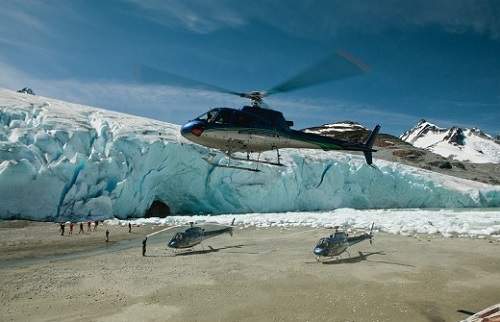
But what has members really excited is the lodge's fleet of helicopters, which will take Atlas members to prime fishing locations... the top of the most scenic ridgelines... and to massive glaciers.
In October, we're returning to Germany, site of our first-ever event. The CEO of Porsche has invited us to race cars on the company's private test track in Leipzig. BMW executives offered us a similar experience at their top-secret test facility. The trip will culminate in Munich, as members celebrate Oktoberfest in the festival's most coveted tents.
And we're already planning our adventures for 2016... We've arranged for an excursion through New Zealand. Our travels will take us from the cities on North Island to the scenic, adventure-filled landscapes of the South Island. And in classic Atlas fashion, we'll stay in some of the most luxurious lodges in the southern hemisphere.
This is just one of the excursions we have planned for next year. We're also headed to the Himalayas in Bhutan.
We want to make something clear: Atlas is a social club, not an investment club.
In general, we believe "business first" is the wrong way to go about life. Focus on your relationships, and opportunities will inevitably transpire. As philosopher Seneca once said...
Associate with people who are likely to improve you. Welcome those whom you are capable of improving. The process is a mutual one.
The trips we go on are a way to facilitate the club's true meaning: To get Atlas members out of their comfort zones and interacting with like-minded people in the world's most incredible places.
It's easy to open up when you've shared a racecar with someone... or ziplined across Patagonia with him. It's completely different from a typical workplace interaction. We've found that it's the best way to build friendships and create lasting relationships.

As Atlas Chairman Jeffery Brown explained in the December 26 Digest...
The principles on which the club was founded – personal responsibility and freedom – resonate deeply with me... as did the club's goal of bringing together successful individuals from around the world who embrace these principles.
That's why I became a member. That's why I have remained one for years. The experiences and friendships continue to excite me and the bonds grow stronger. It's been another year full of rich and colorful experiences with great people. And while membership isn't cheap ($25,000), it's hard to put a price on that.
The Atlas 400 only accepts new members two times per year. And the fall window is just opening. If you're interested in learning more about membership in The Atlas 400, please click here. And if you have questions about the club, give me a call at (410) 864-0878. I look forward to the adventures we may share in the future.
|
New 52-week highs (as of 8/10/15): American Financial Group (AFG), Aflac (AFL), Activision Blizzard (ATVI), WisdomTree Japan SmallCap Dividend Fund (DFJ), PNC Financial Warrants (PNC.WS), Valero Energy (VLO), and W.R. Berkley (WRB).
In today's mailbag, one subscriber questions the selloff in Apple and several more weigh in on precious metals. What's on your mind? Send your thoughts to feedback@stansberryresearch.com. Remember... we can't give individual investment advice.
"Is Wall Street 'stupid'? Taking Apple down while bidding up Amazon over $500. Makes no sense at all. Amazon had whopping earnings of 19 CENTS." – Paid-up subscriber Steve K.
"I'm seeing similar insanity regarding precious metals here in southern Georgia. What little inventory the dealers have gets marked up absurdly. The premiums are ranging from 25% on junk silver to almost 100% on U.S. Mint bullion! And with the dealers starving for inventory and consumers willing to pay the markup, the metals keep on selling. Customers buying have outnumbered the customers selling for over three years straight now." – Paid-up subscriber Dave V.
"David Hall Rare Coins would not sell me any silver Eagles a few weeks ago. First time in four years that I called up and could not get the coins I wanted. I was very disappointed. Would be a good question for Van at the conference." – Paid-up subscriber Mark N.
Regards,
Justin Brill
Baltimore, Maryland
August 11, 2015

|