

Greetings from North Carolina and Virginia; Hard Money's Million Dollar Podcast; Inside Money: Brown Brothers Harriman and the American Way of Power; Excerpt from my book on the dangers of drunkenness and alcohol abuse
1) Greetings from North Carolina and Virginia!
As you read this, I'm in the middle of a five-hour drive in a rented van from Wake Forest University in Winston-Salem, North Carolina, where my middle daughter graduated last weekend, to Arlington, Virginia, where she's moving. She starts her new job a week from tomorrow as a Retail Sales Representative at Nestlé, which is by far the largest food and beverage company in the world – roughly 50% larger by revenues than consumer goods giant Procter & Gamble (PG).
I spent the day yesterday with my brother-in-law at one of my favorite playgrounds, the U.S. National Whitewater Center, rafting, zip lining, and climbing. Here's a picture of us (in addition, a video of me climbing is here, and I posted details and more pictures on Facebook here):

2) I actually look forward to long drives by myself (I'm driving the rented van, while my wife and daughter will be in the car) because it's a great opportunity to listen (at 2.75 times speed) to my favorite podcasts and Audible books. Specifically, here's what I have lined up for tomorrow:
- I love Hard Money's Million Dollar Podcast, which follows my colleagues Enrique Abeyta and Gabe Marshank as they try to turn $10,000 into $1 million. They're off to a great start, having more than doubled their money! In the latest weekly episode, they interview Michael Levy, King of NBA Top Shot.
- I've finished the first four chapters of the new book by my friend Zachary Karabell: Inside Money: Brown Brothers Harriman and the American Way of Power. Honestly, I started to listen to it only because I know him and what a great writer he is, but c'mon, a book about Brown Brothers Harriman? What a snoozer, right? In fact, it's a fascinating look at the economic, financial, and business history of the U.S.
Here's an excerpt from the book from the Wall Street Journal: The Capitalist Culture That Built America. Excerpt:
At the dawn of the 19th century, an Irish immigrant named Alexander Brown arrived in Baltimore and set up shop as a linen merchant. The firm that he founded would evolve into one of America's most important investment banks, Brown Brothers Harriman, which is still in business today. Over more than two centuries, as a unique form of capitalism turned the U.S. into the most potent and affluent country in the world, Brown Brothers was the alchemist at the center.
In its first hundred years, the firm helped to make paper currency standard in the U.S., underwrote the earliest railroad and trans-Atlantic steamship companies and almost unilaterally created the first foreign exchange system between the American dollar and the British pound. In the 20th century, it became a cornerstone of what came to be known as "the Establishment," as its partners entered the halls of government to shape the global economic and security system that remains the world's institutional architecture.
And here's Roger Lowenstein's review in the New York Times: The Wall Street Capitalists Who Put Morals Above Money. Excerpt:
Other firms were better known, and frankly, others had more dramatic stories. Yet there is something quietly stirring in the tale of Alexander Brown, a Belfast linen merchant who emigrated (exactly why no one knows) to Baltimore in 1800, and together with his four sons became, first, a major linen importer, then a dealer in cotton, coffee, copper, iron and sugar, then a financier.
Karabell, the author of several books on business and history, uses Brown Brothers as a lens into the nation's growth, and especially in the early decades, it's an apt device. In 1827, Alexander invested $50,000, a daunting sum, in seed capital for the Baltimore & Ohio, America's first passenger railroad, a technology so unproven that the directors planned for horse-drawn carriages if steam power failed. Just as consequentially, the firm financed the growing trans-Atlantic trade. Regrettably, it became a major facilitator of slave-picked cotton.
Antebellum America learned capitalism on the fly, challenged by its expansive and difficult terrain and buffeted by periodic financial busts that, with rare exception, Brown Brothers navigated with aplomb. The young country needed oceans of capital; the Browns provided it with prudent restraint.
3) Speaking of books, my new one, The Art of Playing Defense: How to Get Ahead by Not Falling Behind, continues to be No. 1 in a number of Kindle categories and get nice reviews. The special introductory offer of only $0.99 for the Kindle e-book expires tomorrow, so please order it before the price goes up!
Below is an excerpt from the book about the dangers of drunkenness and alcohol abuse, but to put it in context, I'd like to share a story...
When I was in Atlanta last month, I had a long lunch with my old friend, BJ Bernstein. Here's a picture of us:
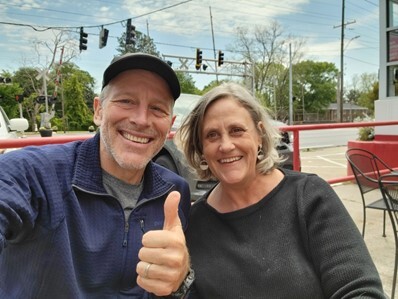
Catching up with BJ reminded me of one of the craziest stories of my life – which I've never shared before – of how I met her 14 years ago...
At the time, she was representing (on a pro bono basis) Genarlow Wilson, a promising young black man who, a few years prior in his senior year of high school, appeared to have a bright future: He was an honors student, the star of the football team, homecoming king, and on his way to becoming the first person in his family to go to college.
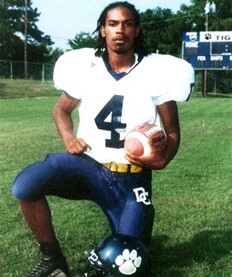
But then, at a raucous, drunken New Year's Eve party when he was 17, he had sex with a 17-year-old and received oral sex from a 15-year-old. A video of the party made its way to a local district attorney, who – under an outdated statute – charged Genarlow with aggravated child molestation, a charge intended for adult sexual predators. When Genarlow refused to take a plea deal, the DA sent him away for 10 years. It was a shocking, racist miscarriage of justice – you can read the full story here (Outrageous Injustice) and the NYT editorial about it here (Georgia's Shame).
After reading the NYT editorial, I donated $1,000 to Genarlow's legal defense fund (BJ had cleverly set up a website, wilsonappeal.com). The next day, she called to thank me – and make an extraordinary request: Might I be willing to put up $1 million in bail? As the NYT later wrote:
The offer is meant to pressure David McDade, the Douglas County district attorney, into granting bond for Genarlow Wilson, who was ordered released from prison earlier this month after a Superior Court judge ruled that his sentence was a "grave miscarriage of justice." That decision was appealed by the Georgia attorney general, which is keeping Mr. Wilson in prison until at least October when the State Supreme Court is set to hear arguments in his habeas corpus appeal. Mr. McDade has declined to set bond, saying Georgia law forbids it; Mr. Wilson's lawyer disputes that.
While it was unlikely that McDade would accept the bail offer, BJ explained, I had to be willing to wire $1 million on short notice in case he did. I didn't have that kind of money sitting around, but I told BJ I'd try to raise it and would call her back.
I committed $100,000, emailed 20 of my friends, and within a few hours got commitments for $900,000 from 10 of them (including Bill Ackman of Pershing Square and Seth Klarman of Baupost Group), so I called BJ back and told her the good news.
She then went public with our offer, and when McDade still refused to release Genarlow – as we expected – there was a media firestorm (even today, there are 2,180 results when you Google "Whitney Tilson Genarlow Wilson"). I had just flown to Sweden to speak at an investing conference, so I was fielding phone calls in the middle of the night from all sorts of media, ranging from ABC News to black radio talk shows. I still remember my favorite line I used in every interview: "Genarlow is the kind of person we should be celebrating, not incarcerating."
Fortunately, the story has a happy ending. Four months after we offered bail, the Georgia Supreme Court ruled in a 4-3 decision that the sentence was "grossly disproportionate" to the crime and freed Genarlow (though he had already served more than two years). He later went on to earn a degree in sociology from Morehouse College, got married, is a father, and now works for the city of Atlanta.
P.S. Genarlow was one of a number of guys who had sex on that fateful night with the 17-year-old, who reported to her mother the next day that she had been raped. While Genarlow was acquitted of that charge (and the 15-year-old said the oral sex was consensual), there's no doubt that he exercised extremely poor judgement (to say the least) – a common occurrence among people who are very drunk.
I wrote about the dangers of drunkenness, using what happened to Genarlow as a case study, in this excerpt from The Art of Playing Defense:
When I order a Diet Coke while others are drinking wine or having a beer, I'm sometimes asked whether I drink.
"Only to excess," I reply with a smile.
I'm only half-kidding. For whatever reason, I've never developed a taste for alcohol. Beer – yuck! I've had one in my life. To me, wine tastes like vinegar and hard alcohol like kerosene.
I do like mixed drinks like daiquiris or piña coladas, but that's only because the fruity flavors mask the taste of the alcohol.
In addition to the bad taste, alcohol is expensive and unhealthy.
For all of these reasons, I rarely drink.
But every few years, when I'm at a great party with friends, I'll drink a lot.
I've been really drunk fewer than a dozen times in my life. And, surprisingly, given how rarely I drink, I have only positive memories of these nights.
So I don't have a problem with anyone drinking – even occasionally to excess, as long as it's done safely.
But it's really important not to become a problem drinker or, worse yet, an alcoholic. Few things will destroy your life more thoroughly – it can even kill you. Over 72,000 Americans died from alcohol-related causes in 2017, up more than 100% in the past two decades and accounting for 2.6 percent of all deaths.
At a young age, I saw up close what alcoholism can do when I worked as a lifeguard for two summers at an alcoholic rehabilitation hospital in New Hampshire. Most of the "drunks," as they laughingly called themselves, had hit rock bottom, losing their jobs, marriages, etc.
Numerous studies support this anecdote. In the Harvard Study of Adult Development cited earlier, alcohol abuse was one of the major risk factors. Psychiatrist George Vaillant, who joined the team as a researcher in 1966 and led the study from 1972 until 2004, wrote that six factors predicted healthy aging for the Harvard men: physical activity, absence of alcohol abuse and smoking, having mature mechanisms to cope with life's ups and downs, a healthy weight, and a stable marriage.
In particular, he noted that "alcoholism and major depression could take people who started life as stars and leave them at the end of their lives as train wrecks." Alcoholism was the main cause of divorce among men in the study and was strongly correlated with neurosis and depression, which tended to follow alcohol abuse rather than precede it. Together with associated cigarette smoking, it was the single greatest contributor to early morbidity and death.
Even if you're not a problem drinker, much less an alcoholic, you must be careful about getting drunk because it can lead to disaster.
Let me tell you about a young guy I met years ago named Genarlow Wilson. Raised by a single mom, he grew up poor outside Atlanta. Despite attending a number of tough schools, he was doing well in high school: he was an honor student, the star of the football team, homecoming king, and on his way to becoming the first person in his family to go to college.
But then, during his senior year, he got drunk at a party and received oral sex from a young woman from his high school. One of his classmates took a video of it, which ended up in the hands of the local district attorney, who charged Genarlow with aggravated child molestation, despite the fact the girl said it was consensual and there was only a two-year age difference between them (he was 17, she was 15). He refused to take a plea deal that would have required him to be labeled a child molester for life, so, under arcane state law, he was convicted and sentenced to 10 years in adult state prison.
99% of the time, that would have been the end of the story. He would have been just one more young black man behind bars, his promising future over. But Genarlow got lucky – sort of. His sentence was so outrageous and so racist – this would have never happened to a white teenager – that a local lawyer took on the case pro bono and cleverly attracted a lot of media attention, including a New York Times editorial. After reading it, I reached out to her and, at her request, offered to post $1 million in bail. The Georgia Supreme Court ultimately ruled that Genarlow's sentence was cruel and unusual and ordered him released – but he had already served two years in prison.
A decade after that fateful night, Genarlow earned a degree in sociology from Morehouse College, and he is now married and a father – but he will never get back those two years. And it all started with getting drunk at a party.
It can be hard not to drink. All of us, especially young folks, will likely face pressure to join in. My oldest daughter, Alison, when she was a senior in high school, lost a number of friends because she didn't drink and therefore wasn't invited to their parties. That hurt her a lot – but I'm really proud of her for not succumbing to peer pressure.
In summary, I'm not telling you not to drink – nor even never to get drunk. But I am telling you to be careful where and with whom you get drunk and to stay far, far away from regular, heavy drinking.
Best regards,
Whitney