

How to Avoid – and Profit From – Manias, Bubbles, and Investor Irrationality; I'm going to live to 104
1) Entering a new year has me looking back at my long investing career...
And when it comes to mistakes, by far my biggest ones were emotional, not analytical.
I'm not alone...
Long ago, the legendary Warren Buffett said:
Investing is not a game where the guy with the 160 IQ beats the guy with the 130 IQ... Once you have ordinary intelligence, what you need is the temperament to control the urges that get other people into trouble in investing.
Ever since, I've been studying behavioral finance – better known as investor irrationality – which attempts to explain how and why emotions and cognitive errors influence investors and create stock market anomalies such as bubbles and crashes.
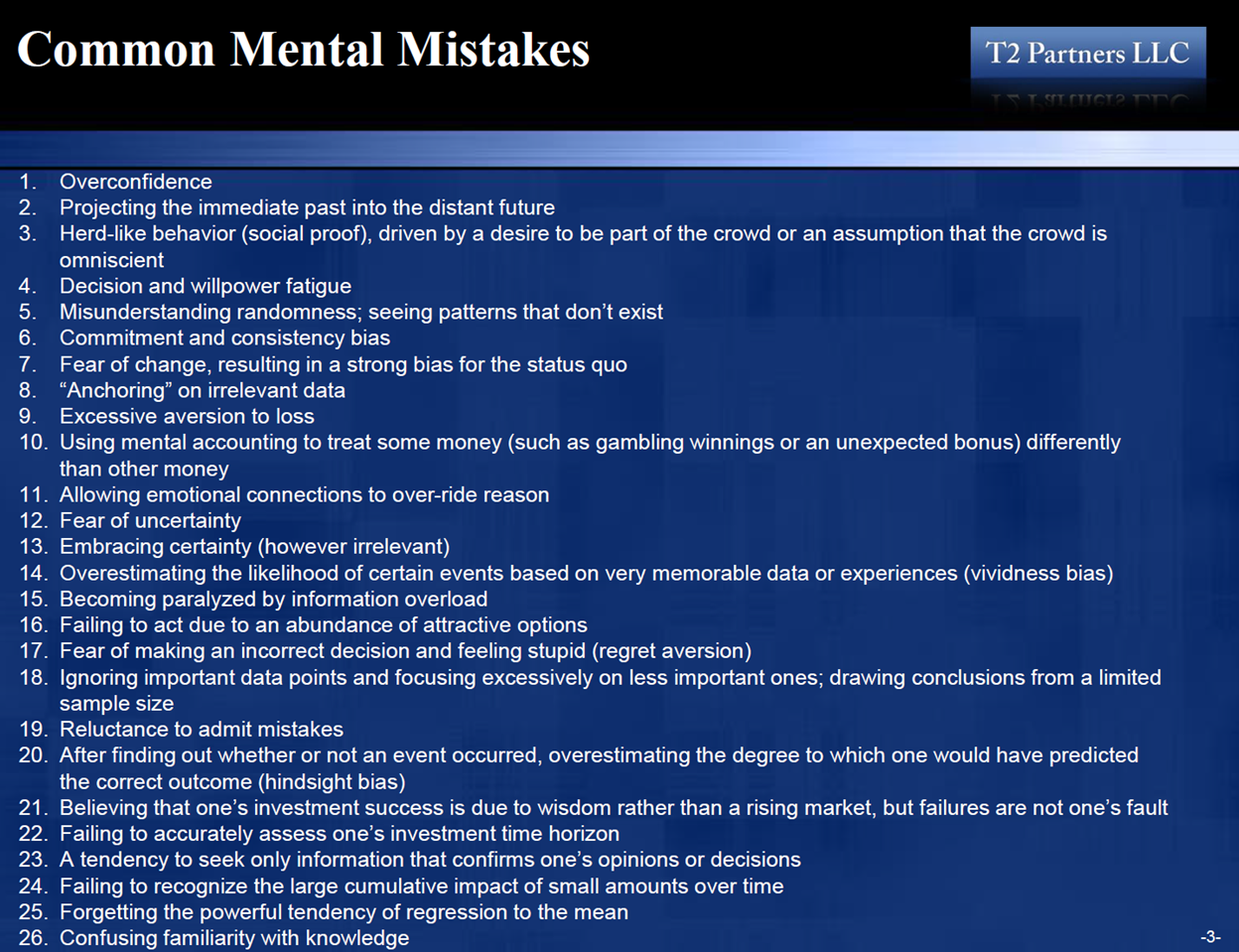
After more than a decade of studying this topic, in 2011 I put together a presentation entitled "How to Avoid – and Profit From – Manias, Bubbles, and Investor Irrationality," summarizing what I learned. I'd like to share it in a series this month, similar to what I did last month with my presentation on "Lessons From 15 Years of Short Selling."
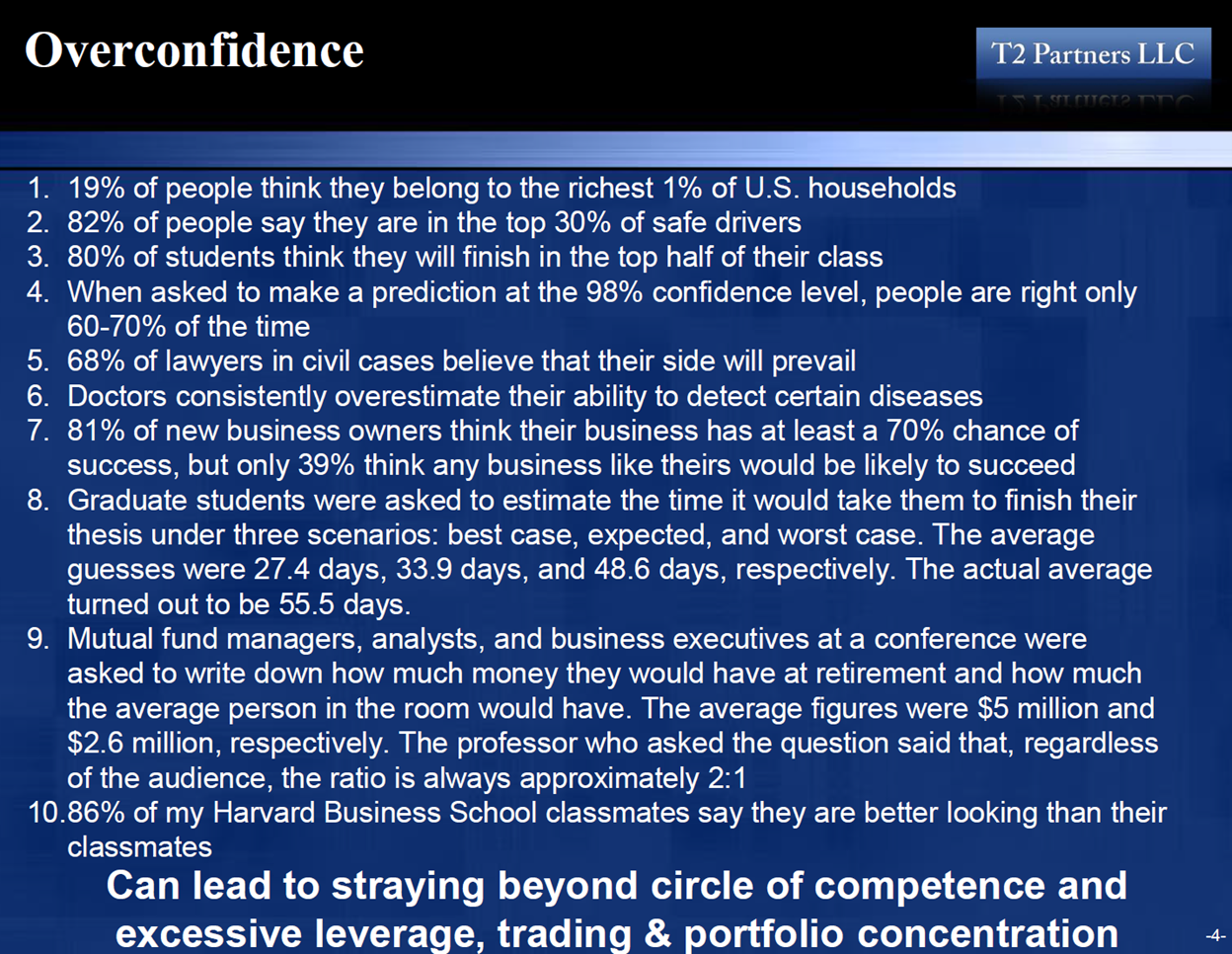
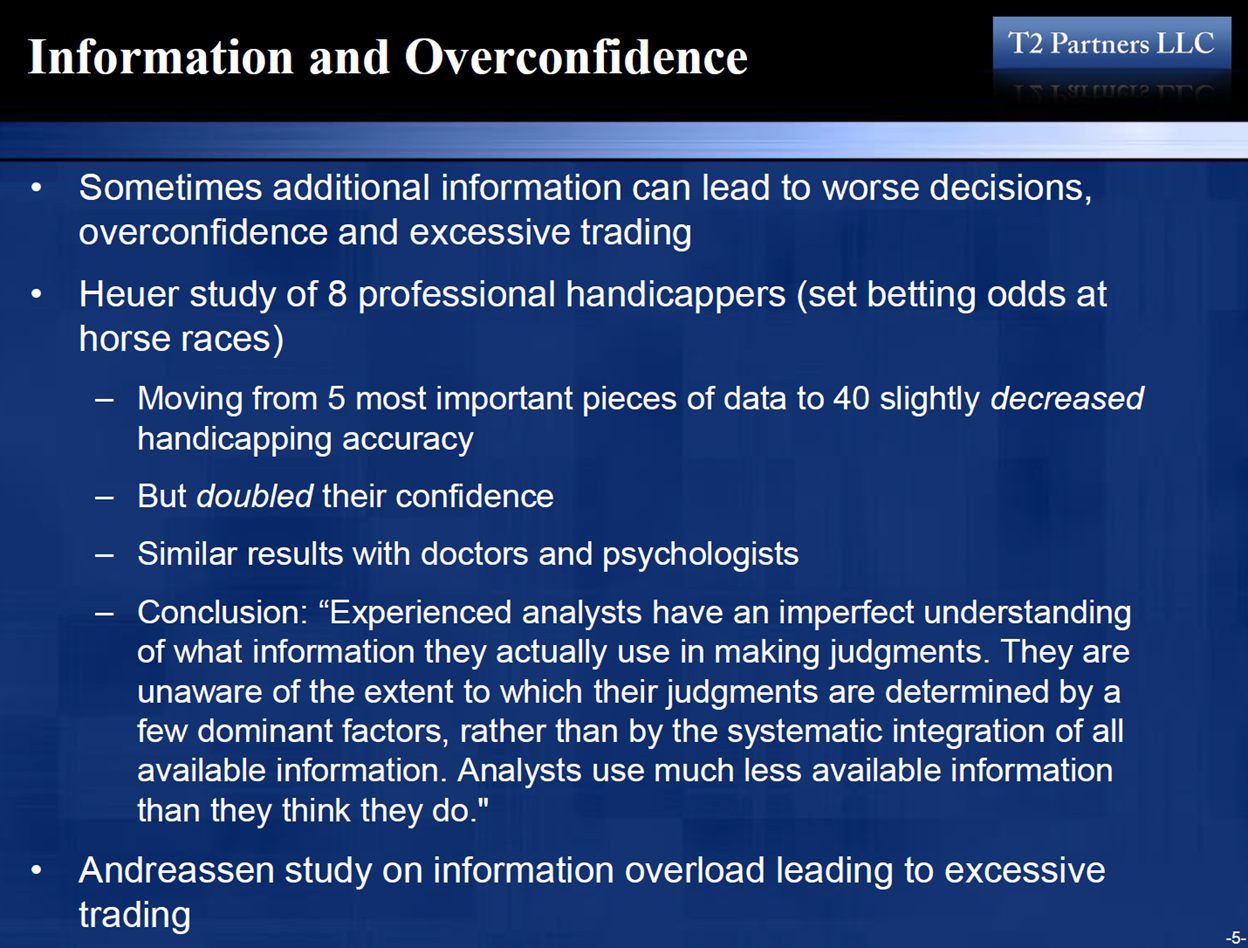
So without further ado, here is an overview of the subject and two slides on overconfidence, the biggest trap investors fall into:
2) Well, if I don't kill myself rock climbing/mountaineering, doing 24-hour races, tree skiing, biking in the city, etc., this life expectancy calculator says I'm going to live to 104:

I view this as great news, though I was shocked to read that in a recent poll of U.K. residents, "only 35% of people said they wanted to become centenarians." This is mostly because:
Older people are less likely to want to live to 100 than younger ones, perhaps because they have already had a taste of poor health, or have gone through the experience of caring for elderly parents who suffered in their later years. In the poll, fewer than one in five people thought they would have a good quality of life if they reached 100.
The life expectancy calculator says that if I want to extend my life by another year, I should use sunscreen more often and cut back on the modest amount of crappy foods and sweets I consume. Excerpt:
Ultraviolet rays present in sunlight and tanning beds greatly increase your risk of skin cancer, including melanoma. They also increase wrinkles. You are already providing some protection for yourself. Further minimizing your sun exposure could add a quarter of a year to your life expectancy.
The more you can get fast foods out of your diet the better. While you are already doing a pretty good job of doing so, completely removing fast foods from your diet could add a quarter of a year to your life expectancy.
Cutting back sweets in your diet to one to two times per week or less could add half a year to your life expectancy.
This New York Times article has advice for those planning to live past 100: If You Live to 100, You'll Need More Than Money. Excerpt:
An enlightened attitude and deliberate mental, social and physical activity during retirement also matter. That means continuing to learn new things, staying involved in the community and working to some degree.
Activity is critically important, said Mitch Anthony, a consultant in Rochester, Minn., and author of "Life Centered Financial Planning." Mr. Anthony, who trains financial planners in life planning, has found that people who embrace what he calls a "new retirementality" do best when they remain socially and mentally vibrant.
In developing a core life-planning philosophy, he said, you will have to ponder answers to three questions: "What do you want out of life, what gives you joy, and how do you pay for it?"
Purpose and meaning throughout life are important, many researchers agree, although it's hard to pin down on how they improve longevity. One study, published in 2013, suggests that these factors may offer a mental and possibly physical breakwater for life's many travails.
"Having purpose in life may motivate reframing stressful situations to deal with them more productively, thereby facilitating recovery from stress and trauma," the researchers found...
Living a long life still requires a solid nest egg and the ability to withstand any number of financial and other shocks. The financial piece is aided by countless online tools and professionals. Online calculators can help you estimate your retirement income and tweak your portfolio to adjust risk or improve returns. Working with a fee-only certified financial planner (who doesn't work on commission) can also help you create a plan.
For now, Hoyt and Rizzo are following the longevity planning script. "We see ourselves maintaining strong connections with our community, friends, and family, laughing every day," Ms. Rizzo said. "Not 'acting our age,' trying new experiences, big and small – and always learning."
Best regards,
Whitney
P.S. I welcome your feedback at WTDfeedback@empirefinancialresearch.com.