

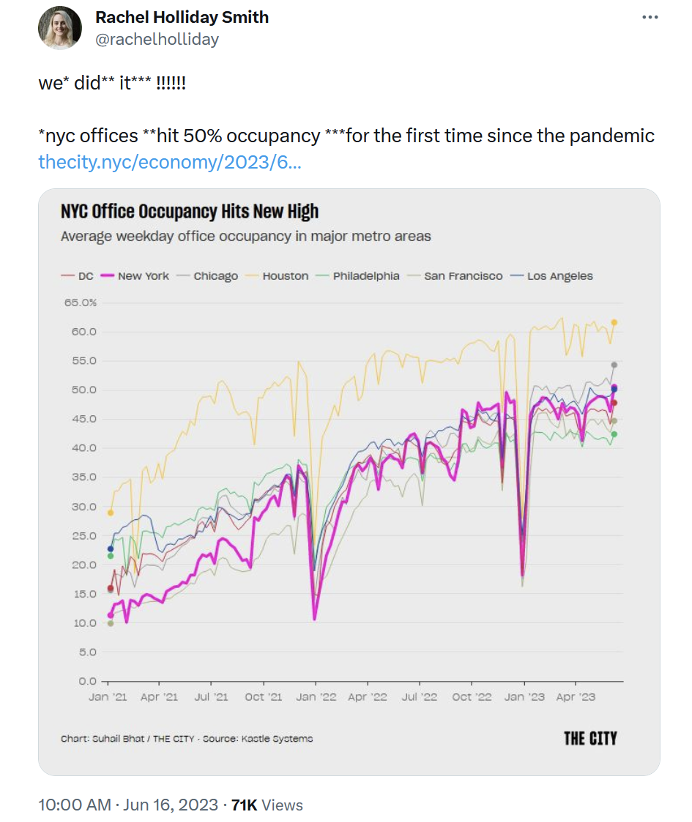
NYC offices back to 50% occupancy; Weakness in the NYC commercial real estate market; Florida Is Losing Its Affordability Edge; The S&P 500's best start to a year since 1997; Inflation expectations down; Ukrainian children's art exhibition and auction opens today
1) Here's a glimmer of good news regarding New York City's recovery from the pandemic:
2) That said, NYC's commercial real estate market remains in a deep depression.
For more on this, here's an excerpt from the latest missive by former New York City hedge fund manager Eric Rosen, who has retired in Florida and writes an interesting blog, The Rosen Report:
I met with a real estate executive in NYC last week, and he told me some interesting details about the commercial market which are outlined below.
- Historically there are approximately $60-$80 billion of commercial sale transactions in NYC. The worst years saw $12-$18 billion, but so far this year it's been less than $1 billion.
- Retail rents on Fifth Avenue, upper Madison Avenue, and desirable locations in SoHo historically were as high as $3,000 per square foot and inline retailers could expect $500-$800. It's now hovering in the $200's.
- While class A office buildings continue to push high rents for office space (1 Vanderbilt, 1 Madison, Hudson Yards) of high $100's to $200/psf, there is an exodus from class B and class C office buildings.
- New York City's office vacancy is reportedly 18% but more realistically closer to 28% when you factor in shadow vacancy (space leased to tenants but not being occupied or used (e.g. Deloitte, PWC, Meta who have reported space is being held as "non-operational" real estate).
- The high-end class A office buildings (approximately 60 across the city) are a small percentage of the total inventory but represent 80% of all new office leases in the past two quarters.
- Of the 475 million square feet of commercial space in NYC, there is likely 100-150 million square feet of obsolete office space.
- The praised "residential conversation" play is only applicable to approximately 3% of this inventory given high costs for conversions, the continuous rise in construction costs, and the regulatory environment.
- Operating costs for office buildings continue to rise and taxes have risen an average 7-8% annually over the past 10 years, making base-year adjustments for owners exponentially higher than any potential rent growth they could achieve. The higher taxes take place despite materially lower valuations.
- Blackstone has handed back the keys to lenders on approximately $2.5 billion of office buildings across their portfolio in NYC, Las Vegas, Chicago, and California. Brookfield has done the same.
- There are now close to $1 billion worth of buildings being marketed by lenders as "deed in lieu" as the equity holders have handed back the keys (see Metropolitan Tower, 61 Broadway (RXR), 1740 Broadway).
I think the work-from-home phenomenon is here to stay, so commercial real estate across the country will remain under pressure for years.
This means that investors in bank stocks will need to carefully evaluate each bank's exposure to this sector – something we did at Empire Investment Report before recommending a basket of six regional bank stocks in our last two issues.
You can subscribe to the Empire Investment Report and get immediate access to our entire archive of back issues here.
3) Eric also shared some insights on the Florida residential housing market:
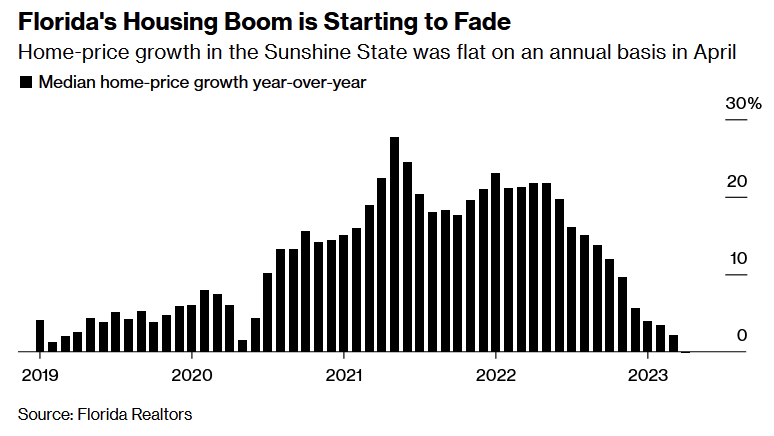
Florida Is Losing Its Affordability Edge After Drawing a Flood of New Arrivals. Excerpt:
A stampede of Northeasterners in search of sunshine and cheaper living sent Florida's housing market into a frenzy through the pandemic. The manic demand is finally starting to wane.
Single-family home prices in Florida have flattened for the first time since 2011, after climbing almost 50% in the past three years. Inbound moves are slowing and soaring mortgage rates and insurance premiums have eroded one of the Sunshine State's most alluring attributes: affordability.
"The fact that Florida is getting more expensive is making it less attractive to homebuyers," said Daryl Fairweather, chief economist for Redfin Corp. "It becomes a concern for people trying to fix their monthly housing expenses."
The pullback in Florida, while still moderate compared with downturns in once-hot Sun Belt areas like Phoenix and Austin, shows the limits of a pandemic boom that has priced out locals and inflated the cost of entry for newcomers. One top destination for New Yorkers heading South – Miami – is now the most-unaffordable metro area in the US, according to May data from RealtyHop on homeownership expenses relative to incomes.
Eric concludes:
Despite the sharp increase in housing costs in South Florida, I still feel the cost of living, quality of life, and pro-business policies are much better than the major alternatives.
Eric and I respectfully disagree about the relative merits of New York City versus southern Florida. He thinks NYC is a crime-ridden hellhole, but I love it here. NYC has its problems, to be sure, but I think it's the greatest city in the world and wouldn't trade it for anything!
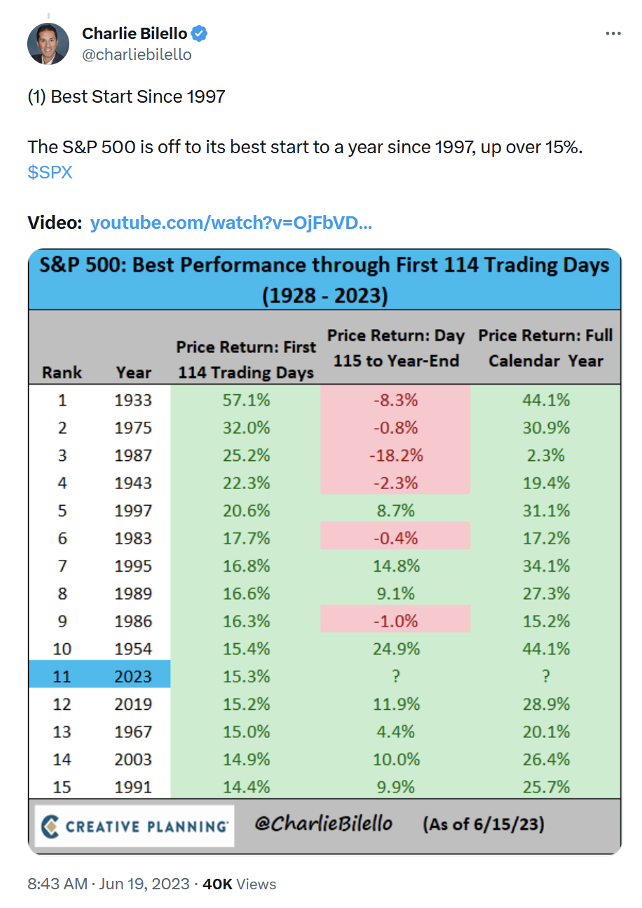
4) Here's Charlie Bilello with a Twitter thread highlighting what a great year for stocks it's been:
Almost no "experts" predicted this, as Bilello notes:
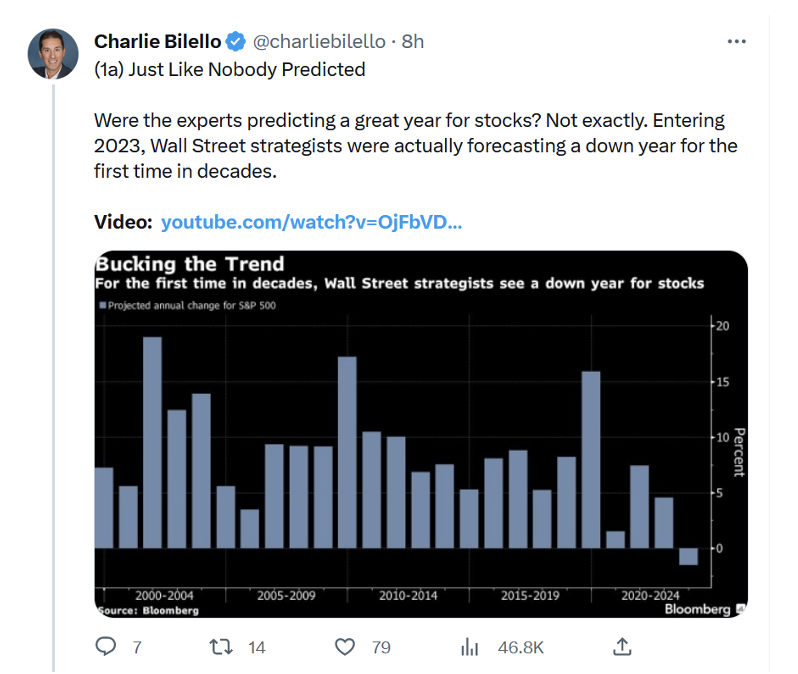
In contrast, I've been bullish all year, starting in my January 13 e-mail when I wrote that I was "reasonably bullish" and estimated that "the market could rise 15% to 20% this year."
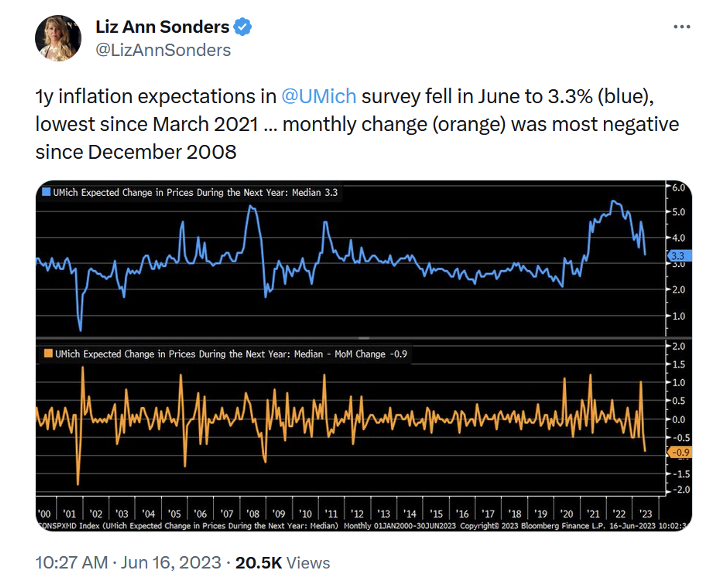
5) I continue to be moderately bullish, in large part because I think the Fed is finished tightening thanks to falling inflation. Here's another data point about that:
6) Following up on Friday's e-mail about the Ukrainian children's art exhibition and auction I've organized to raise money for Ukraine, yesterday we hung all 92 pieces at Franklin Parrasch Gallery (19 E. 66th Street) and they look fantastic!
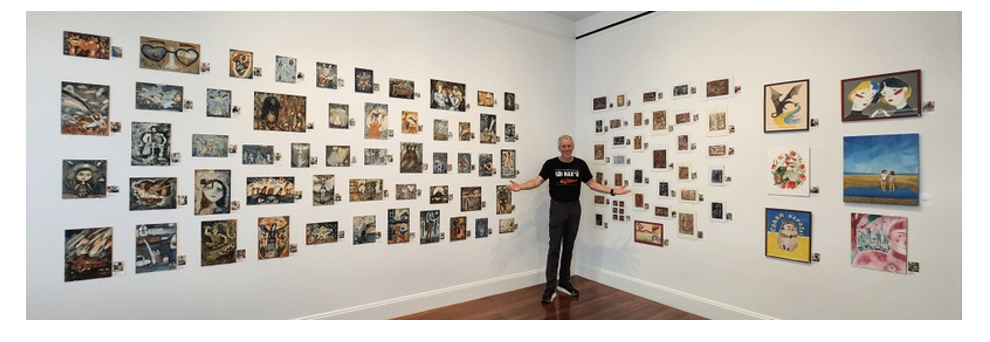
I've posted close-ups of my favorite artworks on Facebook here.
If you're in NYC, you can stop by and see the exhibition in person anytime from 11 a.m. to 6 p.m. until Thursday. Franklin is a close friend and is generously donating his space.
We will host a cocktail reception at the close of the exhibition on Thursday from 6-8 p.m., which is free and open to all. I'd like to pack the gallery, so please come and feel free to share this invitation with anyone you think might be interested in attending. To RSVP, go to this page, and click the "Donate & Tickets" button (there is no charge, but we'd like to know how many people are coming).
If you can't make it to the gallery this week, you can see the 92 artworks and bid on them here. The minimum bid is only $100.
The auction will end at 8 p.m. on Thursday. If you don't want to wait until then, or fall in love with a particular piece, or simply want to make a fixed donation, I've established "Buy It Now" prices of $500 for each of the 34 prints, $1,000 for the 50 drawings, and $2,500 for the eight largest ones. (We've already sold five pieces for $6,000.)
I hope to see you on Thursday!
Best regards,
Whitney Tilson
P.S. I welcome your feedback at WTDfeedback@empirefinancialresearch.com.