

Pandemic dashboards for the U.S. and world; We're No. 1 in COVID Resilience Ranking; Africa and South America are hot spots; Vaccination dashboards for the U.S. and world; Articles
I continue to closely follow the pandemic, sending lengthy e-mails to my coronavirus e-mail list roughly once a week. If you'd like to receive them, simply send a blank e-mail to: cv-subscribe@mailer.kasecapital.com.
Below is the e-mail I sent yesterday...
1) In a shocking reversal of fortune, the wealthiest countries, which suffered the most in the first year of the pandemic, are nearly fully recovered and back to normal... while developing nations, especially those in South America and Africa, continue to suffer widespread sickness, death, and economic devastation.
This is almost entirely due to the miraculous vaccines, which are widely available in the U.S. and Europe... but less so in the rest of the world (see further discussion below).
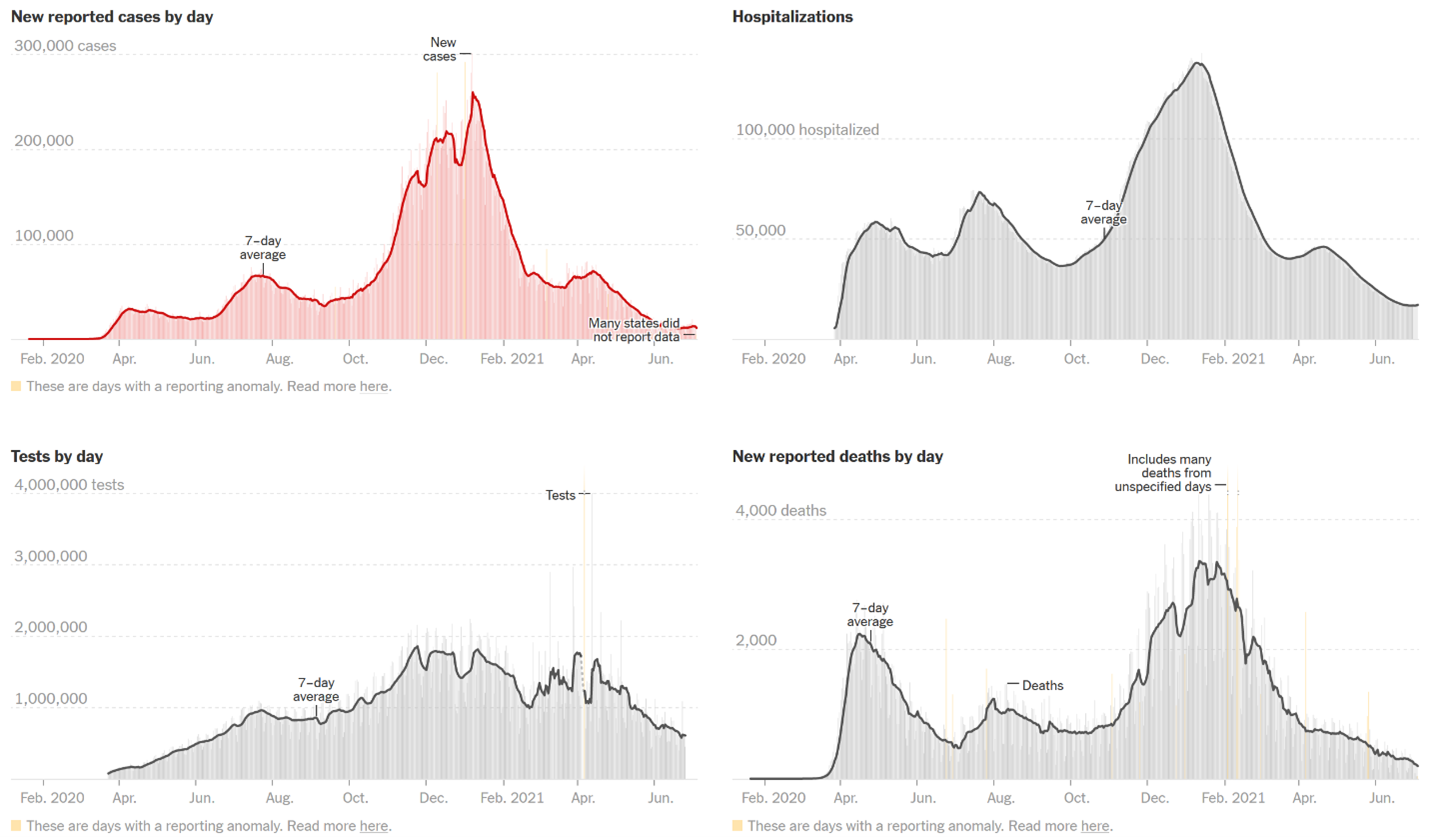
Exhibit A of what's happened is the U.S. These charts show the latest data. Cases are steady at around 12,000 per day, while deaths per day are down to around 200 – both are down roughly 95% to their lowest levels since the start of the pandemic (source):
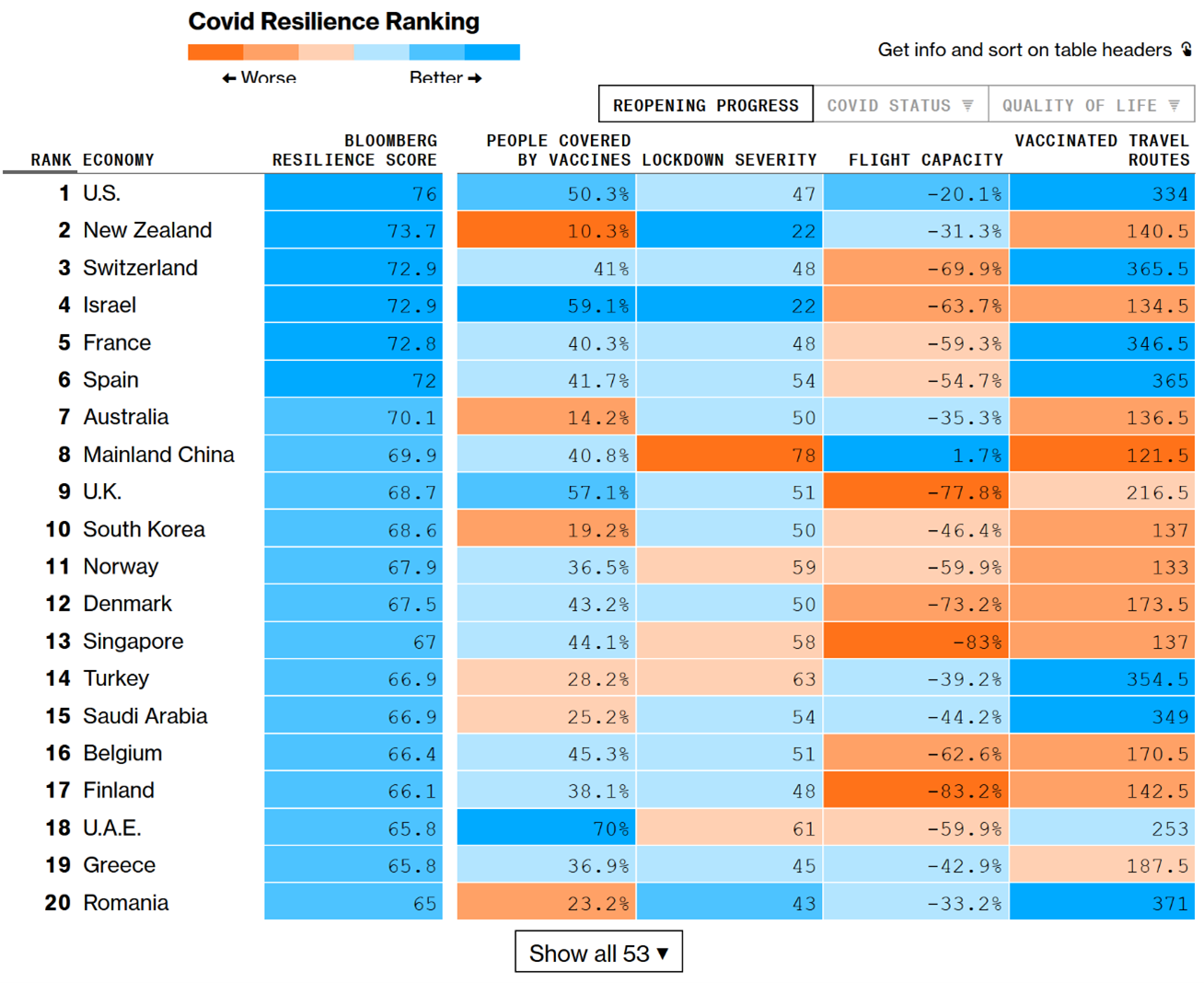
2) Given where we were during the first year of the pandemic, our turnaround is nothing short of astonishing! According to Bloomberg's "COVID Resilience Ranking," the U.S. is now ranked No. 1 in the world. Excerpt:
Almost a year and a half into the pandemic, the best and worst places to be in the COVID-19 era are increasingly defined by one thing: normalization.
The biggest vaccination drive in history is enabling parts of the globe to abolish mask mandates, relax restrictions and dismantle border curbs, making the magnitude of reopening key to quality of life. Taming cases and deaths was once paramount, along with ensuring a robust health-care system. Now, the ability to essentially turn back the clock and return to pre-pandemic times is taking on an even greater significance.
Central to that is an economy's openness to the world, and that's why we've introduced a new element – Reopening Progress – to Bloomberg's COVID Resilience Ranking. Two new metrics capture the ease of moving in and out of a place and how much air travel has recovered, alongside our 10 other measures tracking mortality rates to infection counts, freedom of movement to economic growth.
This pivot has ushered in dramatic changes to the ranks. The U.S. is now No. 1, with its fast and expansive vaccine rollout, dominated by the highly effective Messenger RNA shots, stemming what was once the world's worst outbreak.
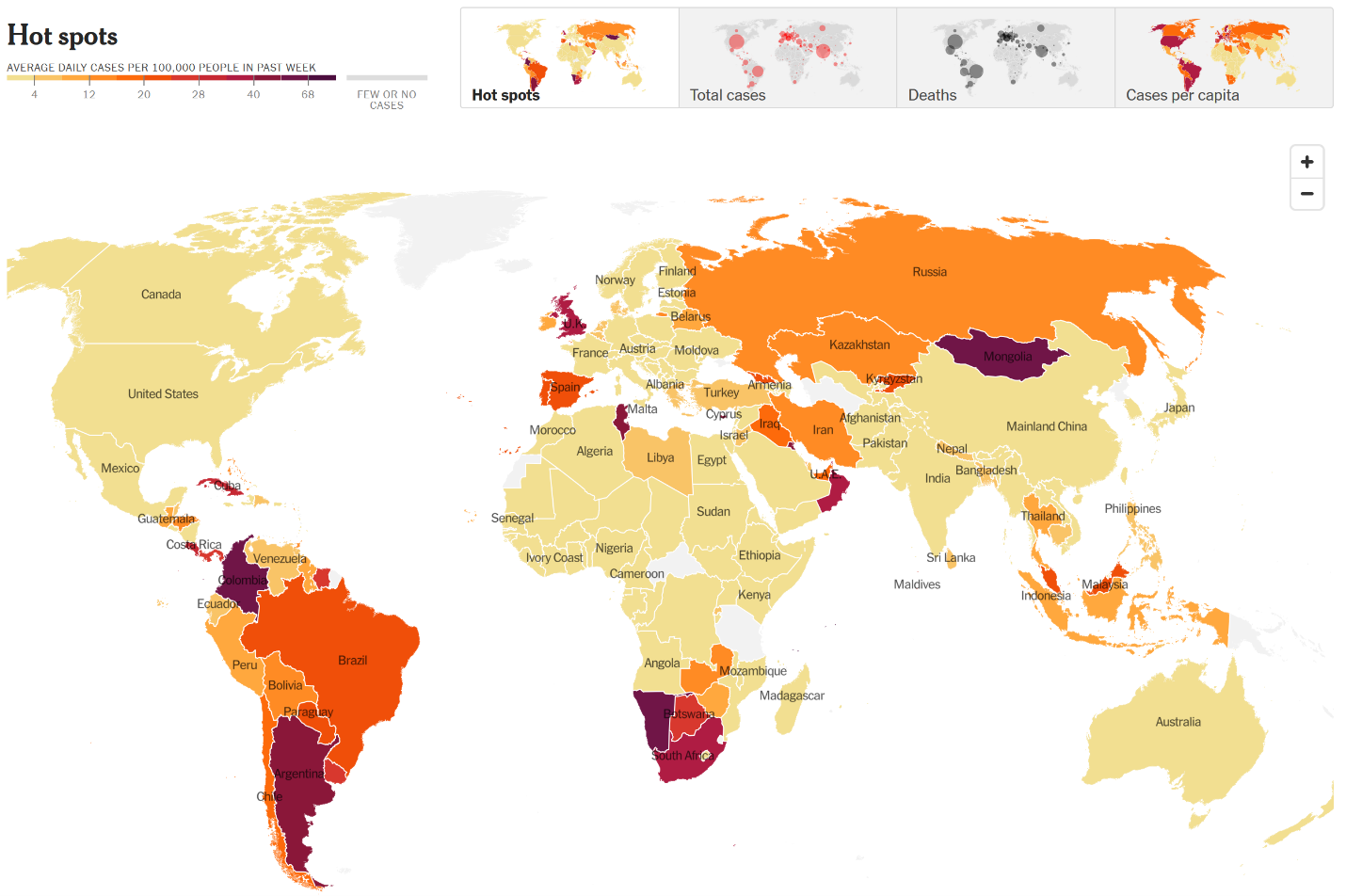
3) This chart shows the hot spots around the world, which are concentrated in South America and southern Africa (source):
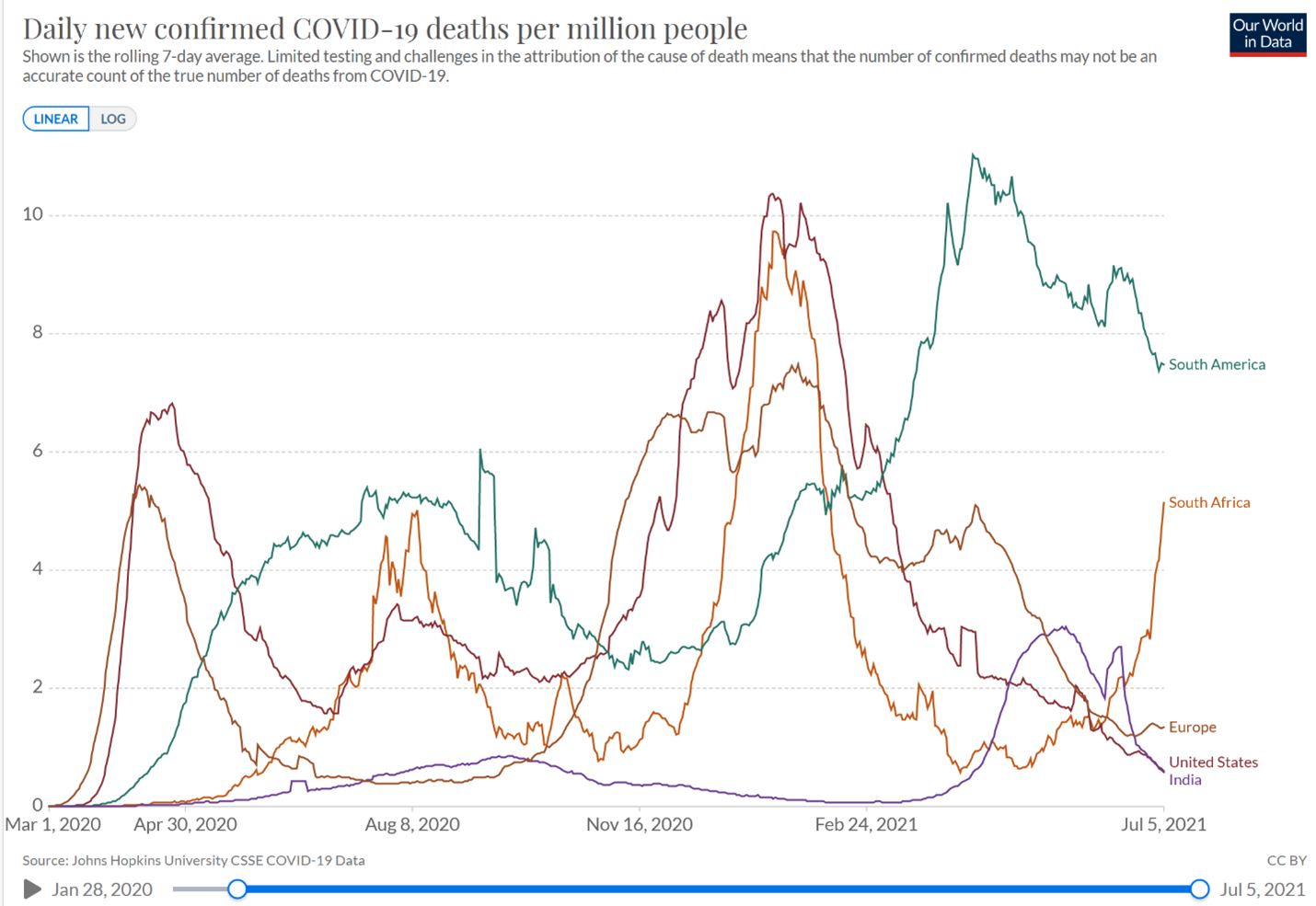
Here's another chart showing daily deaths per capita in the U.S., Europe, and India (where the numbers are excellent) versus South America and South Africa (where things are grim) (source):
4) Note that most of Africa looks OK on the map, but that's mostly due to poor reporting in most countries (other than South Africa). In reality, much of Africa is getting walloped, as this article highlights: As the Rich World Moves On, Africans Face Repeated Virus Waves. Excerpt:
While the attention in much of the developed world is turning to post-pandemic issues of easing restrictions, vacations and a return to normal, Africa is in the grip of a crippling third wave of infections and bracing for a fourth – and maybe even a fifth.
As the more contagious delta variant starts to spread across the least-vaccinated continent, cases are rising, hospitals are being overrun and deaths are mounting. With little prospect of a significant proportion of Africans being vaccinated in coming months as rich nations continue to hoard shots, epidemiologists expect another wave of disease will follow before the end of the year. That carries the risk of more vaccine-resistant variants developing, endangering not just Africans but also the rest of the world.
"This third wave is going to be devastating because in Africa and South Africa we couldn't get access to vaccines when we needed them most," said Tulio de Oliveira, director of Krisp, a South African genetic-sequencing institute. "If we don't get vaccines in the next couple of months we risk another devastating wave, not only in numbers but in lives."
Africa remains woefully under-vaccinated, with only 1.1% of the continent's 1.2 billion people having gotten a jab compared with about 50% of the populations of the U.S. and the U.K. that are fully inoculated. Only 50 million of the more than 3 billion doses of vaccines that have been administered globally have been in Africa, according to the Africa Centres for Disease Control and Prevention, and the effects of that are becoming apparent.
Cases are doubling every three weeks, and the continent is on the verge of exceeding its worst week of the pandemic. On Friday, the number of South African daily coronavirus infections surged to a record. Cities from Johannesburg to Kampala have been forced to lock down and intensive care units are overflowing. In the continent's poorer countries, patients are dying because of a lack of oxygen and health-care workers are overwhelmed, with nurses looking after as many as 40 patients each.
5) The story is similar in South America: South America Is Now the World's COVID-19 Hot Spot. Excerpt:
While COVID-19 is receding in much of the world, the pandemic is raging in South America, which has just 5% of the world's population but now accounts for a quarter of the global death toll.
Almost a million people have died across 12 countries in the region. Amid another devastating surge, Brazil surpassed 500,000 this past weekend, with the virus killing seven times as many people per capita each day than in hard-hit India. Colombia and Argentina, which together have 95 million people, are tallying three times as many deaths each day as all of Africa. Of the 10 countries around the world with the highest daily death rates per capita, seven are now in South America. Collectively, the region's death rate per capita is eight times the world's rate.
Several factors explain why: a slow rate of vaccination, the spread of new COVID-19 variants, crowded cities, weak health care systems, far higher rates of obesity than in Africa and Asia, and some governments that largely gave up trying to control the virus.
In short, the world urgently needs to flood Africa and South America with vaccines!
6) Despite a wrong-headed, harmful anti-vaccine movement, the U.S. has done an excellent job vaccinating its citizens, with 55% having received at least one dose, as these two charts show (source):
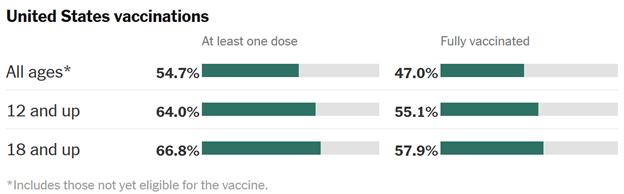
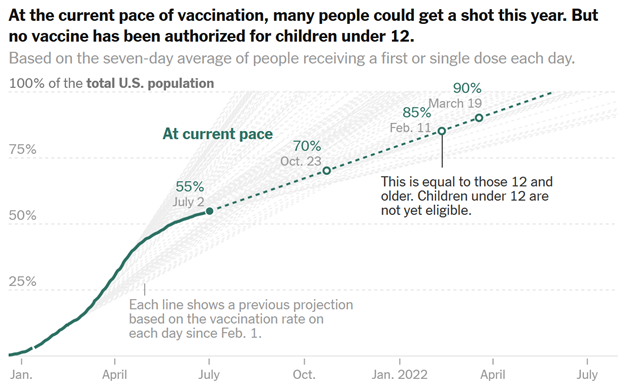
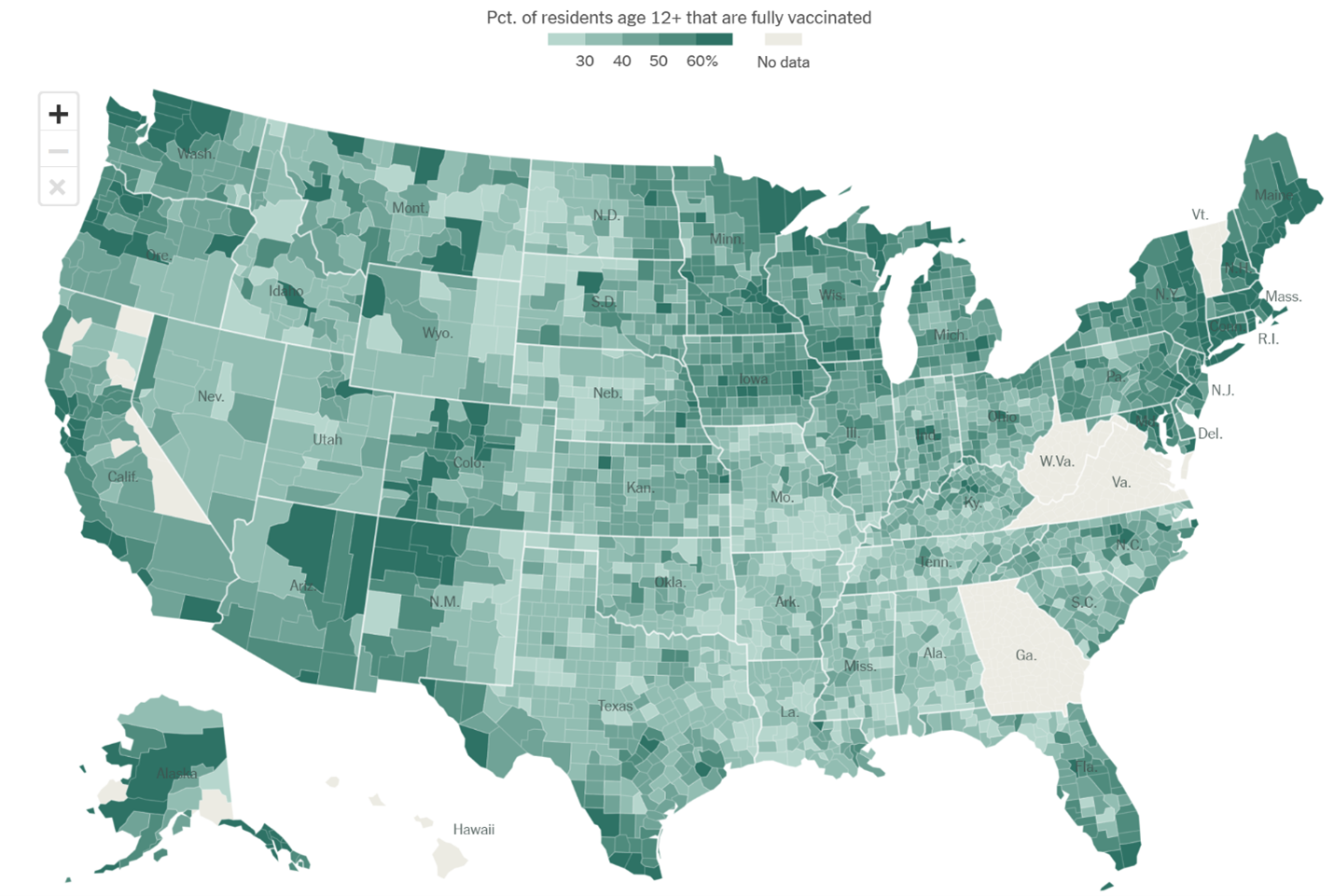
7) The vaccination rate variation by state is highly politicized: The 21 states with the highest vaccination rate were blue in the last election (Nebraska was the top red state), whereas the lowest eight states (and 18 of the bottom 19 – the lone exception was Georgia) were red. Here's the U.S. map (source):
8) The U.S. continues to lead major countries in the percentage of its citizens who've been vaccinated, with most of the rest of the world catching up – with the tragic exception of Africa (source):
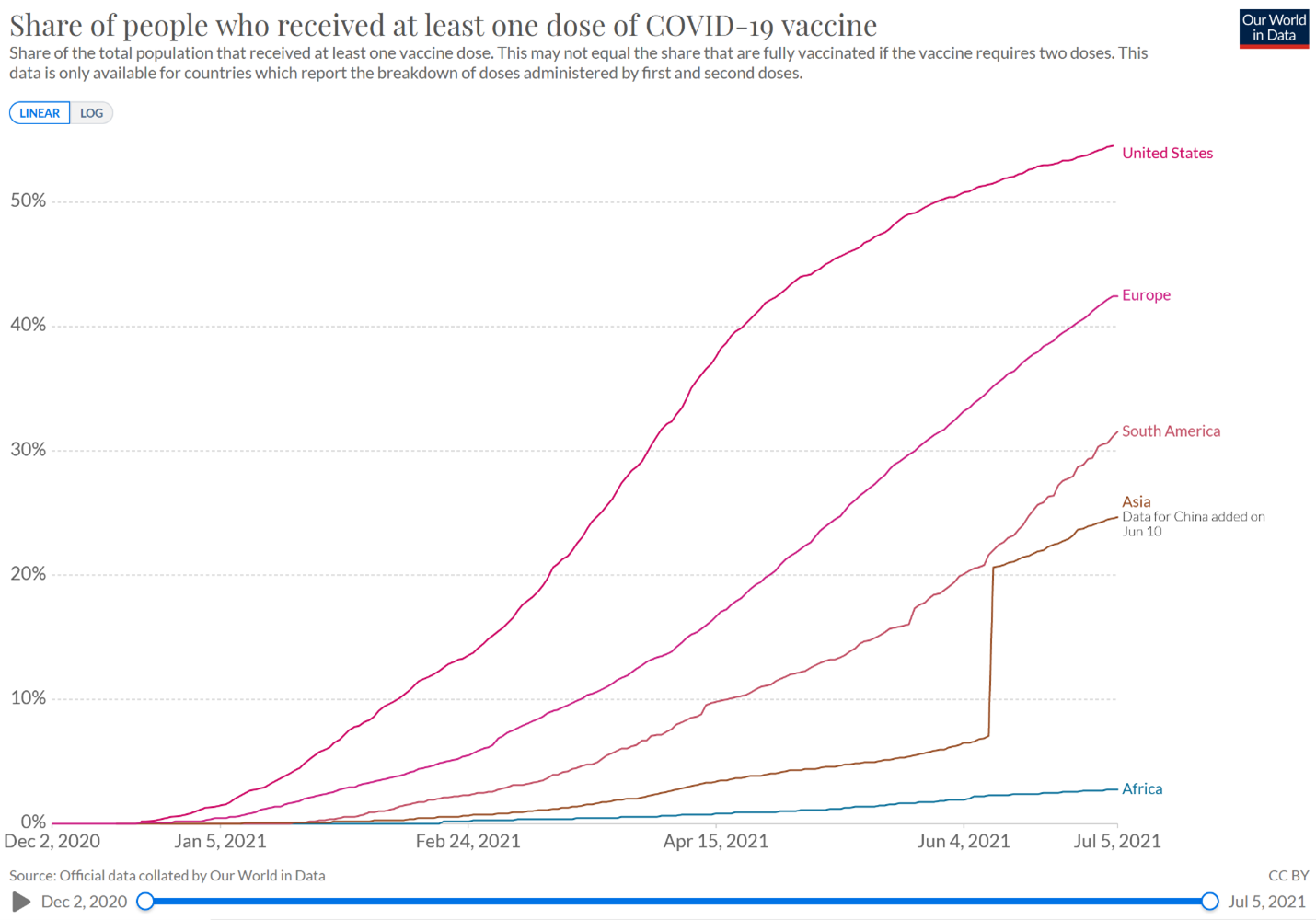
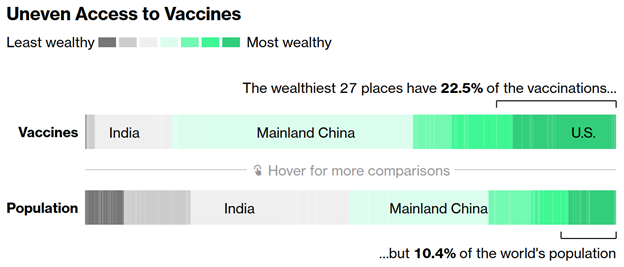
As this chart shows, the wealthiest 10.4% of the world's people have received 22.5% of the vaccinations – and the situation is even more extreme if you exclude China's vaccines (source):
9) Here are the most interesting articles I've read about COVID-19 and the pandemic over the past month:
- Nearly all COVID deaths in U.S. are now among unvaccinated
- Why Is There Such a Gender Gap in COVID-19 Vaccination Rates?
- See Which States Are Falling Behind Biden's Vaccination Goal
- Bloomberg's tracker shows which states are making the most week-by-week progress in closing their racial vaccination gaps.
- The Straightforward Economics of Vaccine Lotteries
- A third dose of COVID vaccine may help protect immunocompromised patients, small study suggests
- Good news: Mild COVID-19 induces lasting antibody protection
- Many Post-COVID Patients Are Experiencing New Medical Problems, Study Finds
- New COVID study hints at long-term loss of brain tissue, Dr. Scott Gottlieb warns
- Distorted, Bizarre Food Smells Haunt COVID Survivors
- How should Delta change the way parents think about COVID?
- Teens Are Rarely Hospitalized With COVID, but Cases Can Be Severe
Best regards,
Whitney