

Three final lessons on shorting; Study: many of the 'oldest' people in the world may not be as old as we think; Off-road jeep tour near Ushuaia, Argentina; Boarding the boat for our 12-day trip to Antarctica
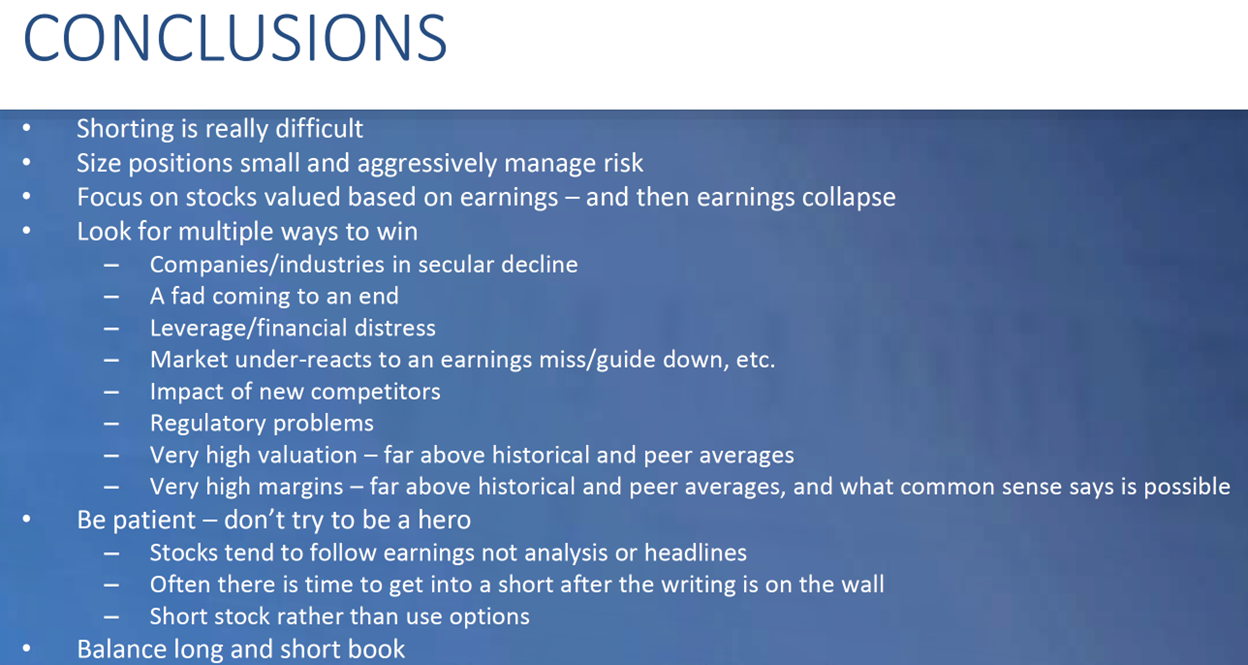
1) Continuing where I left off in yesterday's e-mail, here are the last two slides from my presentation on "Lessons From 15 Years of Short Selling":

2) A fascinating study that debunks the claims of the vast majority of supercentenarian claims – and teaches something about statistics: Study: many of the "oldest" people in the world may not be as old as we think. Excerpt:
In other words, as soon as a state starts keeping good records of when people are born, there's a 69% to 82% fall in the number of people who live to the age of 110. That suggests that of every 10 supposed supercentenarians, seven or eight of them are actually younger than that, but we just don't know it because of poor record-keeping.
This doesn't mean that any of these false supercentenarians are lying. It could be that they lost track of their age a long time ago, accidentally double-counted some years, or were told the wrong birth year. But it does mean that the majority of people claiming to be supercentenarians, born in areas that didn't keep reliable, accurate birth records, are probably not quite as old as they say they are.
As a result, most of the studies we've conducted on them – trying to divine the secrets of old age from genetic tests and diet surveys – may be no good. But this isn't just a funny little accident of old-age science: It actually illustrates a serious challenge in science...
It seems likelier, the paper concludes, that many – perhaps even most – of the people claiming to reach age 110 are engaged in fraud or at least exaggeration. The paper gives a couple of examples of how this might come about; some of it might be reporting error, and some of the supercentenarians might be produced by pension fraud (someone might be claiming a dead person is still alive for pension benefits, or claiming the identity of a parent or older sibling)...
The paper still needs to undergo peer review, but if its findings hold, it does illustrate an interesting statistical phenomenon: When you're looking for something exceptionally rare, your data set will be dominated by errors and false positives. For example, if you're looking for a disease that affects only one in a million people, and your test for the disease is 99.99% accurate, then it'll turn up 100 false positives for every true positive. Even though you used a highly accurate test, most of your "positives" don't have the disease!
Similarly, supercentenarians are extremely rare. Only about one in 1,000 people who live to the age of 100 make it to 110. The vast majority of people would never impersonate their parent or older sibling for benefits, or forge a birth certificate, or participate in identity theft, or get confused about how old they even are. But if one in 1,000 people would do that, then fraudulent supercentenarians will be more common than bona fide supercentenarians. When you're looking at an exceptionally rare phenomenon, you have to be exceptionally careful – or you'll mostly find yourself studying something else entirely.
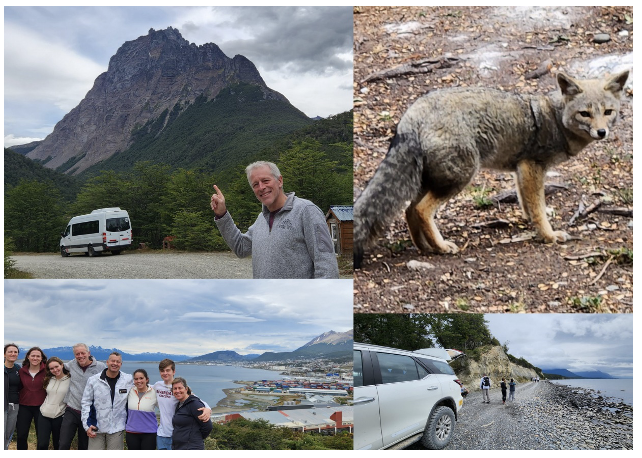
3) Yesterday we took a bus to a nature reserve in the lakes region near Ushuaia and took this off-road jeep tour. We saw a fox and a peak I'd like to climb someday! Here are some pictures:
4) As you read this, my family and I are boarding this 50-cabin small ship, the Plancius:

We're embarking on a 12-day trip to Antarctica (here's a website with details) – two days across the Drake Passage each way, which will give us eight days along the continent, with daily trips to hike, snowshoe, and kayak to see the scenery, penguins, and seals.
I don't expect to have a fully reliable Internet connection, so I'll share pictures from the trip after my return on January 3.
Also, note that Empire's offices will be closed tomorrow and Monday, so look for my next daily on Tuesday, December 27.
Merry Christmas and Happy New Year!
Best regards,
Whitney
P.S. I welcome your feedback at WTDfeedback@empirefinancialresearch.com.