SpaceX IPO: This Rocket Company Aims for One of the Largest IPOs Ever

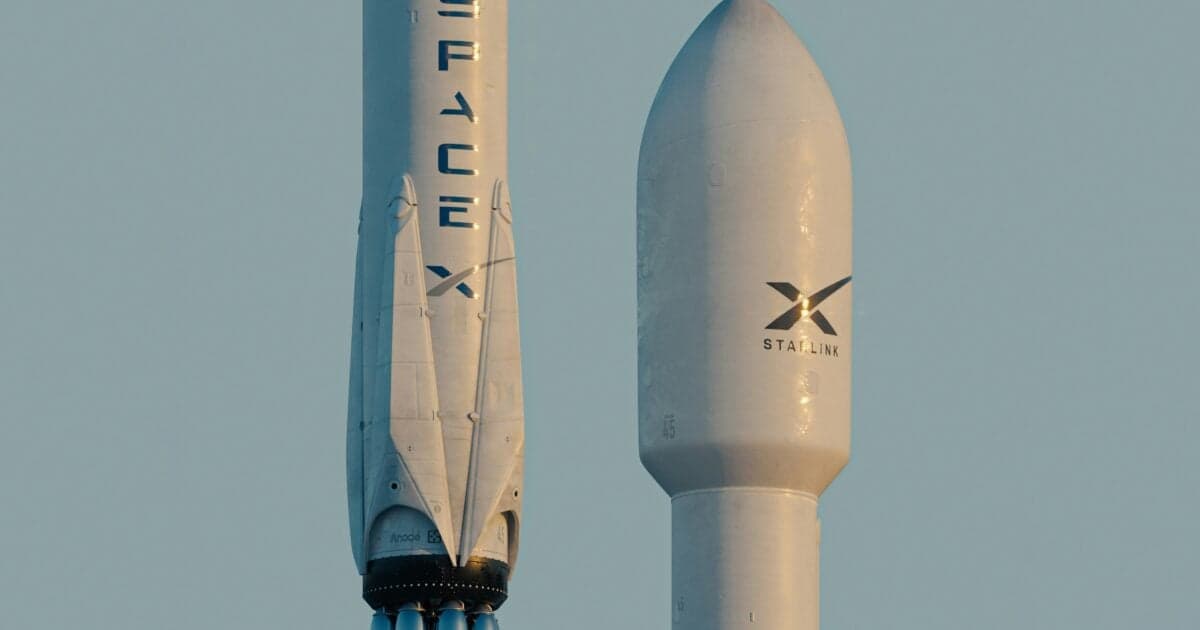
SpaceX is planning a big event in 2026... splashing into the public markets with an IPO.
The company is reportedly targeting a valuation that would make it nearly the largest-ever IPO by total market cap. (Founder and CEO Elon Musk likes to do it big, it seems.)
Musk is aiming for a $1.5 trillion valuation at IPO. The company plans to raise more than $30 billion from the offering, according to a recent Bloomberg report.
An IPO wouldn't happen before late next year. And it could well slip into 2027, depending on the health of the bull market and how interested the market is in IPOs next year.
However, while we can't know for certain when – or if – a SpaceX IPO will happen, the move could take advantage of a stock market that has been on a long winning streak. After all, the S&P 500 Index is about to close out its third straight year of gains in 2025.
After years of downplaying a SpaceX IPO, Musk seems to have had a sudden change of heart. That's probably because a hot stock market gives Musk plenty of incentive to get a deal done now – especially if he wants to debut with a bang.
The big question for investors, though, is what SpaceX is actually worth...
Is it reasonable to place the company among the world's most valuable, despite the fact that it brings in much less revenue? And does a $1.5 trillion valuation leave any upside for investors?
Here are a few big things for investors to know about SpaceX...
SpaceX's big plans: What does SpaceX do?
SpaceX may be best known for its rocket launches, even if some of them admittedly fizzle out. But its businesses include a range of operations – some current, and some moonshots still in development:
- Starlink satellite Internet
- Rocket launches (via its semi-reusable Falcon 9 rockets)
- Various contracted projects, including developing a lunar lander and new spacesuits
- Starship, a development-stage, fully reusable launch vehicle
- AI data centers in space (planned)
Musk has even touted Moonbase Alpha – a permanent settlement on the moon – and missions to Mars as future goals.
Undoubtedly, those big plans capture a lot of people's imaginations. Moonbases? Trips to Mars? Those are the stuff of dreams – precisely the areas where Musk is good at keeping investors focused on the future.
But even the nearer-term plans – such as AI data centers in space – are ambitious.
These data centers would use modified Starlink satellites to handle the processing. Google is currently running tests to find out if its tensor processing units ("TPUs") – advanced chips optimized for AI – can handle the radiation and harsh environment of space.
All in all, SpaceX will need to clear several engineering challenges to keep these data centers running smoothly off-world.
SpaceX also has a multibillion-dollar agreement with NASA to rocket a crewed mission to the moon. But SpaceX's lunar lander project has fallen years behind schedule, with setbacks – and dramatic explosions – along the way. And SpaceX still needs to crack refueling in orbit for the mission to succeed.
But Musk's vision for the company isn't all pie in the sky. For one thing, SpaceX is actually profitable today, according to analysts' estimates...
Starlink is a huge driver of revenue, and has been growing strongly. Starlink revenues are estimated to have nearly doubled to $8.2 billion in 2024, with customers up 100%, per Payload Space.
And Payload says the company has generated operating profits, estimated at $4.5 billion in 2024.
So unlike many private companies of similar market cap, SpaceX is already turning a profit.
SpaceX: What is the stock really worth?
A $1.5 trillion valuation may seem like a long shot. But SpaceX's last two "valuation events" may make it seem more tenable. Still, those valuations are different from the typical fundraising of private companies. So let's dig in a little bit.
SpaceX may tout its rising valuation in the last few events, which saw its numbers soar:
- July 2024: A $210 billion valuation
- December 2024: A $350 billion valuation, based on a tender offer for $1.25 billion in stock (of which SpaceX bought $500 million worth)
- July 2025: A $400 billion valuation, based on a tender offer for $1 billion in stock (of which SpaceX bought an unspecified amount)
- December 2025: An approximately $800 billion valuation, based on a tender offer in which the company and other investors would buy $2.56 billion in stock from insiders
In a tender offer, the company buys shares back from insiders, including employees who have earned them as part of their compensation package.
Compare this to the last few fundraising rounds of another big-name AI company, Anthropic, which is likely to conduct an IPO in 2026:
- November 2024: Raised $4 billion at a $40 billion valuation
- March 2025: Raised $3.5 billion at a $61.5 billion valuation
- September 2025: Raised $13 billion at a $183 billion valuation
Anthropic is also teeing up another round of money in 2026 at a $300 billion valuation.
While both companies have seen massive valuation increases over the past 18 months, there's a difference. And it hints at what's going on at SpaceX.
In Anthropic's case, the company is raising huge amounts of funding to support its massive capital expenditures ("capex"). That makes sense. The company is spending heavily on its AI business... And while revenue is expected to grow quickly, Anthropic needs funding today. So Anthropic is raising cash from outside investors and selling significant stakes in its business to them.
The situation is markedly different at SpaceX. Put simply as possible, SpaceX's cash is going to insiders rather than the company.
If we look back at its funding events, it's selling relatively little stock. In fact, it's buying back stock from insiders. And it's raising little funding in each of its last few valuation events.
In each of the last three valuation events, SpaceX was moving stock that amounts to less than one-third of 1% of its total (new and rising) valuation. Meanwhile, Anthropic is raising cash with share sales of 5% to 10% of its business.
Big portions of recent revaluations are about cashing out insiders in a tender offer, which SpaceX does twice a year.
So SpaceX's valuation events seem to be about two things: 1) cashing out insiders of a little bit of stock, and 2) providing a regular interval to revalue the stock higher.
In fact, SpaceX's valuation has soared by nearly 4 times in just the past 18 months or so.
The December 2025 tender offer effectively doubled the valuation from July 2025 while teasing a potential IPO... which itself boosted this round's valuation.
The promise of a $1.5 trillion valuation in an IPO in a year or so may have made it more palatable for investors to swallow today's skyrocketing price. Plus, it's easier to place small amounts of stock at aggressive valuations than large amounts.
Musk defended the rising valuation in a recent post on social media platform X:
There has been a lot of press claiming [SpaceX] is raising money at $800B, which is not accurate.
SpaceX has been cash flow positive for many years and does periodic stock buybacks twice a year to provide liquidity for employees and investors.
Valuation increments are a function of progress with Starship and Starlink and securing global direct-to-cell spectrum that greatly increases our addressable market.
According to Musk, SpaceX deserves its increases based on positive developments at the company. Regardless, the stock looks highly valued today – and even more so if Musk gets his $1.5 trillion IPO.
With SpaceX's 2026 revenue running at an estimated $22 billion to $24 billion (by at least one analysis), the current valuation of $800 billion is about 33 times the high end of estimated sales. At the hoped-for $1.5 trillion, the valuation comes in at more than 60 times sales. That's sky high.
In addition, let's remember that SpaceX is not a highly scalable software business, but rather a "hardware" business. That makes it more capital-intensive, with higher risks.
Is a SpaceX IPO worth it?
It's hard to argue that SpaceX is not overvalued based on current or near-future metrics. But bulls will point to Musk as a genius you don't want to bet against.
No doubt, Musk has been great about maintaining the high valuation of Tesla (TSLA) – where he also sits as CEO – despite flagging car sales and a string of broken promises about the timing of his company's innovations.
Musk also has a lot of incentive to keep SpaceX's stock price up, since he owns roughly 40% of the business, according to Barron's.
If we add a $1.5 trillion valuation on SpaceX to his stakes in other businesses such as Tesla, Musk could become the world's first trillionaire. (That is, if the market continues to ignore The Big Short investor Michael Burry's warnings.)
If SpaceX does hit $1.5 trillion on IPO day, though, investors would have to hope for massive future gains to double their money. And there are simply better ways to do that – stocks that offer higher chances of success with less downside.
As legendary investor Warren Buffett once said: "You pay a very high price in the stock market for a cheery consensus."
The best time to buy isn't when everyone already loves a stock... It's when the market hasn't caught on to the true potential.
Since the start of 2025, more than 700 stocks have doubled. That's incredible. And yet, says True Wealth senior analyst Brett Eversole, we're not done yet. His latest research shows a new pattern forming that could send today's market soaring even higher.
He calls this pattern the Melt Up Tsunami. And he has identified the six stocks that could benefit, including one stock he says could not just double, but triple. He has named that stock in his new presentation, found here.
Good investing,
James Royal
Join for free. See how over a million people are taking control of their wealth…