

Highlights from Warren Buffett's annual letter; SPAC Startups Made Lofty Promises. They Aren't Working Out; Citigroup to Get Rid of Overdraft Fees, the Biggest Bank to Do So; New skis
1) Berkshire Hathaway (BRK-B) CEO Warren Buffett released his much-anticipated annual letter on Saturday, which you can read here.
In it, he gave a nice overview of the company, focusing on the "Four Giants":
- The insurance companies and their $147 billion of float
- Apple (AAPL), of which Berkshire owns 5.6% of the outstanding shares
- BNSF, the nation's largest railroad, which earned a record $6 billion in 2021
- Berkshire Hathaway Energy ("BHE"), which "has become a utility powerhouse (no groaning, please) and a leading force in wind, solar and transmission throughout much of the United States"
Buffett then discussed Berkshire Hathaway's investments, enormous cash holdings, and share repurchases, and finished with a beautiful tribute to Paul Andrews, the founder and CEO of Berkshire subsidiary TTI, who passed away last year.
Here are some of the highlights from Buffett's letter...
Regarding Berkshire's almost unimaginable size
- "Many people perceive Berkshire as a large and somewhat strange collection of financial assets. In truth, Berkshire owns and operates more U.S.-based 'infrastructure' assets – classified on our balance sheet as property, plant and equipment – than are owned and operated by any other American corporation. That supremacy has never been our goal. It has, however, become a fact.
"At yearend, those domestic infrastructure assets were carried on Berkshire's balance sheet at $158 billion."
- "In 2021, for example, we paid $3.3 billion while the U.S. Treasury reported total corporate income-tax receipts of $402 billion."
- "Berkshire's balance sheet includes $144 billion of cash and cash equivalents (excluding the holdings of BNSF and BHE). Of this sum, $120 billion is held in U.S. Treasury bills, all maturing in less than a year. That stake leaves Berkshire financing about 1⁄2 of 1% of the publicly-held national debt."
How he thinks about stocks
- "We own stocks based upon our expectations about their long-term business performance and not because we view them as vehicles for timely market moves. That point is crucial: Charlie and I are not stock-pickers; we are business-pickers."
On phony accounting
- "Deceptive 'adjustments' to earnings – to use a polite description – have become both more frequent and more fanciful as stocks have risen. Speaking less politely, I would say that bull markets breed bloviated bull..."
On the benefits of teaching
- "Teaching, like writing, has helped me develop and clarify my own thoughts. Charlie calls this phenomenon the orangutan effect: If you sit down with an orangutan and carefully explain to it one of your cherished ideas, you may leave behind a puzzled primate, but will yourself exit thinking more clearly."
2) My colleague Enrique Abeyta is quoted in a recent article in the Wall Street Journal about the stunningly (though not surprisingly) dreadful performance of many SPACs.
As he has said many times, the sector is full of opportunities... but also full of junk that investors need to watch out for. Here's the article: SPAC Startups Made Lofty Promises. They Aren't Working Out. Excerpt:
A startup battery maker that wooed investors with rapid growth forecasts said it would miss its revenue target by as much as 89%. A scooter rental app is expected to bring in less than 20% of what it projected this year. An electric bus company that planned to boost revenue faster than any U.S. startup ever told investors to disregard its projections.
Dozens of startups that went public in a pandemic-fueled stock market frenzy are missing the projections they used to win over investors, many by substantial margins and just a few months after making those forecasts.
Nearly half of all startups with less than $10 million of annual revenue that went public last year through a special-purpose acquisition company, known as SPAC, have failed or are expected to fail to meet the 2021 revenue or earnings targets they provided to investors, according to a Wall Street Journal analysis.
The underperformance of these nascent companies – most of them tech startups – bolsters one of the biggest concerns many investors and others raised about the SPAC boom of the past two years. Critics of SPACs say the loosely regulated going-public process allows startups to attract investors with bullish financial projections, despite having little or no revenue in their history...
Enrique Abeyta, editor at Empire Financial Research, which gives investment guidance, said he expects half of the companies that went public with a SPAC last year will be out of business or delisted within five years...
"I feel like we are in a position right now in the world where SPAC is a four-letter curse word," said Mr. Abeyta.
As Enrique put it in the February issue of his Empire SPAC Investor newsletter:
Questionable companies with little to no revenue are falling by the wayside... and rightly so. But that also means that many strong and promising businesses in the sector are now being completely ignored...
Frankly, right now, anything that's a SPAC gets no respect, gets no coverage, and may sell down just because it's a SPAC.
But that's actually a huge advantage for us...
There were a lot of deals for real-world businesses that, because they were a SPAC, were done at appropriate valuations and are now trading at a fraction of those valuations.
The sharp pullback across the board has actually given us favorable entry points into these names... and we remain extremely bullish on these names and the sector over the long term.
In fact, in the midst of the carnage, Enrique and his team have found a company that went public via a SPAC merger that has a long track record of consistent growth. As he says, it's the opposite of those shady start-ups with no sales (as Wall Street likes to call them, the "pre-revenue" companies) that the SPAC sector is awash with.
Due to its history and the business that this company is in, it might look "boring"... But that's partly why Enrique and his team see a great opportunity here. You can find out how to get instant access to this recommendation – as well as Enrique's full portfolio of open recommendations in Empire SPAC Investor – here.
3) Better late than never on this...
Hopefully the other big banks will follow Citigroup's (C) lead and eliminate these predatory fees that I and others have been railing about for years: Citigroup to Get Rid of Overdraft Fees, the Biggest Bank to Do So. Excerpt:
Citigroup will eliminate overdraft fees this year, becoming the biggest lender in the nation to get rid of the charges, which regulators have criticized.
The bank will do away with fees for overdrafts and returned items by the summer, it said in a statement on Thursday. It follows smaller lenders, including Capital One Financial (COF) and Ally Financial (ALLY), that said last year that they would halt the fees. Among the nation's banking giants, Bank of America (BAC) said it would cut – but not eliminate – overdraft charges to $10 from $35 this year, while JPMorgan Chase (JPM) and Wells Fargo (WFC) have tweaked their services for strapped customers.
Citigroup's move aims "to make the financial system easier and more equitable for communities who have little or no financial buffer," said Gonzalo Luchetti, the chief executive of U.S. personal banking at Citi.
Banking regulators have focused on overdraft practices in recent months. The acting comptroller of the currency, Michael J. Hsu, has said the charges disproportionately affect the most financially vulnerable customers. Rohit Chopra, the director of the Consumer Financial Protection Bureau, has said many lenders have become "hooked on overdraft fees" to feed their profits.
The U.S. banking industry's revenue from overdraft and insufficient funds was $15.47 billion in 2019, according to an estimate in December from the consumer bureau.
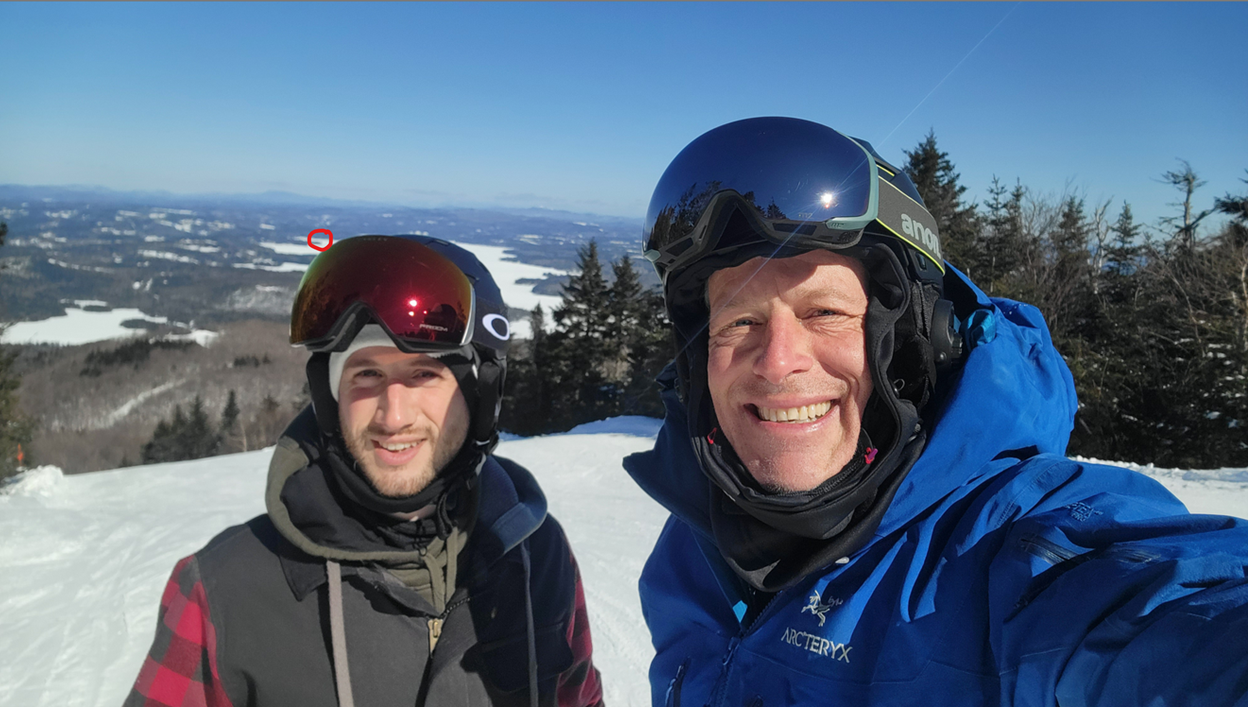
4) I skied at Mount Sunapee yesterday with my World's Toughest Mudder teammate, Tom, and we basically had the mountain to ourselves.
He drove up from his home in Rhode Island on Sunday and is spending two nights with my parents and me at our extended family's home on Lake Sunapee (I've circled it right above Tom's head in the photo below). The forecast was for gusty winds and a wind chill of 10 degrees below zero, but we got lucky: the winds were calm and the temperature got into the 20s – balmy!
The highlight of the day was getting a new pair of skis.
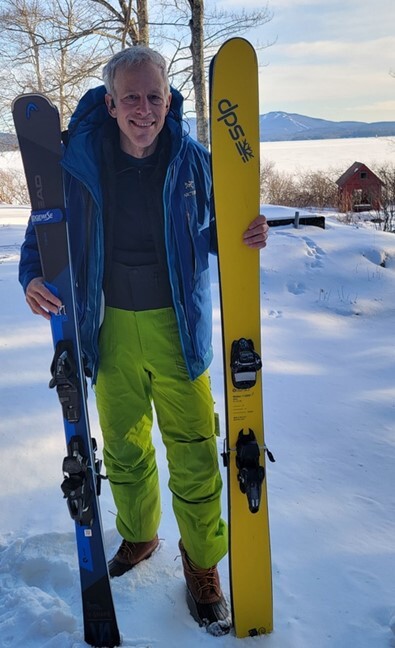
I've been skiing exclusively on a pair of big DPS skis (the yellow ones in the picture below, and that's Mount Sunapee in the background), which I bought in Salt Lake City roughly five years ago. They're brilliant for powder skiing out west, but are ill-suited for the mountains in the east with their hard-packed powder most of the time (like this year).
I had always sort of known this, but it moved to the front of my mind a week ago when I was talking to the guy at the ski shop near Mont Tremblant regarding the best skis for my oldest daughter (she hasn't owned her own equipment since she was a kid, but is now skiing enough to warrant it, so we outfitted her as an early birthday present).
At noon yesterday I went into a local ski shop, where they recommended two possible skis for me, and let me demo them during the afternoon. WHAT A DIFFERENCE! With both pairs, I was instantly able to ski much quicker, make tighter turns with my skis/legs locked together, and I wasn't slipping/skidding when I hit the icy patches locals euphemistically call "New England packed powder"!
Even better, the skis I liked better (Head LYT Tech – the blue ones in the picture below) were on sale, so brand-new ones with bindings only cost me $499.
I can't wait to ski on them today at Mount Sunapee, tomorrow at Stowe, and Thursday at Okemo!
Best regards,
Whitney
P.S. I welcome your feedback at WTDfeedback@empirefinancialresearch.com.