

How Car Rentals Explain the 2021 Economy; How Accounting Giants Craft Favorable Tax Rules From Inside Government; Revolt of the Delivery Workers; The last days of our RV trip
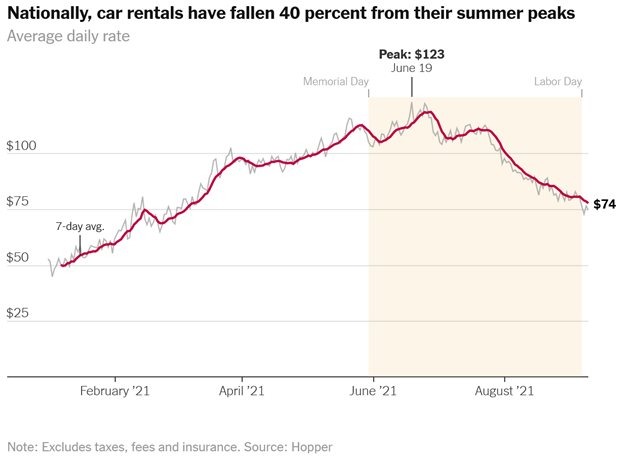
1) I think what's happening in the car rental sector is a representative case study for what's happening in our economy – extreme dislocations during and in the first phase of the emergence from the COVID-19 pandemic, followed by a slow return toward normalcy – which bodes well for the future: How Car Rentals Explain the 2021 Economy. Excerpt:
Few markets better crystallize the topsy-turvy nature of the American economy during the pandemic than the rental car business.
The industry shows how economic decisions made in 2020 keep having serious implications in 2021. While most other industries have experienced less severe swings, the same basic dynamics apply. These dynamics explain why inflation and product shortages spiked earlier in the year – and why they are starting to abate but are not yet close to prepandemic norms.
2) Kudos to the New York Times for exposing this outrageous revolving door that screws all of us: How Accounting Giants Craft Favorable Tax Rules From Inside Government. Excerpt:
The largest U.S. accounting firms have perfected a remarkably effective behind-the-scenes system to promote their interests in Washington. Their tax lawyers take senior jobs at the Treasury Department, where they write policies that are frequently favorable to their former corporate clients, often with the expectation that they will soon return to their old employers. The firms welcome them back with loftier titles and higher pay, according to public records reviewed by the New York Times and interviews with current and former government and industry officials.
From their government posts, many of the industry veterans approved loopholes long exploited by their former firms, gave tax breaks to former clients and rolled back efforts to rein in tax shelters – with enormous impact.
After lobbying by PwC , a former PwC partner in the Trump Treasury Department helped write regulations that allowed large multinational companies to avoid tens of billions of dollars in taxes; he then returned to PwC. A senior executive at another major accounting firm, RSM, took a top job at Treasury, where his office expanded a tax break in ways sought by RSM; he then returned to the firm.
Even some former industry veterans said they viewed the rapid back-and-forth arrangements as a big part of the reason that tax policy had become so skewed in favor of the wealthy, at the expense of just about everyone else. President Biden and congressional Democrats are now seeking to overhaul parts of the tax code that overwhelmingly benefit the richest Americans.
"The accounting firms have a desire to get in favorable rules for their clients," said Michael Hamersley, a former tax lawyer at EY and KPMG. "And the person in the government has a desire to grant their wish because they know they will be rewarded when they get out."
The so-called revolving door, in which people cycle between the public and private sectors, is nothing new. But the ability of the world's largest accounting firms to embed their top lawyers inside the government's most important tax-policy jobs has largely escaped public scrutiny.
In the last four presidential administrations, there were at least 35 instances of round trips from big accounting firms through Treasury's tax policy office, along with the Internal Revenue Service and the Congressional Joint Committee on Taxation, and back to the same firm, according to public records and interviews with government and industry officials.
In at least 16 of those cases, the officials were promoted to partner when they rejoined their old accounting firms. The firms often double the pay of employees upon their return from their government sojourns. Some partners end up earning more than $1 million a year.
3) Talk about the dark underbelly of capitalism...
I wasn't surprised to hear that being a delivery person was a tough job, but hadn't realized just how horrific it is: Revolt of the Delivery Workers. The next time you order from Uber Eats, DoorDash, or Grubhub-Seamless, be sure to tip generously! Excerpt:
Even before the thefts started, the city's 65,000 delivery workers had tolerated so much: the fluctuating pay, the lengthening routes, the relentless time pressure enforced by mercurial software, the deadly carelessness of drivers, the pouring rain and brutal heat, and the indignity of pissing behind a dumpster because the restaurant that depends on you refuses to let you use its restroom.
And every day there were the trivially small items people ordered and the paltry tips they gave – all while calling you a hero and avoiding eye contact. Cesar recently biked from 77th on the Upper East Side 18 blocks south and over the Ed Koch Queensboro Bridge, then up through Long Island City and over another bridge to Roosevelt Island, all to deliver a single slice of cake for no tip at all. And now he had to worry about losing his bike, purchased with savings on his birthday.
For Cesar and many other delivery workers, the thefts broke something loose. Some started protesting and lobbying, partnering with nonprofits and city officials to propose legislation. Cesar and the Deliveryboys took another tack, forming a civil guard reminiscent of the one that patrolled San Juan Puerto Montaña, the small, mostly Indigenous Me'phaa village where they are from.
4) Ten days and 2,426 miles later, our trip that started in Minneapolis ended yesterday morning when we dropped off our CruiseAmerica RV in Seattle.
It was an amazing trip, and certainly gave us a greater appreciation for what an enormous, spectacularly beautiful country we live in!
When I last wrote on Friday, we were just leaving Glacier National Park for a seven-hour drive to Kennewick, Washington, which is between Yakima and Walla Walla in the southeastern part of the state. My cousin, who got married on Saturday, lives there.
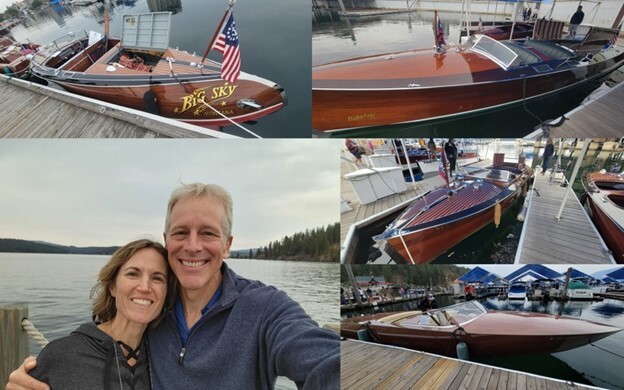
We drove through Idaho on the way and stopped in Coeur d'Alene, a charming city of 50,000 on the northern end of a lake of the same name. After lunch, we walked down to the waterfront and were surprised to see the International Antique and Classic Boat Show, so instead of a hike, we spent the next hour admiring more than 100 magnificent old boats. Here are pictures of a few of them:
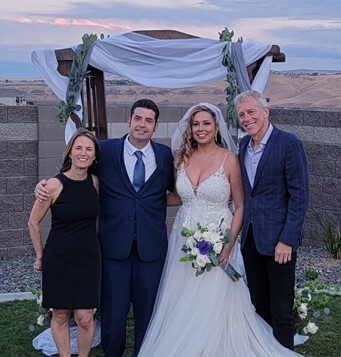
On Saturday night, my cousin Kyle and his new bride Jamie tied the knot. It was a beautiful ceremony and fun party!
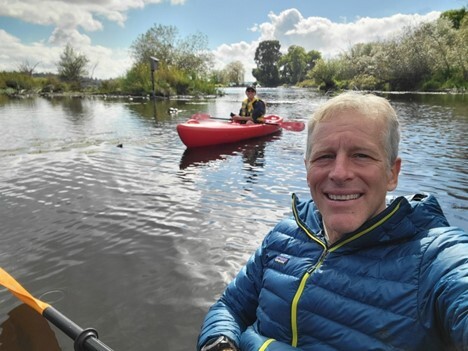
On Sunday, we drove four hours to Seattle and spent the night with one of my readers, whom I'd met a few times in Omaha at past Berkshire Hathaway (BRK-B) annual meetings. He and his wife took us on an evening boat ride and then a morning kayak on Lake Washington:
I've posted more details and pictures on Facebook here.
Best regards,
Whitney
P.S. I welcome your feedback at WTDfeedback@empirefinancialresearch.com.