

The Last Days of Whitney Tilson's Kase Capital
Here's an in-depth article in Institutional Investor by Michelle Celarier about why I closed my hedge funds last fall and my new venture, Kase Learning: The Last Days of Whitney Tilson's Kase Capital, www.institutionalinvestor.com/article/b17f19gwp3595r/the-last-days-of-whitney-tilson's-kase-capital. Excerpt:
"I had lost my passion for the game," Tilson confided in a two-hour, soul-searching interview about the events that led him to shut down his hedge fund last September. After gaining 184 percent, net — when the broader market was up only 3 percent — during the first 11 and a half years of his hedge fund's existence, Tilson's returns had been floundering. Since 2010, Tilson says, he trailed the Standard & Poor's 500 stock index, and in 2017 he had lost almost 9 percent on the year by the time he shut down his fund. "In an ironic twist, I always built my firm to survive the worst storm, but it was a nine year bull market — complacency and sunshine — that took me out."
What distinguishes Tilson from many of his peers is his willingness to talk about the long, excruciating road down...
Tilson's introspection is uncommon for those in the hedge fund business, where self-confidence and salesmanship are as important to success as any investing prowess. As Tilson readily admits, managers cannot afford to be frank while they are going through turmoil, lest they further hurt their business — and their investors. "The last thing you want to do is air your dirty laundry. That will further shake the confidence of your investors."
But there's another reason for Tilson's uncommon openness: His experiences, both positive and negative, have led him to create a whole new business, turning Kase Capital into Kase Learning (Kase stands for the first letters of the names of Tilson's wife and three daughters). From a small conference room at the New York Athletic Club, Tilson has started teaching the perils and profits of investing in general — and running a hedge fund specifically — to aspiring youngsters who don't come out of big seeding platforms like Julian Robertson's Tiger Management or a multibillion-dollar hedge fund.
"Unless you are the lucky 1 percent who has the chance of learning in an apprenticeship, how are you supposed to learn how to do this?" Tilson says. "Nobody teaches the next generation. There is not one business school on the planet that teaches anything really usable to starting up your own hedge fund.
"It's so rare to talk to a manager who is injected with truth serum, isn't it?" he asks as he details his long bumpy journey through hedge fund land. "But I don't give a crap anymore."
Some of this is tough for me to read – it's pretty raw – but overall I'm pleased with it. It feels good, now that I'm not running anyone else's money, to be able to be totally (sometimes brutally) honest.
It's wild – and sort of cathartic – to share my experiences, with the many highs and almost as many lows from my nearly two decades in the hedge fund business. The folks I've been teaching since I closed my funds – mostly those who take my seminars, but also MBA students and others – have generally only heard money managers talking about their best stock picks and how brilliant they are, never about their mistakes and failures. But this is precisely what you should spend at least half of your time and energy studying if you really want to learn and maximize your chances of success – not just at investing, but ANYTHING.
But how can you study mistakes and failures if nobody is willing to talk about them? I think it's total negligence, for example, on the part of Harvard Business School (and, to be fair, every other business school I'm aware of) to overwhelmingly teach case studies that have heroic protagonists achieving great success. That's just not how the world works. Everyone screws up and encounters setbacks, both professional and personal.
Knowing this, your goal should be to reduce their frequency and, when they happen, to minimize their severity by dealing with them honestly and decisively. But how? Smarts, common sense, and high integrity are key, of course, but so is experience. And there are only two ways to get it: learning from others or in the school of hard knocks, stumbling around, making mistakes, and getting scars on your back.
The former is, of course, what any sensible person strive for. But who's really willing to share their experiences honestly, warts and all? A few folks, but not many. I try to be the rare exception, modeling myself after Buffett and Munger who, refreshingly, love to engage in self-flagellation. It's one of the main reasons I've been to the last 20 Berkshire meetings. They have so much wisdom and are wonderful in sharing it – I'm still trying to soak it all up, even decades later.
In fact, I'm in the process of writing a book about the non-investing life lessons I've learned from them over the years, which have made such a difference in my life. For example, one of the simplest yet most powerful things I've ever heard is when Charlie Munger, maybe 15 years ago at a Wesco meeting, said, "All I want to know is where I'm going to die so I never go there." After the laughter subsided, he continued, "I'm serious. Once you've achieved a certain degree of success, your main goal should be not to screw it up." (And he loves to talk about the most common ways people do so: acting unethically and losing your reputation, becoming addicted to drugs or alcohol, etc.)
His wisdom inspirited my slide presentation, The Five Calamities That Can Destroy Your Life – and How to Avoid Them, which will be a key part of my book and which I've posted at: www.tilsonfunds.com/Tilsoncalamities.pdf. My favorite slide is #24 on the 12 questions to ask yourself when considering whether to marry someone – there are few calamities greater than marrying the wrong person.
In summary, I've found that the best learning comes from people with a lot of experience who've achieved both great success AND suffered great setbacks. That's me – and I'm having a lot of fun teaching everything I've learned!
For more information about the two programs Glenn Tongue and I teach every couple of months (Lessons from the Trenches: Value Investing, Entrepreneurship and Life and How to Launch and Build an Investment Fund) and our best ideas conference on shorting on May 3, The Art, Pain and Opportunity of Short Selling, go to www.kaselearning.com.
In addition, we're teaching a free two-hour seminar for beginners, An Introduction to Value Investing, during which we'll cover various topics including: what is value investing, intrinsic value, margin of safety, three ways to beat the market, the three steps to evaluating stocks, valuation techniques, traits of successful investors, how to develop an edge, and an example of a stock pitch of a current favorite idea. There will be plenty of time for Q&A as well.
The classroom only holds 60 people and the first one we scheduled on April 4 is already sold out, so we scheduled a second the next day (Thursday, April 5, two weeks from tomorrow) at the ISIE Business School, 165 West 57th Street, 2nd Floor (directly across the street from Carnegie Hall) from 5:30-7:30pm, followed by a networking cocktail hour.
If you'd like to come, please register here: www.eventbrite.com/e/an-introduction-to-value-investing-by-whitney-tilson-kase-learning-4518-tickets-44382058933. 38 people have already signed up, so don't delay! (If you can't make it on the 5th but would like to be on the wait list for the 4th or notified when we do this again, please email me.)
The Last Days of Whitney Tilson's Kase Capital
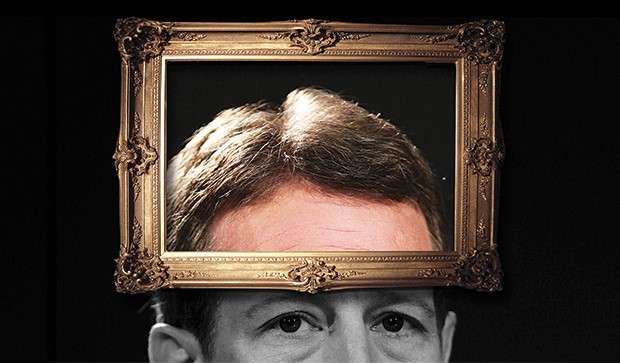
The hedge fund founder explains why his fund was "sucking the joy" out of his life – and why he's turning its failure into a teachable moment.
March 20, 2018
Whitney Tilson's Facebook friends surely thought he was on top of the world last summer.Photo after photo posted on the social media site tells the story of a rich, exciting life: There's Tilson watching whales off the coast of Iceland. Next, he's on the canals of Amsterdam with his wife and daughter. Just a few days later, he's checking out Lenin's tomb in Moscow. Last August he even climbed to the top of the famed Eiger mountain in the Swiss Bernese Alps, photographing every step of the arduous journey.
But to hear Tilson talk today, the reality was grim. After 18 years in the hedge fund business, his firm – Kase Capital Management – was losing money, and Tilson found himself dipping into his savings to keep it afloat.
"I had lost my passion for the game," Tilson confided in a two-hour, soul-searching interview about the events that led him to shut down his hedge fund last September. After gaining 184 percent, net – when the broader market was up only 3 percent – during the first 11 and a half years of his hedge fund's existence, Tilson's returns had been floundering. Since 2010, Tilson says, he trailed the Standard & Poor's 500 stock index, and in 2017 he had lost almost 9 percent on the year by the time he shut down his fund. "In an ironic twist, I always built my firm to survive the worst storm, but it was a nine year bull market – complacency and sunshine – that took me out."
Tilson is one of several veteran hedge fund managers, including Eton Park Capital Management's Eric Mindich, Hutchin Hill Capital's Neil Chriss, Eclectica Asset Management's Hugh Hendry, and Blue Ridge Capital's John Griffin, who called it quits in 2017. Small hedge funds come and go with great regularity, but the inability of the industry's stars to profit as the stock market soared to new heights has raised questions about the viability of the model. Tilson was a much smaller player than the others – at his peak he managed only $200 million – but his experiences are a window into the headwinds that have faced these former masters of the universe.
What distinguishes Tilson from many of his peers is his willingness to talk about the long, excruciating road down. "It's hard, after seven years at sucking at something, to wake up and tap-dance to work. So, I found myself getting distracted. I wasn't physically getting out of shape; it was the opposite. I was going and climbing mountains. This one part of my life, I was miserable at; I was having no success. It's hard to have the self-discipline to focus all your attention like a laser, and all your spare time on a particular part of your life in which you're getting so much negative reinforcement."
Last year, as his fund's losses began to mount, Tilson says, "I didn't feel like I could look my investors in the eye and say, "˜Look, I'm losing you money, but I'm not doing anything else, 18 hours a day that I'm awake, the only thing I am doing is trying to turn performance around.' " The vacation photos notwithstanding, Tilson says he even felt guilty attending his daughter's soccer games. "My hedge fund was sucking all the joy out of my life."
Tilson's introspection is uncommon for those in the hedge fund business, where self-confidence and salesmanship are as important to success as any investing prowess. As Tilson readily admits, managers cannot afford to be frank while they are going through turmoil, lest they further hurt their business – and their investors. "The last thing you want to do is air your dirty laundry. That will further shake the confidence of your investors."
But there's another reason for Tilson's uncommon openness: His experiences, both positive and negative, have led him to create a whole new business, turning Kase Capital into Kase Learning (Kase stands for the first letters of the names of Tilson's wife and three daughters). From a small conference room at the New York Athletic Club, Tilson has started teaching the perils and profits of investing in general – and running a hedge fund specifically – to aspiring youngsters who don't come out of big seeding platforms like Julian Robertson's Tiger Management or a multibillion-dollar hedge fund.
"Unless you are the lucky 1 percent who has the chance of learning in an apprenticeship, how are you supposed to learn how to do this?" Tilson says. "Nobody teaches the next generation. There is not one business school on the planet that teaches anything really usable to starting up your own hedge fund.
"It's so rare to talk to a manager who is injected with truth serum, isn't it?" he asks as he details his long bumpy journey through hedge fund land. "But I don't give a crap anymore."
Continue reading here: www.institutionalinvestor.com/article/b17f19gwp3595r/the-last-days-of-whitney-tilson's-kase-capital