

Kim Iskyan's trip to Singapore...
Kim Iskyan's trip to Singapore... How the city-state became so wealthy... Incredible economic growth...
Editor's note: The Digest team is headed to Washington, D.C. this week to work on a special project. We can't share the details with you yet, but it's big... We hope to unveil everything in May.
So, in lieu of our regular Digest, we're sharing the latest issue of Kim Iskyan's excellent Global Contrarian. Each month, Kim travels the world looking for the biggest opportunities in the most unloved markets. He often travels to the most dangerous countries in the world to provide his subscribers with unparalleled insights into these markets.
Since launching his advisory in late 2013, Kim has visited South Africa, Russia, Ukraine, Iran, Macau, Venezuela, and Mongolia, to name a few.
Most recently, he visited Singapore, the Asian business hub. It's a fantastic issue. In it, he shares some of the history behind the powerful city-state, the policies in Singapore leading to its success, a snapshot of the real estate market, and an analysis of its stock market. We hope you enjoy...

It's one of the greatest transformations the world has ever seen...
Fifty years ago, Singapore was in trouble.
Close to a quarter of the workforce was unemployed. The tiny Asian city-state was poor, with gross domestic product (GDP ) per capita of just more than $500 a year. For comparison, America's GDP per capita was $3,800 a year. More than two-thirds of Singapore's population lived in slums on the outskirts of the city.
Singapore doesn't have natural resources like oil, gold, or natural gas. Aside from its location in the middle of the major sea route between India and China, Singapore didn't have a lot going for it.
Fast-forward to today, and Singapore is one of the wealthiest countries in the world. Its GDP per capita has grown more than 10,000% over the past 50 years.
It's also one of the safest, healthiest, and most business-friendly countries in the world.
Singapore's transformation from third-world city-state to first-world economic powerhouse in less than 50 years is an economic miracle. Most countries struggle to make small changes over a period of decades, and few countries have lifted themselves out of poverty. But Singapore has managed to completely reinvent itself. That's why I recently visited the city-state.
You see, although Singapore isn't the type of market we look for in Global Contrarian – a market with bad sentiment, cheap valuations, and catalysts for change – it holds valuable lessons for countries looking to create their own economic miracle.
I went to Singapore to learn exactly how it transformed itself in just two generations... and to try to understand the ingredients other countries might be able to use to repeat Singapore's success.
How an Economic Miracle Happens
Singapore's modern history began when it became a port in the 1800s... thanks to its strategic location.
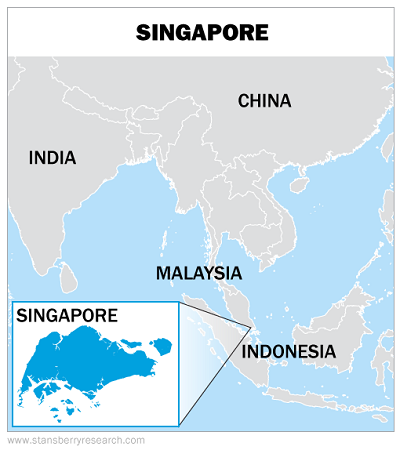
The island became a British colony in 1867. And by the 1900s, Singapore was being used as an important port for the increasing global trade of rubber and tin, which were in abundance in the region.
After briefly being occupied by Japan during World War II, Singapore won independence from Britain in 1959... the same year Lee Kuan Yew, a prominent member of the People's Action Party, which was – and still is – the dominant political party in Singapore, became prime minister.
Then, in 1963, Singapore joined what became the country of Malaysia, in part as a way to access a larger regional market. But relations between the People's Action Party and the Malaysian government turned sour. And Singapore broke off on its own in 1965.
Things looked bad for the city-state after its union with Malaysia fell through. As I said, Singapore was a small, poor city-state without natural resources. Its
But it turned out that Lee Kuan Yew being elected prime minister and leaving Malaysia were two of the best things that could have happened to Singapore.
Shortly after the city-state left Malaysia, Lee Kuan Yew created a government that was focused on the long-term transformation of Singapore.
Lee Kuan Yew has made sure the government is made up of well-paid, highly qualified people who would focus on policies, rather than politics.
Singapore works so well today partly because Singaporeans feel their elected representatives are looking out for the city-state's best interests. People in Singapore put more faith in their politicians than the citizens of any other country, according to the World Economic Forum. When asked if they trust their national government, 83% of respondents in Singapore said they did... compared to just 35% in the U.S.
The city-state also ranks seventh in Transparency International's Corruption Perceptions Index, which reflects the perceived level of public sector corruption (the U.S. ranks 17th).
Lee Kuan Yew's government was also eager to learn from other countries' experiences. It wasn't shy about taking others' ideas and adapting them.
For instance, in the 1960s, the government created an Economic Development Board to make Singapore a "one-stop shop" for investment. Lots of governments have these one-stop shops to help facilitate foreign investment, but few work well. National governments rarely play a positive role in carving out a country's economic and investment priorities.
But Singapore took this idea and used it to its benefit. The Economic Development Board allows foreign investors to learn about investment opportunities, find local partners, and navigate Singapore's regulatory environment. That laid the groundwork for the explosion in investment in Singapore that has been central to its development. For example, throughout the 1970s, foreign direct investment in Singapore as a percentage of
The government also let the market do its own work. Once it set regulations, it got out of the way and let the market take over. This has led the Heritage Foundation, an American think tank, to rank Singapore second in the world in terms of economic freedom. Meanwhile, the U.S. ranks 12th.
Another important thing that the government did was implement politically unpopular, but smart, taxes to influence its citizens' behavior and to raise government revenue.
For instance, in 1990, the government set a quota on the number of cars allowed on the island. A Certificate of Entitlement (
For example, in the U.S., you can buy a new Toyota Corolla for around $18,000, depending on the model and extras. A similar Toyota Corolla in Singapore will set you back – after the
And higher-end cars cost more than a pricey college education... a BMW X5 that you can buy for around $60,000 in the U.S. has a price tag of around $275,000 in Singapore.
As a result, only around one in 10 Singaporeans owns a car – compared with around eight times that level in the U.S., even though Singapore is wealthier on a per-capita basis.
Because of this, there is less traffic and smog. (Singapore does have traffic jams sometimes, but they rarely last more than five minutes.)
Thanks in part to taxes like this, the Singaporean government has a strong balance sheet. The government usually posts a budgetary surplus – unlike most countries (including the U.S.), where governments spend more than they bring in.
Singapore has such a large current account surplus that the International Monetary Fund in 2013 advised the city-state to reduce it. Singapore has $257 billion in foreign exchange reserves (foreign currency cash and gold held by the country's central bank), the 10th-most in the world. Singapore has also never experienced a banking failure.
But perhaps the most important thing Singapore's government did to transform the city-state was invest in its people and infrastructure. Singapore uses the revenues it raises from things like the
Because of this, Singapore usually ranks at or close to the top in surveys of educational performance of students.
A United Nations survey found in 2012 that 85% of Singaporeans were satisfied with the city-state's quality of education, which was one of the highest levels of satisfaction in the world (just 64% of Americans were satisfied with theirs).
Meanwhile, Singapore's infrastructure – roads, ports, air transport, electricity, and telecommunication services – ranks fifth in the world, according to the World Economic Forum. For comparison, the U.S. ranks 16th. That's amazing when you consider that just 50 years ago, Singapore had little infrastructure at all.
In short, Singapore's government managed to transform the city-state by implementing a "father knows best" policy. The government has been allowed to sacrifice short-term gratifications of individual citizens (like owning a car) for the long-term good of society as a whole (like investing in education and infrastructure).
And this approach has paid off.
Singapore's

Today, Singapore is one of the world's wealthiest countries, with a
Except for Switzerland and Qatar, there are more millionaire households in Singapore (10% of the total), relative to the population, than anywhere else in the world.

Singapore's economy is as large as countries that are many times larger, in terms of population and size.
|
How Singapore's Economy Compares With Other Countries
|
|||
|
Country
|
Population
(in millions)
|
Size (in thousand
square miles)
|
GDP
(in billions)
|
|
Singapore
|
5.4
|
0.28
|
$296
|
|
Egypt
|
84
|
387
|
$271
|
|
Malaysia
|
30
|
127
|
$312
|
|
Nigeria
|
174
|
357
|
$287
|
|
Pakistan
|
184
|
307
|
$238
|
|
Philippines
|
98
|
116
|
$272
|
|
Source: World Economic Forum, Bloomberg
|
|||
Singapore is also the easiest place in the world to do business, according to the World Bank's Doing Business survey.
|
Ease of Doing Business (2014)
|
|
|
Country
|
Rank
|
|
Singapore
|
1
|
|
New Zealand
|
2
|
|
United States
|
7
|
|
Malaysia
|
18
|
|
Switzerland
|
20
|
|
Spain
|
33
|
|
China
|
90
|
|
Sri Lanka
|
99
|
|
Brazil
|
120
|
|
Venezuela
|
182
|
|
Source: World Bank Group
|
|
On another front, the city-state is the world's healthiest country, according to Bloomberg. (Bloomberg ranked the U.S. 33rd.) Singapore ranks ninth in the United Nations Development Programme's Human Development Index, which is a measure of life expectancy, education standards, and quality of life.
The Mercer 2014 Quality of Living Survey, which looks at a range of factors like political instability, health care, housing, education, and climate, showed that Singapore offered the highest quality of life in Asia, and a better quality of life than any city in the U.S.
Singapore is also one of the safest countries in the world. Just 11 people were murdered in the entire city-state (of 5.4 million people) in 2012... compared with 500 people in the U.S. city of Chicago (which has 2.7 million people) that year. Your house or apartment is 70 times more likely to be broken into in the U.S. than in Singapore.
 New 52-week highs (as of 3/10/15): Cempra (CEMP). Two more subscribers write in with their take on Warren Buffett. Again, if you haven't read the first chapter of Porter's upcoming book, Warren's Mistakes, you can read it here. As always, send your e-mails to feedback@stansberryresearch.com. "I learned several years ago that I could not follow Buffett and eat steak. His long term rate of return kept dropping each year, which meant that the recent returns were dropping disastrously! I have great respect for what he did up to 2000, but I admit I don't know what happened to cause his returns to crash. With his early successes, he is due a few mistakes, but he doesn't seem to be learning from them as he should. After all, if you can't beat the S&P, is there a reason to exist? I am eagerly waiting for your book to learn the reasons because I am almost his age and don't want to make the same mistakes!" – Paid-up subscriber George "Hi Porter, an excellent start for your book, and I'm looking forward to the finished product. It is a bit disconcerting to see that even when an academic nonsense idea is so thoroughly trounced and proven wrong, as you show with Jensen's efficient markets hypothesis, it has no effect on academia. The author is not discredited, the press does not spread the truth, competing academics do not take up the correct idea – very little changes. There is just a resounding silence, and then it's back to business as usual. You can fool some of the people all of the time, and all of the people some of the time... and that's all you really need for practical purposes. Truth is not something to be searched out and discovered, but instead something to be hidden, or ignored if accidentally stumbled upon." – Paid-up subscriber Stephen Kovaka
Regards,
Kim Iskyan
March 11, 2015
