
He's Up 201% in Two Months... and Says a Major Market Drop Is Next
In This Episode
In this week's Stansberry Investor Hour, Dan welcomes Greg Diamond back to the show. Greg is the editor of Ten Stock Trader, an advisory focused on trading using market analysis to find the best opportunities based on previous market patterns.
Greg kicks things off by sharing his theme for 2026: time. He looked at the inflection points in January and is looking at the upcoming ones in April and May. January saw both technology and financial stocks peak before declining. And while Greg believes these sectors are oversold and will correct themselves slightly, the decline will continue. He says that AI taking over is part of this trend, and unlike other "creative destruction" (like the transition from horse-drawn carriages to automobiles) trends in the past, this one is developing much faster. Greg says looking at time cycles and understanding them is essential to prepare for where the market could be heading next...
These cycles that I look at... [they] repeat. There are multiple cycles that you have to focus on at various times throughout the year, throughout a five-year move or a two-year move, whatever you might be looking at. But there's repetition in it. And then you interpret price... [and] price is nothing more than a reflection of all the investors' actions expressed on a chart. And when you study that again and again and again and again, you can see those patterns.
Next, Greg discusses his thoughts on various commodities. He recently traded several positions in silver for wins before the metal's crash and is currently watching to see where it goes from here. He's not as optimistic on oil and natural gas due to the lack of information that investors have outside of OPEC, but he is looking for breakthroughs that could have an impact on the wider market. Copper is another resource that he's interested in, and there are several plays that he believes folks can make. But he says understanding what fuels these movements is more important than why they're occurring...
I stick away from the "why" and focus on what [commodities] are doing... We just talked about silver. We just talked about copper. Oil is kind of wildly going to be in a range. The demand is going to be there. Does this all end in some type of "all the chips are on one side of the table" [setup] and we have this catastrophic financial event? Of course it's going to happen, absolutely, because it always happens. So it's just a matter of [figuring out] "what's the catalyst for that?" And to me, it seems to be AI.
Finally, Greg lists his current trades and where he thinks market volatility is heading. He can't delve too deeply to be fair to his subscribers, but he's preparing to be extremely aggressive in his trades over the next few months. Greg then states that he does his best trading when he ignores what everyone else is saying. He'd rather focus on his monitors and charts than allow himself to be persuaded by outside voices...
[When you're getting fed constant information,] everyone thinks that's a good thing. I hated it. Because essentially what it did is, if I had conviction in a position and I would make my move on it, and then I have 15 other people telling me the opposite, that would sway you a little bit. And after so many times... I said, "I'm done with this." I'd rather be wrong on my own conviction... but to be right and be swayed by this headline or this bobblehead on TV or whomever, and then that gets you out of this position and you end up being right and they were wrong, that just made my blood boil.
Click on the image below to watch the video interview with Greg right now. For the audio version, click "Listen" above.

(Additional past episodes are located here.)
This Week's Guest
Greg Diamond is the editor of Ten Stock Trader – a trading service based on technical analysis. He monitors the global macro environment, including equities, currencies, commodities, futures, interest rates, and more. He publishes a weekly market outlook every Monday and posts daily updates, technical analysis supporting his strategies, and trade alerts through his live online feed.
With 20-plus years of trading and portfolio experience, Greg has traded for a multibillion-dollar hedge fund and a multibillion-dollar pension fund. He has managed multimillion-dollar portfolios across various asset classes and has spoken at business schools on trading and technical analysis. Greg is also a member of the Market Technicians Association and holds the Chartered Market Technician designation.
Dan Ferris: Today we're going to talk with my good friend Greg Diamond. He is an expert trader. He is participating right now in the U.S. Investing Championships. He's in the top spot. He's No. 1. And we'll keep track of his progress throughout the year. He's going to give us a ton of ideas. OK? Get your pens and pencils out. Write all these down. He's going to talk about every single one of them. Nvidia, NVDA, AMD, XLF, IGV, AGQ, the silver ETF, KRE, the banking ETF. Tons of ideas. We're going to talk about silver, gold, copper, crude oil. Write this stuff down because you're going to come away with at least two really good trading ideas today. So, let's do it. Let's talk with Greg Diamond. Let's do it right now.
Greg, Welcome to the show. Good to see you again.
Greg Diamond: Good to be here, my friend. You too.
Dan Ferris: Dude, I just – I did not know that you are – so far, fingers crossed, knock wood – a championship investor. Tell me about that. That is super exciting. What are you doing?
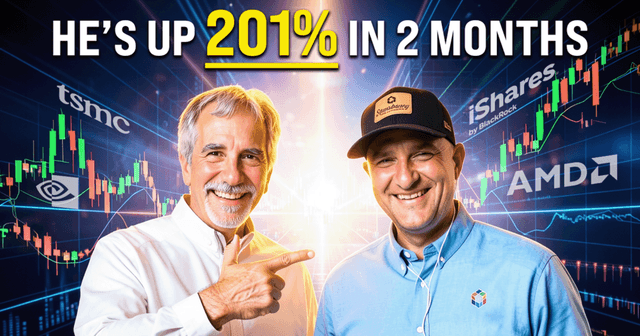
Greg Diamond: I signed up for the United States Investment Championship. And there's a bunch of different divisions, but basically there's a stock division and then there's a futures and options division. So, I entered the futures division to not have any conflict of interest with what I do for Stansberry and my subscribers, obviously. And so far, I'm in first place. So, up about 201% after two months. So, yeah, a long way to go, but excited about that.
And it's kind of putting my money where my mouth is. This isn't just something that I do for Stansberry subscribers. It's – I put my own money up for this and it's out publicly for everybody to see. I think they have a Twitter feed or X feed or whatever, where you can follow along.
Dan Ferris: Oh, cool.
Greg Diamond: And I actually think that they send out a public notification every quarter. So, it's going to be intense. I think there's over 600 people who are involved in it. And former hedge-fund trader, I think, Paul Tudor Jones is in on. it. Mark Minervini – I think that's how you pronounce his name. So a lot of famous guys and gals, I believe, who have done very, very well. So, I put my hat in the ring and am giving it a shot here.
Dan Ferris: That's awesome. Yeah. We've had Mark on the show. He's one of the – one of Schwager's guys.
Greg Diamond: Oh, nice.
Dan Ferris: He's in one of the Market Wizards books. I forget which one, but yeah, that's awesome, man. I hope you crush it. I hope you stay in first and crush it. I hope I'm not jinxing you.
Greg Diamond: Thanks. Knock on wood.
Dan Ferris: How long does the [inaudible] go for?
Greg Diamond: It's a year. So, it started with your open positions of December 31 and goes all the way to December 31 – or January 1 to January 1, whatever.
Dan Ferris: Awesome. Love it. I love having you on the show because you're the real deal. You've traded before you came to Stansberry. You're like a real-deal trader. And obviously, you're proving that again. I know we're going to talk about a bunch of ticker symbols of a bunch of companies that people are really interested in. And I want to dive in actually with IGV, the software ETF, because of course software is – it had sort of a mini crash recently. And people are concerned that software companies will basically be put out of business to some degree in whole or in part by artificial intelligence. And I want to know when you look – because I know you look at the charts. You look – you use [William Gann's techniques]. You just – the price action tells you what you need to know. So, you're not screwing around. This isn't like, "Maybe, whatever." You just know what the market is telling you. And I really – and I'm sure everyone listening really wants to know what it's telling you about software at this moment in history.
Greg Diamond: Yeah. So, at the beginning of the year, I explained to subscribers that I was looking at a theme for 2026. And that theme was really based on time first, and I'll get into the price action in a second. But – and that theme was January and then April and May. Essentially, looking for inflection points that happened in January, and then looking at what happened in April, May – which obviously we're not there yet, but I think that's going to be important.
Anyway. So, we saw a major decline in those software stocks happen in January. We also saw financials top in January. And so, and I recently just came out with a piece about the dominoes keep falling, the generals are getting killed. Look at Microsoft. Look at Apple. Look at Amazon. Look at Google. Look at Nvidia. Look at Meta Platforms. You – go down the list. Look at Advanced Micro Devices. Look at JPMorgan. Look at Goldman Sachs. Look at Bank of America. They're all topping out. And then we saw this cascading decline that happened in software stocks. Now, we'll probably get some type of a bounce here. It's a little bit oversold on the technicals and some of the [relative strength index], some momentum things. But this isn't going away. And similar to what we've seen in other topping processes, this is no different. The whys will change. This time it's AI. It's amazing how fast it's happening with what's happening. But all these things starting to top out is basically telling me get ready for even more volatility – again, going back to my theme in terms of time, probably into this April, May time frame.
Dan Ferris: So, it's not a buyable dip in financials and software. It's your – you're talking about a major topping out process.
Greg Diamond: Yeah, and when I mean major it would be within the context of this bull market that we've been in since April of 2025, whether you want to call that cyclical – yeah. So, it's within that framework going back to let's call it a year ago. And then that's where I think we can see the overall indices because they've held up very, very well despite all this. But it doesn't mean that – in the technical world, it's called divergence. And it's just a classic textbook topping process that takes months to play out and then it's all going to explode. So, that's my outlook.
Dan Ferris: I'm glad you put it in the context of the overall market because I know – even though I'm constantly telling people not to obsess about that, we all do. It's impossible not to. OK, so that's software in particular. And financials too. OK. So, you gave me two and one with that. And you're talking about those in the same breath as being part of, it sounds like, the same topping process within the context you described, of course. That's interesting to me because obviously banking is a highly technological undertaking these days and we all – I can't tell you the last time I was in a bank branch. It's all – it's not just all online – it's all on this. When – I don't even bank on my computer – it's on my phone all the time. There's a huge potential there, of course, for AI as well. And I can't help – the list of names that we have to go through, it's like – it's all tech besides these two. It's like Nvidia, AMD, Taiwan Semiconductor Manufacturing. Is this – are you going to tell me this is all part of one big trend?
Greg Diamond: I think it is. And it's hard to say – I mentioned earlier, it's just moving so fast. AI is coming for lawyers and all the legal documentation. They're coming for, obviously, software. They're coming for everything. So, it's happening so fast, but that trend – and if you look at creative destruction over time, whether it's going from horse and buggy to the car or the airplane or whatever might be, it is – that takes some time. This is happening a lot faster. So, again, it's not – I'm not sitting here predicting that we're going to have some type of 2008, 2009 type prices, at least right now. That probably comes later. But right now in this call, short to medium term, we're seeing that creative destruction come through. And to me, that is a topping process that happens this year.
Dan Ferris: And you – you're – obviously you're aware of the creative destruction. You're aware of AI. You're aware of the narrative. But that ain't how you trade, though, is it? This is just something – it's just something to muse about, isn't it? Like, when you trade –
Greg Diamond: Yeah. And I don't – I say it all the time, I don't look at the why. And we're talking about the why here. It doesn't hurt to talk about it, but I'm not going to sit here and try to predict everything that is going to happen with AI. I think that's impossible. At least from where I sit. Maybe who's – somebody who's in OpenAI sitting at that table knows a lot more than I do. They probably do. But even then, they're not going to be able to tell you exactly how it's going to play out.
Dan Ferris: No, they'll be wrong.
Greg Diamond: Yeah, right. For me, it is all about understanding time cycles and then the price action, as you mentioned earlier. And some of your listeners or viewers might be confused about what that means because I do things a lot differently than most, which is fine. But I've been doing it for so long that it just starts to make sense to me over and over and over again. I don't get everything right. Nobody ever does. But it gives me the probabilities to be profitable consistently year after year.
Dan Ferris: Different how? You said you do things differently and that's fine. And I think it's – it sounds like it's going gangbusters. It's more than fine. Differently how? How do you do things differently?
Greg Diamond: So, I look at the concept of time. And that's a lot to take in, really, if you think about it.
Dan Ferris: It is.
Dan Ferris: But on a 10,000-foot level, these cycles that I look at that – you mentioned Gann earlier, and he's the one that I've modeled most of my work after, is the cycles repeat. There are multiple cycles that you have to focus on at various times throughout the year, throughout a five-year move or two-year move or whatever it might be – you might be looking at. But there's repetition in it. And then you interpret price. And we've – I've probably said this to you a million times before, or you've heard it from other traders: Price is nothing more than a reflection of all the investors' actions expressed on a chart. And when you study that again and again and again and again, you can see those patterns.
So, I take the time. I take those cycles. I take those repeating cyclical patterns and I input price. And then, that allows me to either be on the long or short side of the market. And it's not always – fear gets the most headlines but I'm not always just trading from the short side. We looked at the April low of last year and we – I traded for – on the long side for much of last year. This year, I'm looking more at the short-term put side, short side. Again, we've already gone over what's happened in software. We've gone over the dominoes falling in the generals. We looked at financials. We've already talked about that. So, you can see how I'm putting all this together and formulating this plan.
Again, this topping process might last into April, May when we look at the final domino falling over. And I always kind of go back to – I don't know if you are a Seinfeld fan, but there's an episode where Jerry's like, "In terms of a relationship ending, it's like pushing over a vending machine or a soda machine. You've got to rock it back and forth a few times and then it falls over." And that's kind of what the market – that's kind of what this topping process is. It rocks back and forth. We see – we've seen software, we see banks, the indices may have another run here, and then that's the last time when it comes down.
Dan Ferris: Right. And when you push it over, that's when Greg is starting to notice it's time to get long again probably.
Greg Diamond: Probably. Yeah. You're not far off. You're not far off.
Dan Ferris: [Inaudible]
Greg Diamond: Again, I don't think this is going to be – yeah, I don't think this is going to be a 2008, 2009-type situation again. But I do think that we could see anywhere from a 10% to 25% drop – let's call it a 15% to 25% drop in the major indices.
Dan Ferris: OK. And to be clear, do you have any extra insight on Nvidia, AMD, and TSM or is this all part of the same trend with the software and the financials?
Greg Diamond: Well, again, I just look at it in terms of what's happening with the price action. And let's be honest, Nvidia has held up most of the market, at least semiconductors and tech, for a long, long time. And Nvidia topped in October of last year, had good earnings. They weren't really impressed with it. It's had some bounces here and there since earnings last week or two weeks ago, whenever it was, and it hasn't done anything. Same thing with AMD. TSM is holding up, obviously as a major player. What's happening there with China?
So, it's only a matter for me, again, heading over the next couple months where this – all of it starts to roll over. And that's kind of how I'm looking at it. Inside of what's happening with it – the other thing, and I'm sure you've covered this before, but kind of all these AI chip stocks are just all investing in each other. And they're all throwing all this money around with Open AI and they're buying this stock and it – to me, it's just insane. It's almost like – it's like Burger King, Wendy's, and McDonald's all buying each other's shares and then sharing burger recipes. It doesn't make any sense to me. And to me, maybe that's what the final top is in let's call it 2029 or 2030, whatever it might be. But it's just big one entanglement, and there's just too much money sloshing around in these sectors, and that's when the bubble pops, so to speak. I think this is just a mini bubble pop. That's kind of how I'm looking at it.
Dan Ferris: All right. Right. Just the froth coming off the – yeah. Got you.
Greg Diamond: Yeah. Just scare enough people that this is the end, but it's actually not. But again, when I look at it as a trader, I look at it as a huge opportunity. So...
Dan Ferris: Do you ever trade the index ETFs?
Greg Diamond: Yeah, all the time. Yep. Yeah. Well, and I – especially it's – for Ten Stock Trader subscribers because they're still liquid. So, there are some stocks I just don't touch because the spreads are too wide, it's illiquid. The options are going to move way too much. But yeah, I trade the stock ETF – or stock index ETFs all the time.
Dan Ferris: Like SPY, QQQ – those?
Greg Diamond: You got it. Yeah, IWM. Yeah. Go down the list. Yep.
Dan Ferris: OK. So – IWM. God, we could talk about how weird the Russell 2000 is probably for an hour and a half.
Greg Diamond: It has a mind of its own. That's what I like to say about that. Yeah. I know.
Dan Ferris: The other thing that I think is probably still on people's minds – I know it's on mine – is silver. Which, man, that thing was so frothy, and it just soared and soared and soared and then crashed in one day. Actually, it was over a couple days it was bottomed out. But it looks like it's trying to come back. Where are you with silver? Are you long silver?
Greg Diamond: Yeah, we actually had – we locked in 150% gain on SLV calls in January and we traded AQG. I always get that ticker messed up. What's that one? Yeah, AGQ, the ProShares double ETF on SLV. We traded that for a couple of big wins, 50% and 20%, I think. And then I just – when it crashed, luckily we got out before then. We bought a little bit after the dip. And now we'll see – I mean, we saw a total reversal here with silver and gold rallying obviously with this Iran news. And now silver is down six and a half percent, a complete reversal. Are they pricing in – I don't want to say peace, but limited, coordinated attacks, whatever you want to call them. I don't know yet. Gold's holding on. Silver's holding on. I'm not going to sit here and try to predict geopolitical events and all that.
But if you look – especially if you look – well, you look at silver, the uptrend is pretty much still there. Gold is definitely still there. So, I think this is going to come down to what's going to happen with the Federal Reserve and the dollar and interest rates, what's going to happen geopolitically. And then you have to look at positioning. Is everyone long? Is everyone short? Does it chop around for a little while? So, I think the consensus or the answer to do we have another higher, or is this just going to be sideways, or is that – is that it? Is this another 2011 event where gold and silver don't do anything for another six, seven years? I just don't know yet. But there's still obviously opportunities there that I'll be taking advantage of this year for sure.
And here's the other thing. How is the gold and silver market going to be correlated with the stock market if the stock market starts topping out?
Dan Ferris: Great question.
Greg Diamond: Is it opposite? Is it with it? So, again, I think we still have some questions that need to be answered, but I'm going to be looking forward to – regardless of and I'm – as a trader, you have to be unbiased. You can't just be a perma-bull or perma-bear or whatever. So, I'll be looking forward to see how this trades over the next few months. I think it's going to be very, very interesting.
Dan Ferris: It's already been pretty darn interesting, pal.
Greg Diamond: Yeah, no doubt. No doubt. No doubt.
Dan Ferris: If it gets any more interesting, I'm going to go long antacids. All right.
Greg Diamond: Well, the other thing to talk about and discuss is some people listening, maybe they missed out on the top or they missed out on the bottom. And one thing – it's easy – it's very – it happens to everybody. It's very – it can be frustrating when you miss a big opportunity. But just always remember, unless they outlaw trading and investing, there's always going to be that next trade. So, again, heading into this April, May time frame. I think this is going – another incredible opportunity, whether it's longer short where we see incredible volatility in gold, silver, bonds, the dollar, stocks especially. So, there's always something next on the horizon.
Dan Ferris: While we're still on silver I just want to clarify one thing. When you trade AGQ, do you recommend the stock or do you – or are there options on it?
Greg Diamond: No, I didn't trade the option on the AGQ.
Dan Ferris: Yeah, because it's levered, right?
Greg Diamond: Yeah, yeah, it doesn't mean you can't do it. I – actually, I'm pretty sure it's pretty liquid. But SLV, there's so much equity in there, you're not going to have any issues.
Dan Ferris: Right. All right. Cool. On gold and silver, as long as I'm long gold – I observe stops, and to me there's also a difference between like my paper silver and my physical silver. My physical silver is not going anywhere. But we did stop out of SLV and – like probably everybody else. So, they're different to me. And as long – but just kind of structurally – and I'm a different type of a guy than you, just so everyone knows. I don't do what Greg does – he doesn't do what I do. I'm structurally long silver just because I think – I tend to think of it as gold on steroids, and even if the trend in silver goes sideways and gold is soaring, it's a coiled spring and I'm just waiting. And I'm content to do that waiting. So –
Greg Diamond: And you can see today it's a perfect example that silver tends to react more violently around war and geopolitics that gold does. They both are obviously correlated. I'm not saying that they're not, but silver tends to be a little more sensitive to what happens overseas.
Dan Ferris: Yeah, speaking of the bombing of Iran and the effect on markets, I noticed something. I noticed that – the very first thing I saw was Brent futures, which was the first thing to trade afterward because they trade in London. So, that was – they were up 10% right away. And then I waited for U.S. futures to open. And I was like "OK, 7%." And I just kind of kept refreshing. Seven, six, five, four, six – it was – it seemed like folks were selling into the rally a bit. It was still strong, still positive. And still positive after the weekend. Are you making any oil trades? Or do you see anything – does your system tell you "Hey, oil's interesting now" or no longer? Or were you in it? Where are you on oil?
Greg Diamond: So, first, I will say that I don't trade oil because you're trading against the OPEC cartel, which is as much inside information as you'll ever get and you're – and we're on the outside. I learned that the hard way from my days on Wall Street. I don't trade oil. I don't trade natural gas. Just get that out of the way. However, natural gas I'll look at.
Dan Ferris: Natural gas is brutal anyway, no matter what you might –
Greg Diamond: Yeah, I call it the widow maker because I've just seen way too many people get just crushed by it. Anyway. So, I actually highlighted crude oil to my subscribers. And essentially, it's are we going to have this breakout to – or is it going to be a fake out in terms of this new bullish move based on what's happening with interest rates, what's happening obviously with Iran and the Middle East. You can throw how China and Venezuela – there's a lot of different moving parts here in terms of, all right, how is this going to play out on the world stage? And I think that's what you're seeing in oil right now. Again, you mentioned it popped up. It came back down. It's still up. Stocks dropped and then popped, completely reversed. We traded KRE, the regional bank ETF. We had puts on those. I closed those out this morning for a double-digit gain because it was just looking to me like at least the stock market is starting to price in this isn't going to be some drawn-out conflict.
Dan Ferris: Right. No.
Greg Diamond: Is that something where it's going to be like, OK, this isn't the operation in Venezuela. This isn't the bunker buster in Iran the first time. Or it actually is going to be drawn out and it actually starts to get into later this year. That could be another why in terms of kind of what I'm looking at.
But I think the biggest thing with oil that we look at and what investors and even the president and the Federal Reserve, if oil starts spiking, and looking at bonds here, the 30-year is up 2% today and it's following what's happening in crude. It's following what's happening with Iran. It's the same – you know what? If you really want to do something crazy after this, the subscribers, or listeners, or viewers who are watching, look back exactly four years ago when Ukraine and Russia started going to war and look at what happened with the bond market. We're seeing nearly the same thing that's happening right now. So, is the bond market reflecting a longer-term conflict and the stock market is saying, "Ah, don't worry about it."? Usually the bond guys have it figured out first before the stocks. And that's usually at around a six-month time frame.
So, if you think about it, just in correlation, oil, if oil spikes higher, interest rates are not going to go down. The Federal Reserve cannot cut. They will be stuck. And that's when you see a commodity rally. That's when you see this volatility pick up in the stock market. So, that's how I'm viewing it. I'm not necessarily viewing it like it's strictly based upon what's happening in Iran. Obviously, that's a big catalyst, but I'm looking at it more towards kind of like what I just outlined with gold and silver. What's that correlation with oil, bonds, and the dollar happening with the stock market heading over the next few months? Because if we start to see interest rates rally and crude rally, that's bad news for the stock market going forward.
Dan Ferris: When I look at the oil situation, what I see is like a typical – this would be a typical thing if we got this pop in the futures and there was some difficulty in the Strait of Hormuz for two weeks or whatever it is and then it all just kind of petered out. Now, personally, I like energy stocks for various reasons. Fundamental reasons. I think Venezuela is a ridiculous idea. Nobody's going to spend tens of billions of dollars there without a whole lot of other things happening that are unlikely to happen. And I just – I've recommended refiner stocks and some independent oil and gas producers. So, I'm long oil anyway. Right.
Greg Diamond: Yeah. No, I see XLE's having a heck of a run here.
Dan Ferris: Sure. Sure. Yeah. And XOP, too, the independents. So, I want to be long. But I know that it's a typical thing for this to spike on the bombing and just peter out and then we're back under. I mean, I think Brent or – one of the two, either Brent or [West Texas Intermediate], hit $80 in futures. So, it wouldn't surprise me a bit if we're back under $70, honestly, fairly soon. That would be a typical price action. And that kind of works for my thesis because I noticed that [President Donald Trump] didn't – when he invited all his oil execs to the White House, he didn't invite the ones who went in the Financial Times and said, "We hate this. We wake up every day praying for $70 oil and we're not getting it. Stop with the 'Drill, baby, drill' already." It was kind of hilarious, but I'm not suffering in the oil industry, so I can afford to laugh at it. But for those lower-cost producers who model $40 oil – 20% or 30% return at $45 a barrel or $50 or something, they'll crush it anyway. So, I've – that's what I'm recommending. Anyway. Oil gets interesting when people start bombing places. But long term, you're right. Who knows? We'll see. We'll see in six months. Or three or whenever it is.
So, all right, we've covered oil and silver and gold. Are there any other commodities that just kind of jump out at you as potential opportunity or current opportunity?
Greg Diamond: Maybe copper would be one.
Dan Ferris: That's what I thought you going to say.
Greg Diamond: Yeah. And if you actually look at copper correlated with gold, it's very close. There's two ways to look at it. You can go into the "Doctor Copper" mode where it's – the health of the stock market is based upon what's happening with copper and obviously rare earth materials and AI and these data centers and what that's going to take and what it's going to look like. I get all that, too. So, that would probably be the other one, what to look at and another way to play that. Obviously, trading copper futures is not for everyone, but you can look at your FCX, Freeport-McMoRan, and that's a play on that, too. So – and that's had a nice run. So that to me, that's a chart – I haven't traded it a long time. But that chart to me, it looks constructively bullish right now.
Dan Ferris: Yeah, and just – I have to chime in because I love the fundamentals for copper. I presented on copper two, three years ago at Rick Rule's – I think it was his first event after he formed Rule Investment Media. And it's a tough situation, but it's kind of wonderful for an investor that the demand remains steady and rises. And the supply has been not so great over the past – actually, at this point, 20 years. There's a moment in history, 2006, where you can see before that new copper discoveries every year. S&P Global put out this data: new copper discoveries every year. Then starting in 2006, fewer every year, and some years, three or four of those years, zero discoveries.
And you've got Robert Friedland, maybe the greatest mining entrepreneur of our time, saying, "We need eight Escondida mines in the next decade" or eight years or whatever he's saying these days, and we don't have – Escondida is the largest copper mine in the world of Chile, and we don't have them. He's got one in Africa, but where the other seven are like – where are they going to come from? So, I love the longer-term fundamentals, and being long copper is one of my favorite things right now.
Greg Diamond: Nice.
Dan Ferris: Just for a longer-term investment. And overall, let me ask you about this, because you look at ETFs, you look at broad swaths of stocks, and fundamentally, in a sort of a macro sense, it seems like the world is getting tired of finance and financial assets, pure financial assets, and it's kind of realizing that there are limits to physics. You've got to have a certain amount of stuff. You need oil and you need copper and you need all of these things. Even silver as an industrial metal. You need these things to operate the global economy and to have a high standard of living. And I wonder if you had a view on that, if you care at all about that, because you must be seeing something – if I'm half right, you've got to be seeing something like that in all these markets that you watch. Maybe over the past year or two?
Greg Diamond: Yeah, I – no, again, I kind of stick away from the why and focus more on what it's doing. But yeah, I think – so, no matter what it's going to be, you're still going to have the green-energy nonsense – and people can disagree with me on that, but oil is never going away. It's just never going to go away. You're going to need it for everything. Even if the world went 100% green, guess what? You'd still need all the oil to fund that. And so, it's almost impossible. Anyway. So – but I think you are seeing that in the charts. We just talked about FCX. We just talked about silver. We just talked about copper. Oil is probably going to be in that range that you mentioned earlier. So, yeah, I mean, the demand is going to be there. Again, does this all end in some type of all the chips are on one side of the table and we have this catastrophic financial event? Of course it's going to happen. Absolutely. Because it always happens. So, it's just a matter of what's the catalyst for that? And to me, it seems to be the AI. There's – that just seems so obvious. But bubbles aren't something that happens when everybody's calling for it, so when does that happen? That's going to be the next big question. But obviously, I'll have some thoughts on that matter, too.
Dan Ferris: Yeah, we are setting you up. We absolutely have to have you back in six months.
Greg Diamond: Yeah, definitely.
Dan Ferris: If not – because we're identifying some things here, like we've got to come back to this and we've got to come back to this and we've got to come back to this. So, you will definitely be getting an e-mail for me in six months.
Greg Diamond: Great. Great.
Dan Ferris: If not sooner or a little later. We'll watch the situation. And obviously, I don't tell all the guests this, but you can shoot me an e-mail anytime you want and say, "I've got something." Right?
Greg Diamond: I hear you. Yeah. Yeah.
Dan Ferris: You're one of the few. Mostly when people do that I'm like, "OK, what are you promoting?" You know what I'm saying?
Greg Diamond: Right.
Dan Ferris: But with you I know it's because you are seeing something in the market that you just can't wait to get out there. All right. Man –
Greg Diamond: Yeah, we'll talk about it in six months and then we'll see where I am in the championship trading standings as well.
Dan Ferris: That's right. Yeah. I can't wait to see that, too. So, right now, right this minute, your trade that you are – you don't have to tell me exactly what you're doing for subscribers. But generally speaking, it sounds like short XLF, short the software ETF – what is it, IGV? Those sound like your big trades for the moment.
Greg Diamond: So, again, I mentioned that we closed out the KRE this morning. However, I'm looking at that KRE, looking at XLF for situations over the next few weeks to not just get back into but actually get very aggressive on the short side. Now, the one sector that's holding up right now is semiconductors, and we've gone over that, but that's going to be – also be something that I'm going to be targeting. And I believe it's next week – is it March 10 or 11? I'm going to – I'm hosting a webinar about exactly what we were just talking about, specific reasons why I'm expecting this volatility. I give away a free stock setup that I'm looking at. I won't say it here but we've mentioned it. So, again – and this isn't just me rambling. This is me putting my money where my mouth is. This is me telling you "Look, this is how I look at stuff." And I don't – I'm not one of these Wall Street strategists who just talk and then don't take any risk. First of all, it's a phenomenal job. I don't know how they get these guys make a million dollars a year plus and they don't actually take any risk. It drives me crazy, but God bless them.
Dan Ferris: Nice work if you can get it, eh? Yeah.
Greg Diamond: Yeah. Yeah. It's better than being a meteorologist, I think. Anyway. So, there's a bunch I'm not crazy one way or the other right now I have some risk on. But right now it's really about kind of a "wait and see" type of moment. And again, I mentioned at the beginning: What was my theme for this year? It was January and then April and May. And we saw those January tops happen. We saw it in software. We saw it in financials. We saw a lot of the generals, or the dominoes falling in tech. And so, I think the next big leg or next big inflection point, again, is in a couple months and that's where I plan to get aggressive.
Dan Ferris: OK, And just for our listeners' benefit, you use KRE as just another way to trade the financials or –
Greg Diamond: Sure. It tends to be a little bit more volatile.
Dan Ferris: OK.
Greg Diamond: So, again, it tends to. We saw that last week where there was the lender in London who had gotten all these bad loans, whatever. I won't go into all the details but that started to trickle into the regional banking system here. There was this big fear. And then obviously you get the over-the-weekend news with Iran and that created a low. OK, fine. We were out for a low double-digit number. Let's reevaluate and then look to reenter.
Dan Ferris: Yeah –
Greg Diamond: But KRE, XLF, all on the table. Yep.
Dan Ferris: OK. I can't remember who it was recently that I saw in the news. It was somebody huge in Europe, like I want to say Barclays or some – or Credit Suisse or something who said that they were expecting 15% default rates in private credit because we had this Blue Owl thing as a – which I think may be the canary in the coal mine of private credit. Man, talk about – that's a scary one because it was really not terribly difficult to do a lot of pretty decent research on the housing bubble in the mid-2000s. Right?
Greg Diamond: Right, right.
Dan Ferris: All those public companies. All the documentation around the mortgage securities, banks. It was possible to do a lot of really good work on that early on. You could see it. Private credit, though, I almost feel like you've got to know somebody. You've got to know somebody at an insurance company or a [private-equity] firm or some institution that's been buying this stuff for the last five or 10 years. It's a little harder, but you – it's in – there are public securities, like Blue Owl has three tickers. Do you care about that at all? Do you – are you trading any around that theme?
Greg Diamond: I don't trade in public credit. I'm not going to get involved in that, but perhaps this is the bait and switch heading over the next couple of months. Iran escalates. We saw crude oil rally, inflation expectations rally, interest rates spike, bonds crash. The Federal Reserve can't do anything. You have interest rates spike. I just saw that I think today that credit card debt has reached an all-time high of $1.28 trillion or something. Think about what that combination – And then you throw in private credit, OK, where interest rates are skyrocketing. Guess what? It'd be – even if it's contained, that's the type of inflection point where you get that 20% production.
Dan Ferris: Contained.
Greg Diamond: Yeah, exactly. Right. Right. Subprime is contained.
Dan Ferris: As soon as they use that word, it's over. I’m waiting for someone to tell me it's contained so I can go short in a big way.
Greg Diamond: Exactly.
Dan Ferris: It's [inaudible] – Yeah.
Greg Diamond: Yeah. So, again, I don't like to predict the why, but when you see the catalyst, when you see the headlines and you start to combine that with the cycles and then the price action, the probability starts to become clearer for me. And that's when you can take really calculated risk. And again, I'm going to get aggressive here over the next couple of months.
Dan Ferris: Greg, could you literally turn total blinders to the news and just pay only attention to the price action and still knew what you do? Like, no news?
Greg Diamond: Absolutely. Absolutely. Absolutely. I don't watch – my TV, you can't see it but it's off. I don't watch Fox Business. I don't watch CNBC. I don't watch any – I don't watch CNN Financial. It just doesn't – now, I'll log into Bloomberg and I'll see these headlines. And I don't live in a hole. I don't live in a closet. I see headlines. I see what's happening. But to answer your question, absolutely, 100%. And I trade the best when I'm not paying attention to what other people are saying.
Dan Ferris: Wow. That's – that sounds difficult to me.
Greg Diamond: To me, it's actually – I learned that the hard way through when I was working on Wall Street and you have a phone and you have 15 people calling you from this bank, from that broker, from this guy, from this guy, and you're just getting fed constant information. Everyone thinks that's a good thing. I hated it because essentially what it did is if I had a conviction in a position and I would make my move on it, and then I have 15 other people telling me the opposite, that would sway you a little bit. And after so many times – and again, this is earlier in my career – I said, "You know what? I'm done with this. I'd rather be wrong on my own conviction." And that happens. We all have it. But to be right and be swayed by this headline or this bobblehead on TV or whomever, and then that gets you out of a position and you end up being right and they were wrong, to me, that just made my blood boil. So, to answer to your question, if you just locked me in a room with my screens, my monitor, my model, my indicators, no problem.
Dan Ferris: That's way cool. It reminds me of Warren Buffett [when] said he could be pretty comfortable in prison playing bridge with two other guys and not having fancy accommodations and just reading the annual reports whenever they happen to arrive. He doesn't need to read them online or see a TV screen or anything. It's the same kind of thing. And it's funny because talking to hundreds of people literally in the last, what, six, seven, eight years, whatever it's been, that really is – it seems like it's one of the secrets. It's like you find your way of doing things and just – and if it works, if it's good, you just stick to it like glue. And it's got to be a great way to live in one respect, which is what you just said. You can turn off all the noise. And I don't think people realize – I think the average individual investor that we write to doesn't realize the really significant and very often harmful effect of all of that noise.
Greg Diamond: Yeah. Yeah. It brings about a certain level of peace. And I talk to a lot of subscribers or people who even just get my newsletter or my updates, whatever, and they don't even trade but they know that I look at the market differently. I'm not going to be influenced by these outside noises and all that stuff. And it just keeps a steady flow of non-biased information about "All right, what – this is what's likely to happen next based upon my system."
Dan Ferris: That's good because that's a great way – even – like you said, even if you don't trade, that's a great way to use what you do. Please give me somebody who's a systematic, strict discipline, systematic thinker, just to bounce off whatever crazy idea I might have. That is – those subscribers who aren't trading and reading your stuff are smart. That's pretty cool, actually.
Greg Diamond: Yeah.
Dan Ferris: And frankly, that – you could almost say that about anybody who really truly knows what they're doing. And that's what people wind up doing. That's what I wind up doing. I'm like – there's a reason we're all paying attention to what Buffett says, or lots of people pay attention to what Stanley Druckenmiller says. In the same way, people should pay attention, I think, to what Greg Diamond says, if it's not too crazy to you to mention you in the same breath as Buffett and Druckenmiller.
Greg Diamond: Well, I appreciate that. I don't have their billions, but –
Dan Ferris: Yeah. Well, we're working on that. You're working on that.
Greg Diamond: That's right.
Dan Ferris: All right. March 10, you said? And I encourage everybody to tune in because, as we just said, even if you're not a trader, Greg is going to give you at least one ticker, one idea, and explain to you how he sees the world. And it really is different. That's one of the best things I think we do in the show, is I'm really picky. The people behind the scenes can tell you – they'll say, "Hey, shouldn't you have this person on?" I'm going, "I don't want to talk to him. We don't want that guy on this show because blah, blah, blah, blah, blah." And I'm not going to mention any names, of course. But with you, it's like we're checking in. We've got to check in regularly. And that's one of the best things we do. We vet people and we just want people who are really good at what they do and see the world in a different way.
You could probably – I hate to say this, but I know there are a lot of people who just listen to the podcast and they don't subscribe to any of our stuff, and I bet they get a lot of great ideas just right off of the podcast.
Greg Diamond: Yeah, that's great. Yeah.
Dan Ferris: Throwing the tickers and the ideas out. It's awesome.
Greg Diamond: Nice.
Dan Ferris: All right, Greg. I think it might be time for my final question here. Same question for every guest, no matter what the topic, even if – even with non-financial guests, same identical question. And if you've already said the answer, feel free to say it again. If you need some time to think, don't worry. We'll edit the silence while you think. So, here it is. If you could leave our listener with one thought today, with one takeaway, what would you like that to be?
Greg Diamond: I think the biggest thing – or, one thought – is no matter what your strategy is – you can be a time price guy like me, you can be a, I would say, a pure fundamentalist like yourself, is no matter what it is – if you throw darts at a board and pick stocks to trade or invest in – always have a number. Always manage your risk. And what do I mean by that number? Let's say you have $100,000. Are you comfortable getting it – with it down to $80,000? Are you comfortable with it getting down to $70,000? What's your number? I can't tell you what your number is. Neither can you. You know what your number is. If you're managing a portfolio, whatever it might be, "I'm not comfortable losing that."
So, my message is to always manage your risk. Stay in the game. And if you stay in the game, you'll figure out – especially if you're beginning, starting out trading, investing, whatever it might be, you'll figure out what you're good at, what you're not good at. But as long as you stay in the game by knowing your number and managing your risk, you're going to be OK.
Dan Ferris: That is awesome. It is the common refrain of the most successful and highly experienced people like yourself on this show. So, thanks for that. You just made the case stronger by offering it again.
Greg Diamond: Great.
Dan Ferris: Hey, man. It's always great to talk with you. It's always great to see you. Can't wait till I see you again in person, whenever that's going to be. I don't even know. But thanks a lot for being here.
Greg Diamond: Dan, my pleasure. It's great to be on here as always.
Dan Ferris: All right. Talk to you soon.
Always a pleasure to talk with my good friend, Greg Diamond. I've known him for so long – 10, 15 years. It's been a long time. One of the best traders I know, one of the most knowledgeable discipline traders I know, and he gave us a ton of ideas. We talked about Nvidia, NVDA. We talked about AMD. We talked about the finance ETFs and this whole arcing topping process that is going on in those tech companies and in the finance companies, too. And for the finance he gets at that by trading XLF and KRE. So, it's a big process. It's encompassing software, Big Tech, Big Finance that you find in the XLF ETF and then the smaller regional banks that you find in KRE, which he told you are more volatile. There could be an interesting trade in there somewhere.
And we talked about commodities: silver, gold. He kind of sounded fairly constructive and fairly bullish maybe on those, but he's keeping an eye on them. And we talked about copper. He likes copper. I love copper for the long term. And I do like silver and gold as well. I'm much more patient on silver. Greg would be trading in and out and I would be just a patient longer-term holder. And he of course trades the more volatile ETF, AGQ, in silver. And the way that thing is designed, you never want to hold that for the long term. That is only for short-term trading. And Greg can tell you how to trade it.
So, wow, I'll tell you something. Nobody delivers trades like Greg Diamond. And you heard his two – the two current ones that sounded really best to me were short XLF and short IGV, the software ETF. That's the big trend, the financials and software on the short side. And remember, you can tune in on March 10 and see Greg doing a webinar online, and he will give you yet another ticker symbol, another trading idea that he has currently researched for you. Even if you're not a trader, you'll want to tune in and you can click the link below to do that, OK?
So, another great talk with my friend, Greg Diamond, and another great episode of the Stansberry Investor Hour. I hope you enjoyed it as much as we did. And remember, subscribe, like, and sign up for our free daily e-letter.
Announcer: Opinions expressed on this program are solely those of the contributor and do not necessarily reflect the opinions of Stansberry Research, its parent company, or affiliates.
[End of Audio]
What Big Money Is Doing While Everyone Else Is Guessing
The Diesel Crisis That Could Send Gas to $10 Overnight

The Five Best Turnaround Stocks in 2026 to Buy Now
These Energy Stocks Are Still Cheap... Not for Long