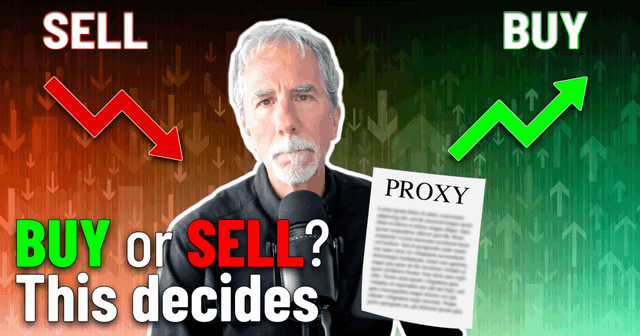

This One Filing Can Tell You When to Buy or Sell Stocks
In This Episode
In this week's Stansberry Investor Hour, Dan welcomes Michelle Leder back to the show. Michelle is the creator of footnoted.com, an information service dedicated to finding opportunities and early warning signals buried in U.S. Securities and Exchange Commission ("SEC") filings.
Michelle kicks things off by explaining what company proxy statements are and why they matter for investors. She says the summary compensation table and footnotes found in these documents let you know not only how much management is being paid but also what motivates their actions. Michelle emphasizes that as an investor, you need to know whether the company has your best interests in mind. She also says to look at director pay, as some officers sit on the boards of multiple companies and may not be likely to "rock the boat" and push for change. Another key component to examine is the related-party transactions that show you any disclosures in company spending...
You see these things, it's really not uncommon for the CEO to lease back [a] jet to the company. We see that pretty frequently... You also see family relationships. One of my favorite ones, Skechers... [had] like 10 different relatives on the company payroll, and they weren't being paid the $15, $20 an hour that you get to work at Skechers. Some of the sons were making $5 million, $6 million a year for jobs that were not even disclosed. What were they doing for that money? [...] If I'm an investor, I want to know about that.
Next, Michelle says that observing who the owners and top investors are is critical. You should also know how many shares investors have. She says knowing this will let you know if they "have any skin in the game" and will work to ensure that shareholders are being considered. Another aspect to look at is shareholder proposals. Michelle states that there's an argument to be made that proposals should come from shareholders with substantial positions rather than those with smaller stakes. And she gives her thoughts on AI utilization in SEC filings...
There's a lot of talk about AI writing the [SEC] filings that we're often being served now and also AI reading the filings and trying to determine what the tone of the filing is... At least so far, I'm finding that they're not getting all of the nuances, and they certainly can't get what's missing. So I don't know that they would have picked up or know the context of what's important. I use the tools as well... And I would say [they] doesn't always do as well as I would hope.
Finally, Michelle shares one stock that she warned her subscribers about before it fell dramatically over the past year. While some had believed that the stock would perform well, Michelle says the SEC filings were the key indicator to stay away from the company. She also addresses other small details that she looks for to evaluate a company's health and her strategy for short-term signals...
If I find something in an SEC filing, I might take a flier. And sometimes it's just a relatively short, small position. Maybe it's 100 or 200 shares. But I'll go in there, and I'll buy it and kind of look at it... and hold it for a little while to see if my theory is right or not... But you find these things, and they can be sort of telling.
Click on the image below to watch the video interview with Michelle right now. For the audio version, click "Listen" above.

(Additional past episodes are located here.)
This Week's Guest
Michelle Leder is the creator of footnoted.com. Launched in 2003, this highly acclaimed information service uses proprietary search techniques that produce insight that is typically three to six months ahead of the market. She is also a Bloomberg Opinion columnist and the author of Financial Fine Print: Uncovering a Company's True Value.
Dan Ferris: Today, we are going to talk about the sexiest SEC filing there is. [Laughter] I know it sounds like there's no such thing, but there is. And we're going to talk to the leading expert who knows these filings better than anybody, Michelle Leder from footnoted.com. She has read more of these things than anybody I know.
And she's going to give us five ways to dive in, and look for the gold and the garbage, the things you need to know as an investor to tell you to buy, sell, or avoid stocks. They're not things the company is going to tell you, but they're things the company has to put out in a public filing. So you've got to know how and where to find them, and Michelle can help you do that today. Michelle, welcome back to the show. It's been a very – so long I don't even remember.
Michelle Leder: [Laughter] Me, either, Dan. Thanks for having me on.
Dan Ferris: All right, we're going to talk about stuff today that I just want our listeners, I promise you, you probably don't know any of this, but you really should, and it could change your life as an investor. And Michelle is better at it than anybody. And actually, Michelle, we're having you on here, and you know, we're getting towards spring, and maybe you could tell our listeners why that time of year speaks especially well to your expertise and your focus as an analyst and an investor.
Michelle Leder: Yeah, well, spring is traditionally proxy season, and if you own individual stocks, you're going to get these, either online, or some people get it old-fashioned, old-school way in the mail. It's actually kind of funny, I thought I had registered for everything online, and I still get a couple of paper proxies in the mail. And I don't know how to turn them off, because I'd rather recycle the paper.
But basically, at its heart, the proxy is an invitation to the annual meeting. And most people don't go to the annual meeting these days, and a lot of annual meetings are held remotely. And so your inclination might be to just toss it in the recycling bin. But I really, hopefully, can encourage people to really pay attention to some of the things that are in the proxy statement, and really dive in, because there's a lot of really good information.
And if you own an individual stock, you really should be reading this, maybe not for every – let's say you own a lot of individual stocks, maybe you're not reading it for every single stock that you own, but you really should be reading it, you know, for your top holdings. Like, if you have top five, let's say your top five holdings, you should absolutely be looking at this and paying attention to it.
Dan Ferris: OK. I'm glad you're talking about this. I'm glad we have you on today, and there's no one else that we could have one to talk about this. But I guarantee you, as important as you make it sound, people are listening to this going, "Yeah, I always throw this in the garbage. I never do anything. My stocks are fine. I don't care." What I want you to do for me today, Michelle, is, and because I think this, I think it's true and important, not just an exercise, make me care about it as an investor, if you can.
Michelle Leder: Yeah, well, and I should get back into the season, also. Most proxies, most companies are on a calendar year. So their year ends December 31, and the proxy deadline is April 30 for companies who file, companies who are on a December 31 calendar, so you're starting to see them a lot these days. For example, yesterday, IBM filed their proxy, and I was looking through it.
And it's not an insignificant document. It's not as big as the annual report, the 10-K. It's not uncommon for it to be 80 to 90 pages. And I can get that reading 80 to 90 pages is maybe not on the top of your to-do list. I get that.
Dan Ferris: Yeah, it's not 80 or 90 pages of Stephen King either. Right?
Michelle Leder: Yeah. [Laughter] No, it is not, although there are some Stephen King-like details in there, if you really delve in. I guess the key things, Dan, about the proxy is, of course, voting your shares, right?
Dan Ferris: Mm-hmm.
Michelle Leder: You can make an argument that maybe it's not as important, but I think, as an – if you're owning individual stocks, you ought to just, there's a way not to vote your individual shares, right? You own a mutual fund, you own an ETF, whatever, and you let someone else take that, take the control for you. And that's fine if that's your style of investing. But I think that if you're owning, if you own individual stocks, you should at least spend some time on this. So what's in the proxy, and why should you care?
Dan Ferris: Yeah.
Michelle Leder: A couple key things. One is the summary compensation table. That is where you learn how much the CEO and the other four top executives at the company, that you are an investor in, are making. And it's quite broken down. It's not just like, oh, so-and-so made, $4 million was paid $4 million. They break it down. Usually, there's six or seven different columns and types of compensation.
There's a bonus, there's usually a column for cash compensation, like the salary, if you will. There's a bonus. There's long-term. There's short-term incentives. My personal favorite is, like all other compensation, that is a really, it's a big catch all, and it often involves delving into a couple of footnotes. And then there's the total compensation, which is usually the last column. And it's just, it's so important to get a handle on this.
One of the things I like to look at, for example: Did the stock not do well last year, but the CEO still got a big raise? If I'm an investor in that company, why am I not getting some – why are the top executives the only ones who are benefiting from this? And I think that that's just something that's really important to be paying attention to.
That's sort of the starting point, if you're going to look at nothing else in the proxy, look at the summary compensation table, just to get a sense of what these executives are getting paid that are basically working for you as an investor. You own the stock. You are technically their boss, more or less, if you think about it that way, and you should be paying attention to this. If someone's not doing a good job, you need to let them know they're not doing a good job.
Dan Ferris: There was a guy, who lived near me, when I lived in southern Washington, he lived over in Camas, and I lived in Vancouver, and he was a – David Nirenberg was his name. And he was a brilliant guy, an attorney who managed a value fund, like real activist. And he said he has a team that does lots of research for him, but he said, "What I do is I read the proxy. I read every word of it, and I find out how well these people are compensated, and how well they're incentivized to serve me as a shareholder."
Like, the lead guy at the firm, that was his sole focus, and they actually did quite well over – I haven't had contact with him for years, but they had a great track record, just focusing on that. Which is, it's interesting, it's like nobody pays attention to this, and yet it can make the difference in returns, can't it?
Michelle Leder: Yeah, it absolutely can. And I think it's just, where the incentives lie, right?
Dan Ferris: Mm-hmm. Yeah.
Michelle Leder: And so, it's, it's important to be paying attention to this. Mark Zuckerberg famously makes, I don't know if it's $1 or zero dollars in salary. But then you look at the all other compensation, figure in Meta's summary compensation table, and you realize, he gets millions and millions of dollars. I don't know what the figure is for this, for 2025, because it hasn't filed yet, but it will be filed soon, because of the April 30 date.
And $24 million in personal security and another 20-something million dollars for personal use of a private jet that he actually owns and leases back to the company. And you look at some of this stuff. And you're just, like, we all know, oh, he makes only $1 a year. He's not making any real money. But then there's this. Now, I don't know about you – I go on vacation. I'm not asking someone else to pay for my air travel. [Laughter]
Dan Ferris: Yeah.
Michelle Leder: It just – it just kind of gives you insight into, sort of how – why this is important. Now, look, I think you can make a legitimate argument in the day and age, like what happened at UnitedHealth back in December 2024, with the president being shot on the street of Manhattan, that there are legitimate security risks that top executives face, right?
Dan Ferris: Sure.
Michelle Leder: And we're certainly seeing that. These people are high profile. There are legitimate security risks, and I don't want to dismiss that. But you can also argue that, what is enough? And is $24 million enough? That seems a little excessive to me, but it's all, I guess, in the eye of the beholder. What might be excessive to me might not be excessive to somebody else. And of course, if the stock is doing well, it's a lot easier to say, "OK, well, we're all doing well."
Dan Ferris: Right. Yeah. And those business models of those really big companies, like Meta and Microsoft and Alphabet, they print money. They gush cash. They just gush it. So, you look at the tens of billions, or whatever it is that, you know might drop to the free-cash-flow line, or whatever you're looking at, and you say, eh, [laughter] right, 24 million? Eh, you know? [Laughter]
Michelle Leder: Yeah.
Dan Ferris: Yeah, I can understand that. But the first time, well, with all the money they're spending on capex, those businesses probably aren't going to return a whole lot. Those data centers aren't going to return anything, probably.
Michelle Leder: Yeah.
Dan Ferris: So you might want to get ahead on this deal, and start showing up in the meeting, and saying, "Do you really need $24 million worth of bodyguards?" And bodyguard travel and probably all kinds of other things associated. But, so, that must be, that other line, that other column of [crosstalk] talking about.
Michelle Leder: Yeah, it's all other compensation. Yeah. And what's really hard is that companies really, and I'm noticing it as some of the proxies are coming in this year, they're really making it harder to read. The type is getting smaller. OK, I am getting older, so I've been doing this for a while. So [laughter] maybe it's some of that, too.
But I think that the type is definitely getting smaller, and they're making it a little bit more – you look at that column, and then there's multiple footnotes to the column. Is it – is it like taking a nice walk in the park with your dog? No. Reading a proxy is not going to be as pleasurable as that.
Dan Ferris: So, Michelle, for our listeners –
Michelle Leder: Is it better than teeth cleaning? Yes. [Laughter]
Dan Ferris: [Laughter] OK. All right. That's fair. It's not root canal work, but –
Michelle Leder: It's not root canal work. It's your portfolio. Let's be honest about this. I own individual stocks, right? Because that's just how I choose to invest. And I want to understand. And based on what I understand about SEC filings, and I make decisions based on things I see in SEC filings, and I buy the stock, or I sell the stock based on that. And it's important, because this is your, this is your future, and you're investing. If you're an active investor, you really need to be reading these things.
Dan Ferris: All right, yeah, that's the point of all this. Yes, if you're an active investor, you need to read these things. If you own individual stocks, and especially, like you said, I'd like the advice on, start with the biggest position, maybe – the biggest, your biggest holding, and get your feet wet there, [laughter] if you haven't been doing this.
So I wonder if we could talk about some – or actually, before we talk about some specific examples, do you have a set of three or five, or some bullet points for our listeners to say, "OK, if this is your first time going through a proxy, you are diving into 80 pages of legalese. Here's how to navigate it." But [looking] for the compensation table sounds like an important one. Are there others?
Michelle Leder: Yeah, look for the compensation table. The other thing I would say is look at – and make sure to pay attention to all the footnotes, or most of the footnotes, especially for that all other compensation. Look at what the directors are getting paid. This is one of my favorite rules, or whatever.
Dan Ferris: You [crosstalk] for me.
Michelle Leder: Yeah.
Dan Ferris: The director part, yeah.
Dan Ferris: Well, some of these – some of these directors are getting paid north of $300,000 a year. I was looking at, I think – when I was looking at IBM, there was a director who was making north of $600,000 a year. Let's be honest. And this is a part-time job.
Dan Ferris: Oh yeah. If it's [crosstalk] a year or something.
Michelle Leder: Yeah. And if you have a part-time job, that's paying you as well as that, are you likely to rock the boat, or –? And a lot of these directors serve on two, three, four boards. Some companies now have rules that prevent you from serving on too many public company boards. But it's not uncommon to see a director serve on two or three boards. So they're making over a million dollars a year, or close to it, for their various part-time jobs.
Dan Ferris: Right.
Michelle Leder: And you look at some of this, and you're just, like, OK, how involved are they really – we think the directors are sitting around a big table and making big decisions and talking about important stuff.
Dan Ferris: Well, they are. They're big decisions.
Michelle Leder: Yeah. But it's just sort of – makes you wonder about that, when you look at some of this compensation. That doesn't imply that – I want to be clear, it's not that, oh, this is totally corrupt or anything like that. It's not. I'm sure, most directors are trying.
Dan Ferris: No, it's human. It's human nature. That's the point, right?
Michelle Leder: Yeah, it's just human nature. Yeah. So whenever – one of my favorite things is, like – favorite things in terms of SEC filings, let's be honest. I'd prefer a nice weekend in Paris, anytime. [Laughter]
Dan Ferris: Gotcha. Noted. Footnoted. [Laughter]
Michelle Leder: But one of my favorite things is, companies will often say a director left and that there were no disagreements. They'll often write, file that – let's say a director left, and they'll say there were no disagreements, or they just left for whatever reason.
But ask yourself, does someone really leave a part-time job that pays them north of $300,000 a year if there were really no disagreements? Would you leave a part-time job that paid you, like, $300,000, $400,000 a year if you didn't have any disagreements? I think [for] most people, I think the answer would probably be no, and it is just human nature. It's – [crosstalk]
Dan Ferris: Michelle, if I were deep in, in the throes of a horrible, debilitating disease on my 110th birthday, I would not quit that job. [Laughter] I would not be wanting to spend more time with family or whatever the nonsense is that they always report. [Laughter] Absolutely not.
Michelle Leder: They don't even usually trot that out anymore. They realize that that's become sort of a – [Laughter] They realize that people see that. But they do say no disputes pretty often, that there were no disputes or, it's just something that you see. Getting back to the proxy list, OK, so we have the compensation table, the summary compensation table. That's one. Director compensation, that's two. The other thing I like to look at is, I like to look at related party transactions, because –
Dan Ferris: Oh yeah.
Michelle Leder: – those can be, if you think back to it, and you and I have been doing this for a long time, Dan, the whole genesis of footnoted came about from Enron and some of the related party transactions that were being reported way back when, in 1999 and 2000. And you have these related party transactions, and the company was disclosing them. And of course, we could argue that it wasn't the clearest way that they were disclosing them, but they were disclosing them. And I think it's important.
Dan Ferris: Well, we talked about one, Michelle. We talked about one, Michelle, with Mark leasing the plane.
Michelle Leder: Yeah, yeah, exactly.
Dan Ferris: Yeah, that is what we're talking about.
Michelle Leder: But you see, you see these things, it's really not uncommon for the CEO to lease back the jet to the company. We see that pretty frequently. I was looking at Discovery – Warner Brothers Discovery is in the news a lot, especially out here in L.A. because of the whole merger fight between Netflix and Paramount. And, you know, Warner Brothers discovery just bought a new plane, you know, back in December, in the midst of all this, like, you know, tussle. And they leased a new plane for their CEO to use.
And so, you know, you look at some of these things, now, that, I don't believe that one's owned by the CEO. But, like, you often do see those types of disclosures. Like, we lease a plane, it's owned by the CEO. You know, it's owned by the CEO, it's owned by this executive officer, and we lease it back to the company for use. And I think that's important to be paying attention to. You also see family relationships.
One of my favorite ones, you know, SKECHERS, it's another company out here, the sneaker company. They were just taken private not too long ago. But if you look at, if you really want to have fun, look at the related party transactions that were going on there. It was, like, ten different relatives on the company payroll, and they weren't being paid, like, you know, the 15, $20.00 an hour that you get to work at SKECHERS.
I mean, you know, some of the sons were making 5, $6 million a year for jobs that were not even, you know, disclosed. Like, what were they doing for that money? It wasn't even said, like, you know, "Oh, he was vice president of marketing, or he was, you know, running the online thing, or." It was just like, "So-and-so is getting paid $5 million a year." If I'm an investor, I want to know about that. You know, it's one thing to run a private company and hire your relatives, right? But like when you're a public company, that's a different obligation.
Dan Ferris: Right.
Michelle Leder: And, you know, I would argue, if I was an investor, I would want to know about that.
Dan Ferris: Yeah. Wow. That is, you know, not even knowing how they're, how they're earning that $5 million paycheck, that's a big one. I hadn't heard that SKECHERS. I never owned the stock, and never recommended it. So [laughter]…
Michelle Leder: Yeah. Yeah, if you look at it, you know, I mean, of course, they're private now, but I think if, if you look at the proxy from last year, you would see some of that stuff. And I've written about that on my site. If I think, if you go to Footnoted, and you search for SKECHERS, you'll see some of the posts that I've done about that. That, I believe, should be available as free content. You know, of course, I have some stuff behind the wall, but I do have stuff that is free and available.
Dan Ferris: Yeah, that's Footnoted dot-com everybody, and Michelle has a category of stuff called "free discoveries". So you can read some stuff for free, and it's really good. I promise you, in fact, that when you read that stuff, it will be things that you had no idea were a thing at all. Like, you didn't know they existed. So it's that kind of digging that she does, and that we're encouraging you to do.
Michelle Leder: Yeah. So the other part of the proxy that I would pay attention to, so we have summary compensation, we have director compensation, we have related party transactions. You want to look at, like, you know, the ownership, right, because they disclose that. So who were their top institutional investors? Yes, you can find this if you go to Bloomberg, or you go somewhere else, and you can see that, and you can kind of dig through it that way, but that's an important thing to pay attention.
You know, how who are the top institutional holders of the company? And they also list who are the top inside, you know, how much, how many shares the insiders own? I always look at that because I think, like, you know, if you have a director ,who doesn't have any skin in the game, but they're making the 300, $400,000 a year, what does that tell me, you know? That tells me that, you know, this is like a part-time job, and that they have no – you know, you want to see a director, Ideally you'd like to see a director of some skin in the game. They don't need to own –
Dan Ferris: I'm glad you brought this up.
Michelle Leder: Yeah.
Dan Ferris: Yeah, I'm glad you brought this up. Just a quick question on it, because this rattles around in my head, sometimes. Do you care – I've thought lately, it's one thing to buy the stock for the, for the direct, you know, the CEO, or whoever, like, you know, Greg Abel who's just took over Berkshire. He said, "I'm going to spend my whole after-tax salary buying Berkshire stock." So that's cool. He's buying it, but most of them just get it granted to them, right?
Michelle Leder: Yeah. Yeah.
Dan Ferris: And I always look at those grants as sort of, it's like a – it's ultimately cash compensation, isn't it, because it's just another way to get more compensation without doing it in cash in the first instance, right? It's just, you're one step removed from cash, is how I view it, because they didn't buy the stock. Does that bother you at all? Do you ever think about that? This is just a little pet peeve of mine, and I'm just bouncing it off of you.
Michelle Leder: Yeah. No, I do. You want to have someone who has some skin. Ideally, you'd want to see someone with skin in the game, right?
Dan Ferris: Right.
Michelle Leder: And is that a reason –
Dan Ferris: Meaning it's exposed to the losses, right?
Michelle Leder: Yeah, exposed to the losses. Exactly. So, yeah, I think that's something that you want to see. Obviously, different people will feel, weigh it differently. Some people – and again, this is all, this is the thing about SEC filings, it's all subjective, right? Like, some people may be perfectly fine with Mark Zuckerberg getting paid $24 million for personal use of the private jet. Maybe they are, and that's OK. And fine.
But, like, I think that if you know, if you're not OK with it, you ought to at least know about it. And that's the question is, like, at least know about it, and then decide, you know what, the stock's doing great. He seems like a great guy. I'm OK with this, you know? And just know that – but information is power, right? And so, I would argue that knowing this information, as opposed to just dumping it in the recycling bin is not a good idea.
Dan Ferris: Right. And you're also the – you're coming at this from the other way, if I could, just for our listeners' sake.
Michelle Leder: Sure.
Dan Ferris: There's also from the other direction, you can drown in information.
Michelle Leder: Of course.
Dan Ferris: And by telling me, hey, look, this thing is 90 pages long, but look for the director compensation and the top five name compensation, and look at the related party transactions. That's why I asked you that question, because it's a million words of legalese or something. So focusing on which information is important is the point here. And I just don't know anybody else I would ask that question to about this particular topic.
Michelle Leder: Yeah. No one expects you, Dan, to read the thing, sit down with a nice glass of wine, and read, you know, "Oh, these are my top five stocks. Let me take these 90-page documents and read them." They'll be tipping the wine glass back a lot quicker.
Dan Ferris: Yeah. [Laughter]
Michelle Leder: I would not encourage you to do it word for word. That's why I think it's important to pick and choose your spots, because there is a lot of verbiage there, and you don't have to read everything. But I think these things – and the other thing I would, I would argue, that is important to look at is the shareholder proposals. Now, there's a lot of controversy these days, especially with the new leadership at the SEC, about shareholder proposals, and what should be allowed and what shouldn't be allowed, and all of that.
Dan Ferris: Meaning?
Michelle Leder: Well, you can make a cogent argument, should there be a shareholder proposal? Now, you're seeing like the barrier to doing a shareholder – I was looking at a proposal yesterday. Someone owns only 15 shares of the stock, and they're submitting a proposal. Now, is that kind of a waste of everyone's time and breath? You can make a cogent argument about that, that maybe if you only own 15 shares, maybe you shouldn't be able to submit a shareholder proposal. Maybe you have to have, actually, let's say a significant, I don't know what that number would be...
And the SEC under the current leadership, under Paul Atkins, is kind of moving in that direction. And I think that it's a complicated thing, right? Some shareholder proposals, and it's kind of gone, if I will, without getting too deep into the weeds, it's kind of swung from one extreme to the other. For a while, you had a lot of shareholder proposals from sort of, let's say, the left, and they were doing like, "Oh, the company should stop its oil this, or it should stop it." It was all about [diversity, equity, and inclusion ("DEI")] and it was about oil, and it was about human rights, and it was about like, let's commission a human rights report on blah, blah, blah.
And now you're seeing it from the left – I'm sorry, now you're seeing it from the right, where you're seeing these proposals, like, "We think you've spent too much money looking at climate change issues," or "We think you've devoted too much resources to DEI." And so you're seeing these proposals, and it's very interesting to see, at least for an SEC filings geek like me, how this all washes out, because you have groups on the left and the right, who are trying to affect change by submitting these proposals to the proxy.
And you can argue that both sides ought to be able to – if the left has been able to do it, then the right should be able to do it. But maybe there needs to be less on both sides, because some of these proposals would be [a] waste of time.
Dan Ferris: Right. That sort of left/right cycle, it's just typical in all of politics. But it has generated this sort of experimentation and discovery of what works and what doesn't. And I honestly feel like one of your free discoveries is Nvidia deleting the DEI-related disclosures from their latest filings from their 10-K, I believe it was. And I feel like we learned that that really didn't get us anything as shareholders. It didn't get us anywhere good that we wanted to be.
And then, we had stories like Target and Bud Light and all that – really got us nowhere that we wanted to be as shareholders. So boom, it's out. And whether that comes about, as you know, part of the left/right cycle or not is – it's almost inconsequential. But I agree. You shouldn't be kept out of submitting a proposal because of your political leanings. It's whether or not it benefits shareholders, so good point there.
Michelle Leder: And I would think you should have a certain stake in the – I think 15, if you own 15 shares, maybe you can make a reasonable argument. Maybe you need to own 200 or whatever. I think 15 might be a little low. So those are the five. So just to summarize, like, summary compensation table, director compensation, related party transactions, looking at the top institutional holders, and other holders of the stock, there's usually a pretty – there's a chart there that tells you that. And then I would pay attention to the shareholder proposals.
And honestly, I would do it in that order: summary, compensation table being top director, compensation being absolutely No. 2, because I think it's important to understand that. And then, so if you're only going to do three, maybe you lop off the last two. Then you can say these three things I need to read in the proxy, or I need to pay attention to. And if I have extra time or extra interest, I can pay attention to the other two.
Dan Ferris: OK. Fair enough. But the top holders is interesting to me, because, of course, Michelle, nowadays, the top holders tend to be the same, whatever it is, three, four firms – [crosstalk]
Michelle Leder: Vanguard. Blackstone.
Dan Ferris: – Vanguard, yep, BlackRock, yeah. BlackRock, Vanguard, State Street, and who else you know, whoever else.
Michelle Leder: Yeah. Fidelity.
Dan Ferris: Yeah, Fidelity, right. Some people really think that's changed things. And that's changed the nature of corporate governance, and the this very thing we're talking about, voting proxies.
Michelle Leder: Yeah.
Dan Ferris: Where do you come down on that? Do you think it's changed things, better, worse, or otherwise?
Michelle Leder: I guess I don't have a strong thing, a strong opinion on that, if I had to really think about it. I think that, there are these proxy advisory firms, which is also generating some controversy right now. There's two major proxy advisory firms, [Institutional Shareholder Services ("ISS")] and Glass Lewis. And they're advising the Fidelities, and the BlackRocks, and the State Streets on how to vote those shares. And that's how it's kind of been done forever.
But you're starting to see, like talk – I think I read an article in the Wall Street Journal not too long ago that JPMorgan Chase was building an internal AI tool to basically replace the proxy advisory firm, you know, whether they use ISS or Glass Lewis. And that they're going to try to try to do this. It seems like, on the one hand, you think, OK, just look at the proxy.
But of course, these companies own hundreds or thousands of companies, and so they can't, like, look at every single proxy and try to figure out this is actually, quite frankly, what AI is kind of built for, is to help make that decision making a little bit easier, right?
Dan Ferris: Right.
Michelle Leder: And maybe there's a matrix that you put in, and you say, OK, what is the stock returning and what is the – you build some kind of tool on that to help you make that decision. I make – when I'm looking at an individual stock that I own, of course, I'm making the decision, but I only own, let's say 10-20 stocks, right? And I'm not even paying as close attention to the smaller holdings. And so I think that – but if you own thousands of them, of course, you need to automate that a little bit more.
Dan Ferris: Yeah, it's, I hadn't thought of them as a target for AI, but it does seem tailor-made for it. On the face of it, though, on the face of it, it does seem an odd – that these firms exist does seem a bit odd. I understand the rationale. You explain it well. But telling me, you know, here's how – and they're not part of the problem is, for me, like they're not just, they're not objective advisers. They're advocates. They advocate various positions, right? So you're being lobbied, as you know, Fidelity is being lobbied by Glass Lewis or ISS – right? And that's what it looks like to me, anyway. No?
Michelle Leder: Yeah. I want to be careful because I'm not – this is not my area of expertise. I'm all about, like, digging through SEC filings. I really don't know from the other side how, if I'm, let's say, a fund manager at Fidelity or State Street or whatever, how I make the decision, what the process entails to vote my shares. I know how I vote my shares and my process, but I honestly don't know how they handle that. And I just wouldn't want to hazard a guess on that, and what's involved. It is a –
Dan Ferris: Fair enough. Yeah.
Michelle Leder: – multi-million-dollar industry.
Dan Ferris: Sure. [Laughter]
Michelle Leder: So someone's making money off of it.
Dan Ferris: A bit of a hint. Yeah. [Laughter]
Michelle Leder: But I just don't know enough. It's not my area of expertise, and I try to only talk about things that I actually know something about, Dan. [Laughter]
Dan Ferris: Fair enough.
Michelle Leder: Otherwise, I get in trouble. [Laughter]
Dan Ferris: Yeah, fair enough. But the nature of your expertise will incline me to ask those sorts of questions. I just fire things at you as a resource, because some of this stuff is, frankly – we don't talk about this with other guests. We're always talking about stocks they like and trades they like. And it might be somebody who's a technical analyst or a bottom-up, fundamental, value-type investor or something. But this technical level here, we don't get to this too often.
Michelle Leder: Sure. Sure.
Dan Ferris: Now, before we – I want the listeners to know this, before we hit the record button on the podcast, I noted an expression that really, it says, "Shortly after, on your website, shortly after I started Footnoted back in 2003," Michelle says, "I coined the expression that there are no accidents in SEC filings. Everything is there for a reason." And then she goes on to explain how things are there for a reason. And Nvidia took out the DEI disclosures for a reason, right?
Michelle Leder: Mm-hmm.
Dan Ferris: I find that very insightful, because the documents are so damn enormous. Just the risk factors in a company like Nvidia, or any of the bigger firms, or ExxonMobil or somebody, the risk factors alone, I feel like, I almost feel like I need a law degree to read them almost.
Michelle Leder: Mm-hmm. Yeah. No, they can be very complex. And I think that the reason I coined the phrase is because, thinking back 20-something years when I started this site, it was, like, you can BlackLine, of course, or whatever tool you were using to compare what was new and what was missing.
But I think there's also an importance, especially as we move more into AI. There's a lot of talk about AI writing the filings that we're often being served now, and also AI reading the filings and trying to determine what the tone of the filing is – but at least so far –
Dan Ferris: I do that.
Michelle Leder: Yeah. At least so far, I'm finding that they're not getting all of the nuances, and they certainly can't get what's missing. So I don't know that they would have picked up or know the context, and what's important. I use the tools as well. And I'll say, what is the most significant risk-factor change? And I would say that it doesn't always do as well as I would hope when I use different AI tools.
Dan Ferris: I find there's this margin of, I don't know how much. I'm just going to say 20% or 30%, initially, on a first run through, where it's – they're missing something, or they're just completely wrong. I'm like, "No, it doesn't say that. It says the opposite of that." "Oh yes, you are correct. I'm sorry." It requires that level of –
Michelle Leder: Yeah. I'll give you a perfect example. Last year I was doing, I was looking, I think, Guess – the clothing maker had put out their 10-Q, and it was shortly after the tariffs were announced. This was last summer, so I think it was the second quarter queue for Guess.
And I was like, tell me what Guess – I put it into the AI tool, and I don't remember which one I used at the time, but it was like, tell me what Guess has to say about the tariffs, and the impact of the tariffs on – it was a pretty specific question. It wasn't just like, what are the new risk factors, or what, blah, blah. It was like, what does Guess have to say about the tariffs? And the first sentence came back, "When President Biden put the tariffs in place in August –" I mean, "on April 2, 2025."
And I was like, whoa, wait a second. If you can't get that one fact right, how am I supposed to go on and read the rest of it? It was just sort of scary to me, honestly. Now, I think that the tools have been – that was like last summer. And I do believe that the tools have been improved pretty dramatically since then.
Dan Ferris: They have.
Michelle Leder: You still, you can't take it for the gospel. You can't.
Dan Ferris: No, you can't.
Michelle Leder: And you know –
Dan Ferris: Yeah, yesterday, just yesterday with Claude 4.6, this is the one everyone's saying, "Wow, this is really good. OK, we're really getting somewhere." I put a piece that I'm working on in there, and there was a deadline of April 30. And it came back, and said, "Well, we're past that deadline now." I'm like, "It's March the 10th." The day is March the 10th. I had to tell it, and it didn't' know that.
Michelle Leder: Oh, thank you for correcting me.
Dan Ferris: You're right. Sorry, I didn't look at the calendar. I'm like –[laughter]. And yet, at the same time, I have put together charts from multiple – I use NotebookLM because you can just throw in 20 10-Ks, or the last 10, or however many you want. And that's the only source it'll use for all your questions. And I think that's cool. And I put together charts of certain data points that I couldn't – if I had had to do it by hand, it would have been a huge pain in the neck. So, it's smart and it's dumb at the same time. [Laughter]
Michelle Leder: Yeah. And sometimes you don't know when it's being smart or dumb. That's where I get frustrated because it's, like, if I have to use it to fact check – I found it's best, it's often more useful when I know the fact to begin with. Like I knew that Guess, for example, had a lot to say about the tariffs. Something like 95% of their clothing was coming from overseas, from places like Vietnam and China and places like that. So we knew that that company was heavily impacted by the tariffs. And yet to – so I knew a starting point. And of course, I think some of it is the prompt, right? You can make a – everyone errors in a prompt and everything.
Dan Ferris: Oh yeah. But, yeah, that's the skill, isn't it?
Michelle Leder: Yeah, yeah, of course. But getting back to the filings, I think that, like with the proxy season, like with April 30 coming up, you're going to start to see a lot of proxy filings coming out in the next couple of weeks, let's say. And it's just – it's use it as a jumping-off point. Use it to try to figure out, like, is the stock still worth me owning? Are the incentives in the right place? Are they not? And I think those are important questions to ask for anyone who owns individual stocks.
Dan Ferris: So that's good. I'm glad you gave us the framework there, and the bullet points of five things to look at. That is very valuable. I know I'm going to use them. [Laughter] So with most guests we do like them to discuss a favorite stock, or if they're a short seller, a favorite short. If you don't want to, it's fine. But is there one that you particularly like, or particularly would like to warn folks that they might be doing something shady? Either way, do you have one?
Michelle Leder: Well, let me talk about something that I wrote about last year that I thought, you know, something that's close to my heart and everything. It's Zoetis, a major market-cap stock. And I wrote about them for my premium subscribers last February, saying that the company, I thought the company was soft pedaling some problems that they were having with a particular block, a drug that they had called a blockbuster drug called – [crosstalk]
Dan Ferris: Zoetis, is this the pet care – drug?
Michelle Leder: The pet care, pet drug. Pet drugs, yeah, yeah, yeah. And so at the time, the stock was trading at $170 a share. And everyone was telling me, "Michelle, you're crazy. This is, like, going to go to two something. It's going to rocket." If you look at where it's trading now, it's trading – and it's gone as low as $115 less than a year later, and it's now trading at about $120 or so. I think that there were some hidden signals in the SEC filings.
This is what I'm saying, where you talk about, well, what's missing, what's in there. And this is where you can really understand. And if you have an edge, and I'd like to think that I understand SEC filings better than probably 99% of most people out there.
Dan Ferris: Safe to say. Yeah.
Michelle Leder: And if you understand that, you can really – it can benefit you on both the long side and the short side. I often look, for example, I look for merger signals in filings, and that's benefited me in the past on any number of stocks, stocks that you know I'm holding. There's just any number of – I think that if you can – I guess what I would say is, if you can master the skill, you can, you have something that few other investors pay attention to.
And it's, especially now with some of the AI tools, it becomes a little bit easier to get to the meat quicker. When I first started looking at SEC filings – I don't know, maybe we're around the same age then, I'm not sure. But I remember reading my first 10-K, and I was sitting in a newsroom in Bradenton, Florida, and it was for a bank that I was covering, because I started the first 10 years of my career, was a traditional business journalist. And I got a 10-K.
And in order for me to get the 10-K this was before Edgar, this was before you can download anything, and I had to actually call someone in Washington, D.C. to physically go to the reading room at the SEC, xerox the pages, FedEx it to me, and then I had to sit there and read it – you couldn't do Command F, you couldn't search for phrases. You literally had to read the stupid five.
And it was, that was sort of the beginning. That was my genesis. I remember reading that filing, and the bank was talking about how great they were doing. It was a small, relatively small bank in Florida. And then there was a footnote that said, "By the way," it wasn't by the way, but it was like, "We are being investigated by the OTC, the RTC." It was like, the FDIC. And [laughter] it was just kind of like every federal agency. I don't think the FBI was on there, but maybe.
But it's just, it just shows you how, if you can develop something that, if you can zig when other people are zagging, I think it's like a helpful skill to have. So, in terms of individual stocks, I'm trying to think of what I've bought recently. I've bought, there was a small company that I found something interesting in Mativ. MATV. And I bought it at about $5 a share, and [it] went up to $12. It's since bounced back a little bit. There was a signal that I saw in an SEC filing that piqued my interests. And I bought –
Dan Ferris: What was the signal?
Michelle Leder: It was looking at, it was, I'd have to remember now, because it's [been] a couple months, but it was a, it was an interesting disclosure that they had, that, to me, made it seem like whether it was a grant, it might have been a grant, an unusual grant to the CEO, like, an unusual grant to shares. And usually, they don't do that unless they think like – again, it's all incentives, right?
So why does a company suddenly hand out 250,000 options to the CEO? There's a reason for that. Everything has a reason. And that's when I talk about, there are no accidents in SEC filing. So when you find something in an SEC filing, and you got to ask yourself, "Why is the company doing this?" And that's kind of like how I start every discussion on what I'm looking for is, like, why is the company doing this?
Dan Ferris: Right. And isn't that the why, the why is essentially legal. It's a compliance thing. It's there because it has to be there, legally, in other words. That's why it's not an accident.
Michelle Leder: Yeah, exactly. So, I think, in general, like, you know, if I find something in an SEC filing, I might take a flyer. And sometimes, it's just a relatively short, small position. Maybe it's 100, 200 shares. But I'll go in there, and I'll buy it and look at it based on that and hold it for a little while to see if my theory is right or not. I don't do a lot of shorting, personally, because I think that that's a unique skill. So I often find things in a filing.
But understanding, and I guess this is, in general, overall, sometimes you see something in a filing, and I like to think of it as, like the way you go to the dermatologist, and you get your skin checked to make sure that that mole is not really melanoma whatever.
Dan Ferris: Sure.
Michelle Leder: So, sometimes, you find something in a filing, but the problem is, is that you don't know what the time frame is. You don't know, is this company going to be acquired? Maybe you see something in a filing that looks like an acquisition symbol – signal to you. But you don't know, is it going to be acquired in three months, six months, eight months, or the CEOs meet and talk, and they decide they can't stand each other, and to hell with this deal. So things like that.
An example – I'm just trying to think of an example off the top of my head that, but you find these things, and they can be sort of telling. It's like a tell. Like, if you're playing poker, it's kind of like a tell. Like, sometimes –
Dan Ferris: Absolutely.
Michelle Leder: – some companies play better poker than others, I guess, is what I would say. Some companies have fewer signals in their filings, and some companies have – if you're looking for the top, the very largest, what I like to think about is my sweet spot is usually between a $500 million market cap, and let's say to like, $2 billion or so market cap.
Because once you start getting above into the huge companies, they have reams of lawyers, armies of lawyers who are making sure that there are no weird signals in SEC filings. But the smaller companies don't always have that.
Dan Ferris: Right. And isn't it true, Michelle, I've learned this myself, isn't it true that you just got to dig in there, because you absolutely never know what you're going to find. You never know what that thing is going to be. And it could be the most mundane thing in the world, and you go, "Oh, I didn't know that. That's pretty –"
Michelle Leder: Yeah.
Dan Ferris: And I'll tell you, I remember, whoa, like 24 years ago, like a long time ago, I was looking at Alexander & Baldwin, which was all just one company. They've split into Matson and Alexander & Baldwin now. But I looked at it, and I looked at all the land they had. And I wound up going to Hawaii and going to the land office and looking up all the parcels. And then I found out I could do the rest of it online. So I looked up all the parcels, and they said most of this land was acquired for like $100 an acre or something.
Michelle Leder: Oh, wow.
Dan Ferris: And, and the highest and best use of real estate, one of the very highest and best uses, most valuable, is residential lots, right? [Crosstalk] And they were, they were doing that. And I was like, whoa, they're going to realize a lot of the value of land that looks out at the ocean, at Hawaii.
Michelle Leder: Yeah, seems like a safe bet, right?
Dan Ferris: Yeah, it didn't seem to be in the stock price at the time, at the bottom in 2002 or whenever it was. So it's just you never know what you're going to find. And you can find some really wonderful things.
Michelle Leder: I've found some crazy things. One time, I found – talk about related party transactions, there was a company disclosing, like, a hunting lodge. They owned a hunting lodge, and that was stocked with, I'm not a hunter, but it was stocked with pheasants, and other animals and stuff like that to shoot at. And that they use this for corporate retreats.
And the hunting lodge was owned by the CEO, and it was largely used by the family, but every now and then – and it was a business expense. And you're just thinking, "Oh my god." There was another thing, like a fishing cabin – there was another CEO, who had this fishing cabin. And it made it sound like this was not like, from the description, this wasn't like a little shack on the river. It was like a 10,000-square-foot fishing cabin. [Laughter]
But you just – you find the craziest things in SEC filings. It's just – I think back over the years and some of these disclosures, it's just, it's kind of amazing, when you think about it.
Dan Ferris: It is.
Michelle Leder: You know what I often say, also, another Michelle rule, if you will, is, companies are required to disclose these things, but they're not required to say, "Hey, Dan, on page 59 of the most recent proxy, we did this." Right? They're disclosing it. It's up to you to figure out if, you know, to find it, and it's up to you to determine if it's important or not.
Dan Ferris: Absolutely. Yeah, yeah. I think we are – yes, we are at the perfect moment here with that to ask our final question, which is the same for every guest, no matter what the topic, even if it's a nonfinancial topic. And if you've already said the answer, feel free to repeat it. And the question is simply for our listeners' sake, if you could leave them with a single takeaway or a single thought that you'd like to leave them with today, what would that be?
Michelle Leder: Read the proxy statement. Maybe not read it, but skim it. Skim the proxy statement. Let's do that, and start with those top three things that I said and see if that gives you a different view of the company than whatever you had going in that.
Dan Ferris: I think that's the perfect takeaway for a talk with you, Michelle. And it's been really fun. I'm glad you could be here.
Michelle Leder: Great. Thanks so much for having me, Dan.
Dan Ferris: All right, we will, and we will definitely be calling you up again. I want to have you on every so often, because nobody else talks about this stuff.
Michelle Leder: [Laughter] It's a little geeky, right?
Dan Ferris: It is.
Michelle Leder: It's like I am an SEC filing geek, and so you have to geek out on it a little bit, but –
Dan Ferris: You really do.
Michelle Leder: – I think you can have fun with it.
Dan Ferris: Yep. Yeah, and thank you for that. That's great.
Michelle Leder: Thanks.
Dan Ferris: Well, I never believed that I would say this, but I had a fun time talking about proxy statements with Michelle, who knows more about them, I think, than anybody we talked to on the show. And it was great. Who would have ever thought that you could have a lively conversation about something that is so technical, and filled with legalese? But I hope that you took some notes and noted the easy way to sort of get into it.
Look at the executive compensation table. Look at the director compensation table, right? Find out who owns the stock. Look at the related party transactions. Those are the first things you should do. If you want to read the rest of it, you have at it, man. I've read, I've read some of these things, too. And like we said, you never know what you're going to find. But start with those three or four things, and then, that'll make it easier to make some decision.
And learn some extremely important things about the stocks you own that I'm afraid, I bet most people listening to this don't actually know, which is kind of too bad. You should be a little bit more informed than that. Like Michelle said, you don't have to read every word of it, but you should get those basic pieces. And I'm glad that she gave them to us today. And she discussed Mativ, the ticker symbol MATV.
She talked about Zoetis, the pet drug company, ticker symbol ZTS, and gave us some insights either way about you know what alerted her, what caught her eye, right? You never know what you're going to find. She told us what she found. So it's really – we learned a lot today. I learned a lot. I read these things. I don't read every word of the proxy. But I look at those four or five things, and then I do read some other things. And you just never know what you're going to find.
So I wind up sort of skimming through, and finding things. You just find things. I don't know how else to put it, you know, you can't predict what you're gonna find. Not everything is, you know, the whole point of this is that you're running a mining operation when you analyze a stock. You've got a big clump of Earth with a little bit of gold in it that you're looking for. And Michelle gave us some really good ideas about how to find the gold. So a really fun interview and a fun episode of the Stansberry Investor Hour. I hope you liked it as much as I did. And remember, like, subscribe, and sign up for our free daily e-mail.
Announcer: Opinions expressed on this program are solely those of the contributor, and do not necessarily reflect the opinions of Stansberry Research, its parent company or affiliates.
[End of audio]
George Noble: Why the Tesla and AI Bubble Will 'End Badly'
Everyone Trades Too Much... And It's Costing Them Everything
What Big Money Is Doing While Everyone Else Is Guessing
The Diesel Crisis That Could Send Gas to $10 Overnight